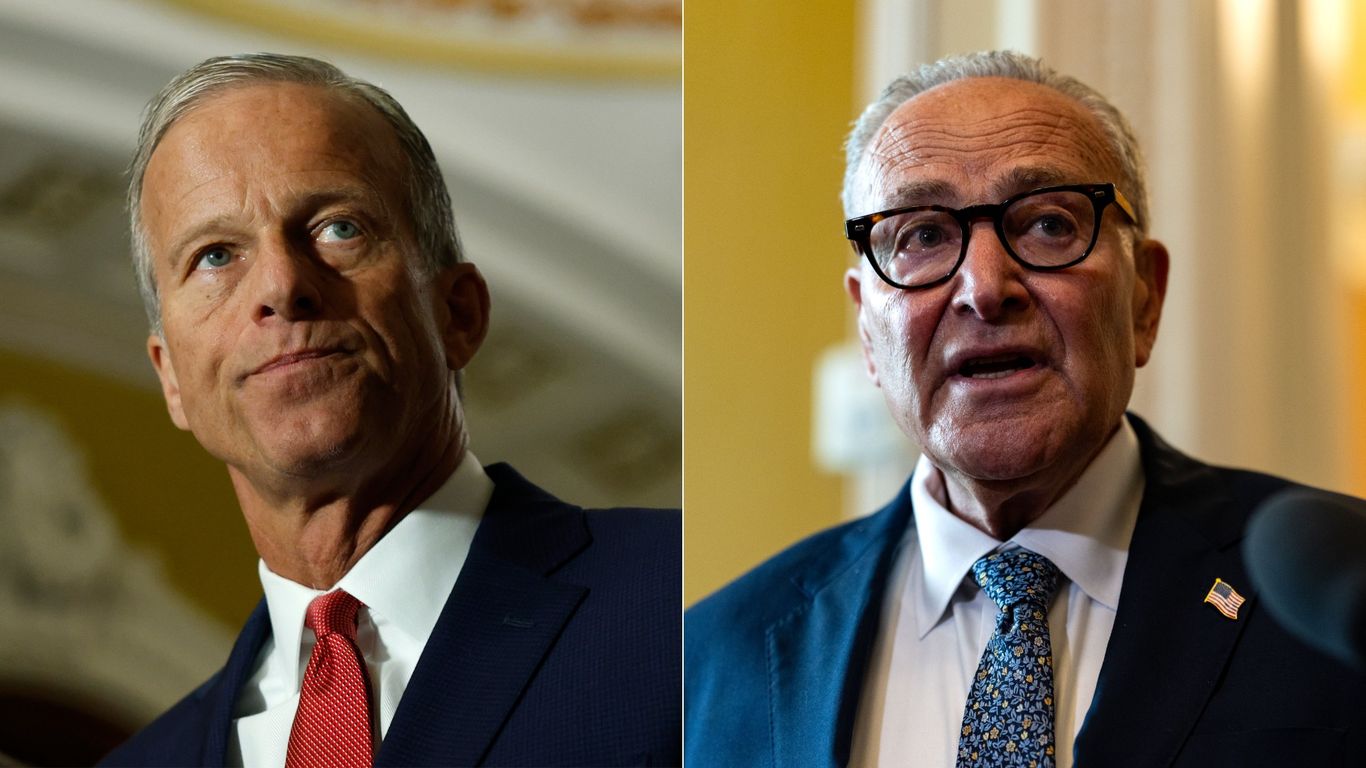
The Senate failed to pass two stop-gap spending bills on Friday, including a House-approved Republican measure and a Democratic alternative, as neither garnered the necessary 60 votes. This legislative gridlock significantly increases the likelihood of a federal government shutdown by October 1st, introducing fiscal uncertainty and potential operational disruptions across various government functions. The impasse stems from partisan disagreements over funding levels and policy riders, with further votes expected ahead of the deadline.
The failure of the U.S. Senate to pass two separate stop-gap spending bills has materially increased the probability of a federal government shutdown on October 1. Neither the House-passed Republican measure, which failed a procedural vote 44-48, nor the Democratic alternative, which failed 47-45, managed to clear the required 60-vote threshold, underscoring a deep legislative gridlock. This impasse introduces significant near-term fiscal uncertainty and the potential for economic disruption should non-essential government functions cease. The division is complex, evidenced by cross-party votes such as Senator Fetterman's support for the GOP bill and opposition from Senators Paul and Murkowski. Sticking points include Democratic priorities for healthcare funding, specifically ACA subsidies, and the adamant fiscal conservatism of key Republicans. Even if a shutdown is narrowly averted, the GOP's proposed continuing resolution only funds the government through November 20, suggesting this fiscal uncertainty will likely resurface, creating a recurring headwind for markets.
AI-powered research, real-time alerts, and portfolio analytics for institutional investors.
Overall Sentiment
moderately negative
Sentiment Score
-0.50
