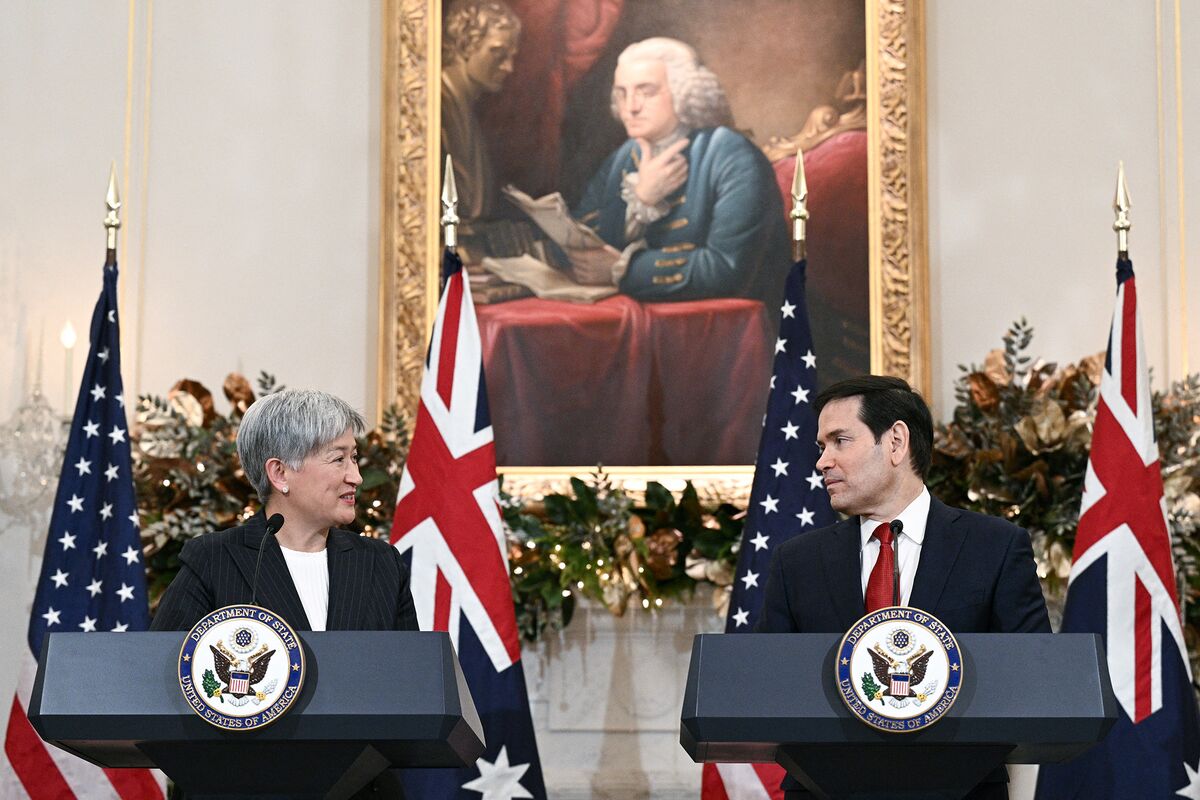
The Trump administration has endorsed the Aukus security pact with the UK and Australia after a review of the Biden-era agreement that would sell nuclear-powered submarines to Australia, Secretary of State Marco Rubio said, stating “At the direction of the president, Aukus is full-steam ahead.” The confirmation signals continuity in a major trilateral defense program and could benefit submarine builders, prime contractors and allied defense supply chains while reinforcing geopolitical alignment in the Indo-Pacific.
Market structure: Confirmation of Aukus creates a multi‑decade, high‑margin procurement stream concentrated in submarine hulls, naval nuclear reactors and integrated combat systems — clear winners are US/UK prime contractors and nuclear suppliers (General Dynamics, BWXT, BAE). Shipyard and skilled labor capacity will be the binding constraint, supporting above‑inflation contract pricing and multi‑year backlog visibility; expect 5–15% revenue tailwinds for core suppliers over 3–7 years if delivery schedules hold.
Risk assessment: Key tail risks are program cancellation/renegotiation, tech‑transfer export controls, major cost overruns or UK/US Congressional funding cuts; any of these could trigger >30% equity drawdowns for exposed primes. Immediate market moves will be muted (days-weeks), but the event materially re‑rates equities over 12–36 months contingent on contract awards and initial keel‑layings; monitor Congressional defense appropriations and first firm contract within 6–12 months as binary catalysts.
Trade implications: Direct equity plays: long GD, BWXT, HII and overweight aerospace & defense ETF (ITA/XAR) for sector exposure; prefer 12–24 month option structures (LEAPS or call spreads) to capture rerating while capping capital. Supply‑chain winners (specialty steel, defense electronics) are secondary plays; avoid cyclical commercial shipbuilders and Australian contractors without clear Aukus contract share, where margin compression risk is highest.
Contrarian angles: Consensus underestimates implementation risk — political pushback in Australia/US, workforce shortages, and export‑control friction could delay revenue recognition by 2–5 years, leaving multiples vulnerable. Conversely, Chinese naval reaction could accelerate global naval procurement, perversely increasing upside to primes beyond Aukus; weigh this asymmetric payoff with limited‑loss option structures rather than large directional equity bets.
AI-powered research, real-time alerts, and portfolio analytics for institutional investors.
Request DemoOverall Sentiment
mildly positive
Sentiment Score
0.25
