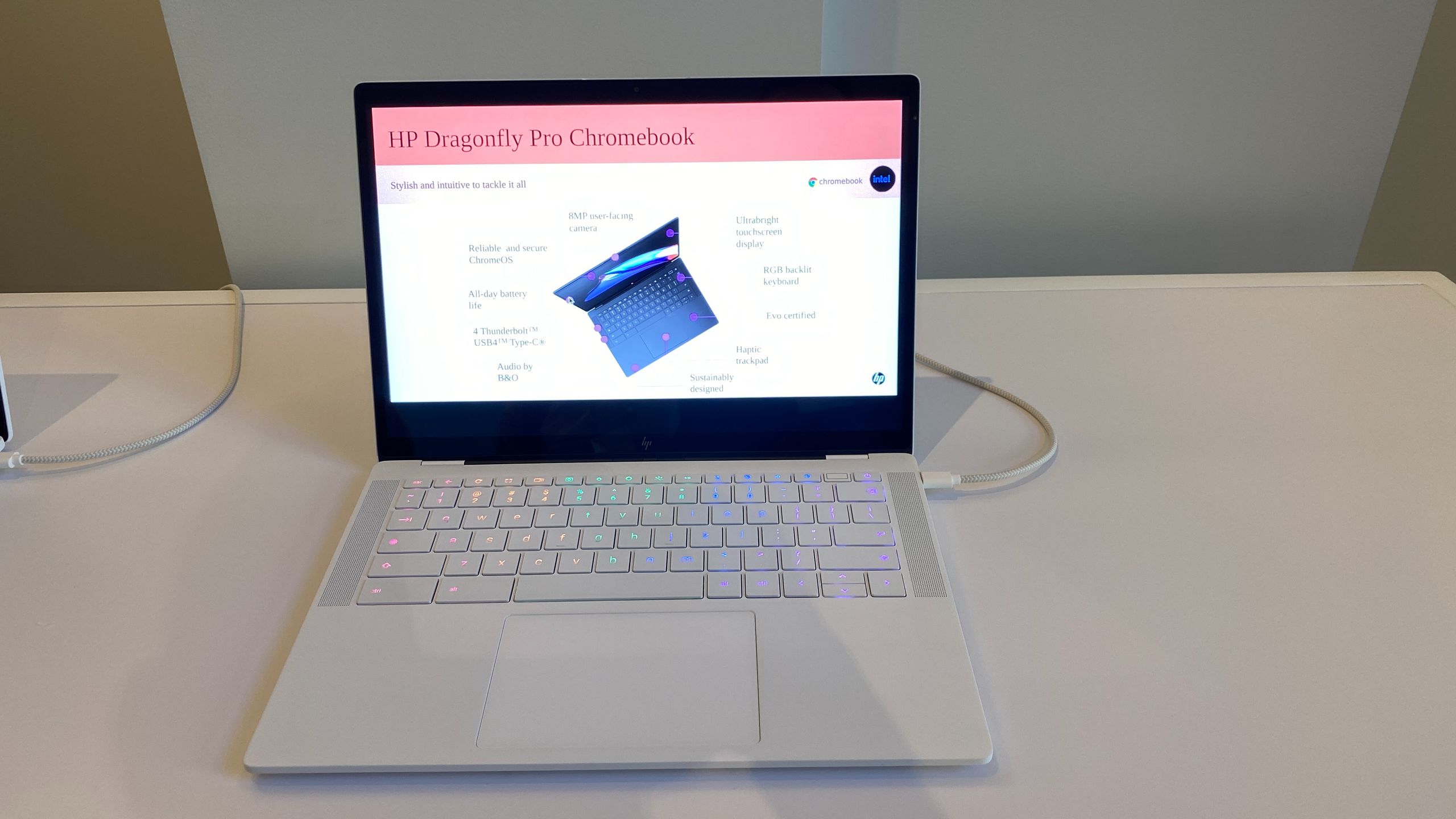
Leaked screen recordings and images reveal Google is testing an Android-based desktop OS codenamed Aluminum OS (ALOS) on an HP Elite Dragonfly Chromebook (build ALOS: ZL1A.260119.001.A1), signaling a potential replacement for ChromeOS. The UI shows desktop-oriented changes (taller taskbar, repositioned clock/status, Chrome with extension support) and the company expects to deliver the new OS by 2026, suggesting early closed-beta validation that could drive a future migration path for existing Chromebook fleets and alter competitive dynamics with Windows and macOS.
Market Structure: Alphabet (GOOGL) is the primary direct beneficiary — consolidating ChromeOS into Android (Aluminum OS) increases potential ad/Play-store TAM on desktop devices and raises services monetization per user; conservatively this could add 1–3% revenue upside to core segments over 2–3 years if adoption reaches 5–10% of desktop users. HP (HPQ) and other Chromebook OEMs face a bifurcated outcome: a forced refresh cycle could boost unit sales near-term (+5–15% replacement demand over 12–18 months) but increased support/recall risk can compress hardware margins.
Risk Assessment: Tail risks include regulatory intervention (EU/US antitrust suits within 6–24 months) that could force unbundling of Play/Chrome (high-impact, low-probability) and operational failure/bricking events that trigger recalls and legal liabilities for OEMs within 0–12 months. Hidden dependencies: enterprise device management contracts and legacy silicon compatibility (Intel/INTC exposure) create second-order costs; catalyst calendar centers on Google developer previews and Google I/O (May 2026) over the next 3–5 months.
Trade Implications: Favor asymmetric long exposure to GOOGL via defined-risk option structures over 6–12 months to capture product optionality while limiting drawdown if regulatory news hits. Reduce concentrated exposure to Chromebook-heavy OEMs (HPQ) unless clear OEM support/upgrade pathways announced in next 90 days; consider small hedges on INTC exposure tied to OEM refresh cadence.
Contrarian Angles: Consensus underestimates litigation/regulatory timeline — market may be slow to price a multi-quarter drag if antitrust probes escalate. Conversely, the market may also underprice a rapid OEM refresh cycle: a confirmed mandatory upgrade window or major enterprise migration could produce a 10–20% upside in Alphabet ad/OS monetization pathway within 12–18 months, a scenario where call spreads would be cheap relative to realized upside.
AI-powered research, real-time alerts, and portfolio analytics for institutional investors.
Request DemoOverall Sentiment
mildly positive
Sentiment Score
0.25
Ticker Sentiment
