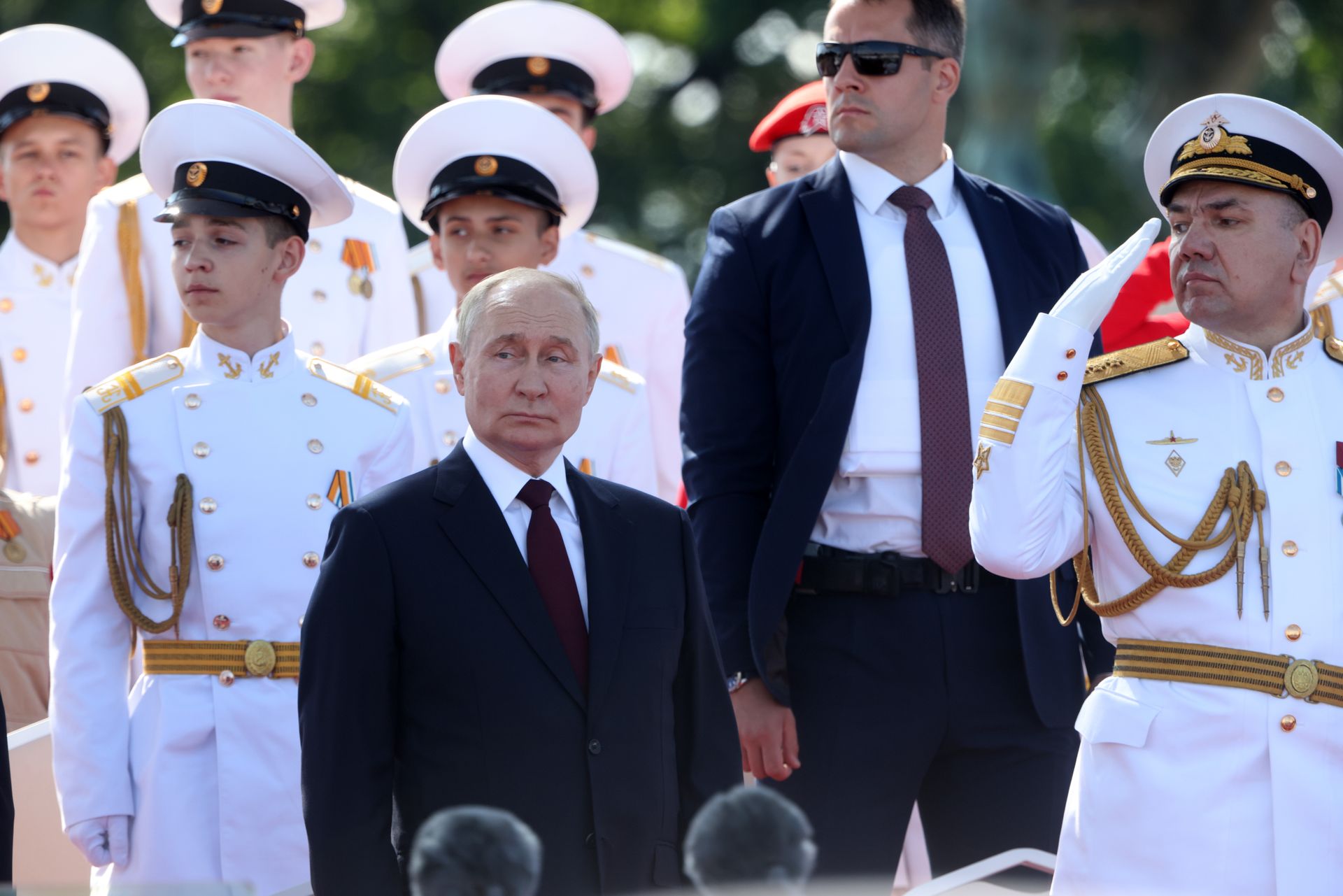
Russia canceled its annual Navy Day parade in St. Petersburg for the first time since 2017, citing security concerns amid a wave of drone attacks that reportedly saw nearly 100 drones downed across western Russia. These incursions disrupted operations at key airports like Pulkovo, delayed train services, and damaged infrastructure, underscoring escalating security challenges and operational risks within the country. The incident highlights a growing trend of drone activity impacting Russian territory.
Russia's cancellation of its annual Navy Day parade in St. Petersburg for the first time since 2017, explicitly due to security concerns, marks a significant escalation in the perceived threat level within its domestic borders. This decision was precipitated by a large-scale drone incursion, with the Russian Defense Ministry claiming to have intercepted or destroyed 99 drones across numerous western regions. The attack created tangible operational disruptions, most notably affecting critical transportation infrastructure. At least 70 flights were delayed at major airports like Pulkovo in St. Petersburg, while damage to a railway's power supply system in Volgograd Oblast delayed train services for over two hours. The breadth of the attack, targeting regions from Bryansk to the Black Sea coast, demonstrates an increasing capability to penetrate Russian air defenses, elevating operational risks for assets and supply chains in western Russia. The UK Defense Ministry's assessment that the cancellation was for "force protection concerns" corroborates the severity of the situation, shifting the conflict's impact from the front lines to Russia's key economic and logistical hubs.
AI-powered research, real-time alerts, and portfolio analytics for institutional investors.
Overall Sentiment
strongly negative
Sentiment Score
-0.70
