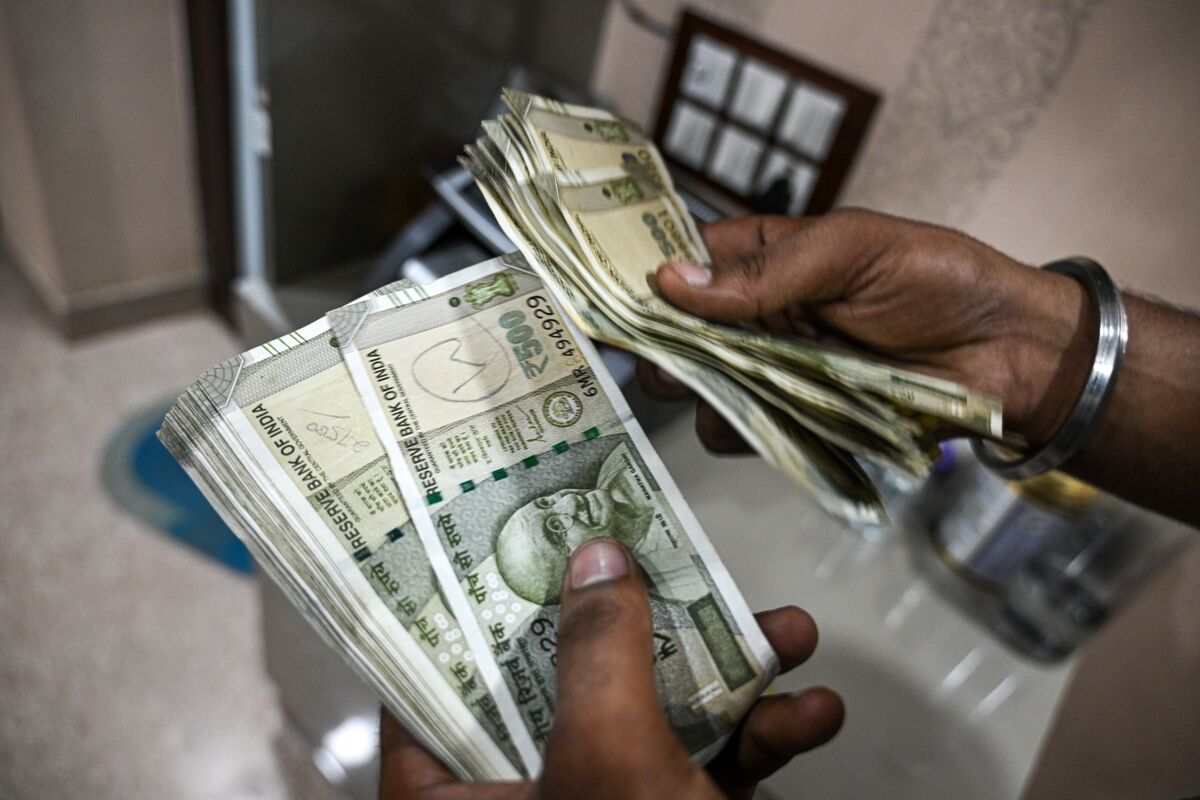
Foreign banks are increasingly pursuing rupee-denominated deals as offshore debt issuance slows, signaling a shift in demand toward local-currency instruments. The trend could bolster rupee liquidity and support onshore bond markets while constraining offshore debt channels and cross-border issuance, warranting close monitoring of FX flows and Indian fixed-income supply dynamics.
Market structure: Foreign banks stepping into rupee-denominated deals as offshore USD issuance slows benefits onshore primary and secondary INR markets, local banks (HDFC Bank HDB, ICICI IBN) and EM local-rate desks who capture fees and carry. Expect short-end INR yields to compress first — roughly 10–30bps over 1–3 months if flows persist — while offshore underwriters of USD paper lose market share and fee pools.
Risk assessment: Key tail risks are sudden RBI intervention (capital control or FX selling) or a US-rate shock that reverses flows and weakens INR >4–6% in days; both would flip winners to losers. Immediate horizon (days): volatile FX moves; short-term (weeks–months): onshore curve repricing; long-term (quarters): potential structural shift toward domestic funding if offshore issuance remains muted.
Trade implications: Tactical opportunities include short USD/INR 3-month NDFs (target 2–3% INR appreciation, stop-loss 3% adverse move) and overweighting Indian bank equities (HDB, IBN) +2–4% portfolio weight for 3–6 months to capture fee and trading upside. Allocate small duration to local-currency sovereigns via LEMB (or direct 2–5yr INR govts) to capture 10–30bps yield compression; trim on >30bps rally or RBI intervention.
Contrarian angles: Consensus treats this as flow-driven and temporary — but if offshore issuance stays down for 6–12 months it becomes structural, benefiting domestic credit and banking margins; conversely, the trade is underpriced for a Fed-driven reversal (2013 “taper tantrum” analogue) which could trigger rapid unwind and 5–8% INR depreciation, hurting exporters and long-INR positions.
AI-powered research, real-time alerts, and portfolio analytics for institutional investors.
Overall Sentiment
neutral
Sentiment Score
0.10
