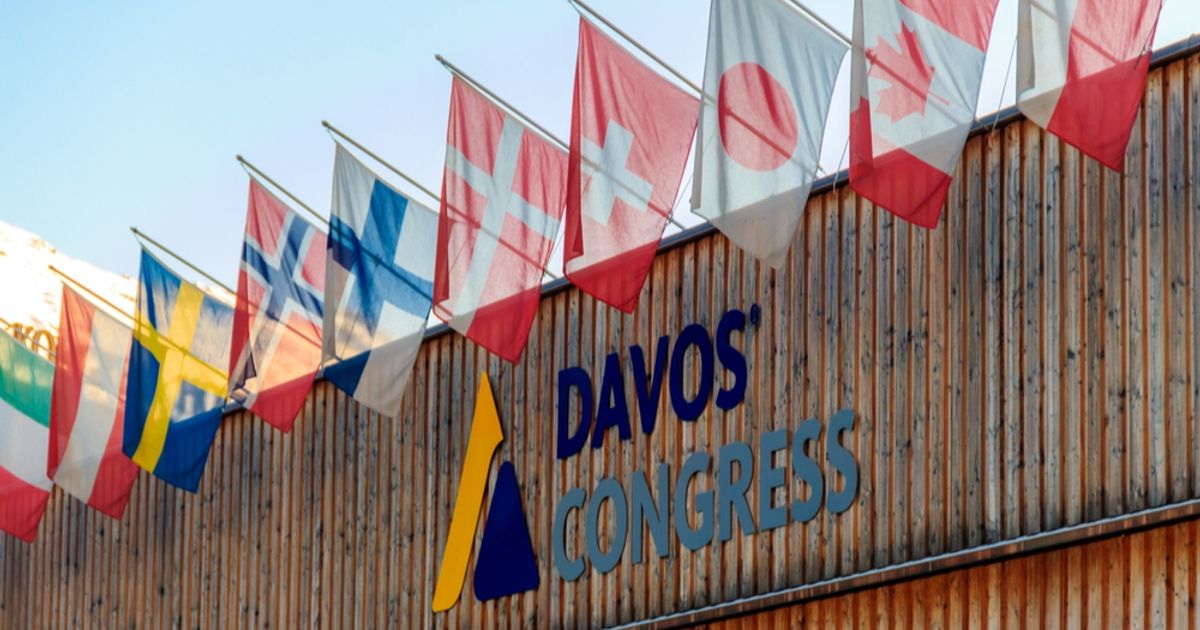
Wedbush analyst Dan Ives reports Davos conversations are dominated by AI investment, adoption and monetization, with Nvidia seen as the central engine powering demand from hyperscalers (Microsoft, Amazon, Alphabet) and Palantir cited as a standout beneficiary in the AI monetization phase. Ives projects roughly $3 trillion in AI-related spending over the next three years (with more than $550 billion of capex already underway), expects a strong Q4 earnings season led by Big Tech and anticipates further capex acceleration into 2026, while noting geopolitical and tariff concerns remain secondary.
Winners are hyperscalers (MSFT, AMZN, GOOG), Nvidia (NVDA) and software monetizers like Palantir (PLTR) as AI demand reallocates spend to GPUs, cloud services and AI-enabled software; losers include legacy CPU-centric suppliers and on-premise services lacking accelerator roadmaps. Expect sustained pricing power for datacenter GPUs over 6–18 months as capacity (fab + packaging + datacenter power) lags demand; secondary market and OEM lead-times will keep gross margins elevated for GPU vendors and cloud providers.
This rotation implies tighter supply/demand in semiconductors and higher capex financing needs for tech (directional increase in IG issuance and corporate borrowing demand), pressure on power/commodity chains (copper, power), and higher equity vols in semis/options with asymmetric upside around earnings. FX: risk-on flow with US tech leadership will likely lean towards a firmer USD in the next 3–12 months, compressing foreign-currency earnings for non-US exposed winners.
Tail risks: US/ALLIED export controls or AI-specific regulation (model controls, training-data laws) could shave 20–40% off near-term TAM in targeted segments; a chip fabrication disruption (single-source failure at TSMC) is another low-probability, high-impact risk. Near-term catalyst set: Q4 earnings over the next 4–8 weeks (validation point), Blackwell/next-gen silicon launches (6–12 months), and any government subsidy/regulation announcements in 3–9 months.
Trade implications: establish concentrated, time-boxed exposures—prefer equities for multi-quarter capture and options for event risk. Be prepared to trim winners post-earnings (>+30% moves) and hedge long-semiconductor exposure with short exposure to incumbents (CPU-centric) or buy protective puts if volatility compresses. Consensus is underestimating execution & energy constraints; conversely, it may be overestimating immediate addressable spend from smaller enterprises—avoid indiscriminate theme-levered longs without revenue traction.
AI-powered research, real-time alerts, and portfolio analytics for institutional investors.
Request DemoOverall Sentiment
moderately positive
Sentiment Score
0.60
Ticker Sentiment
