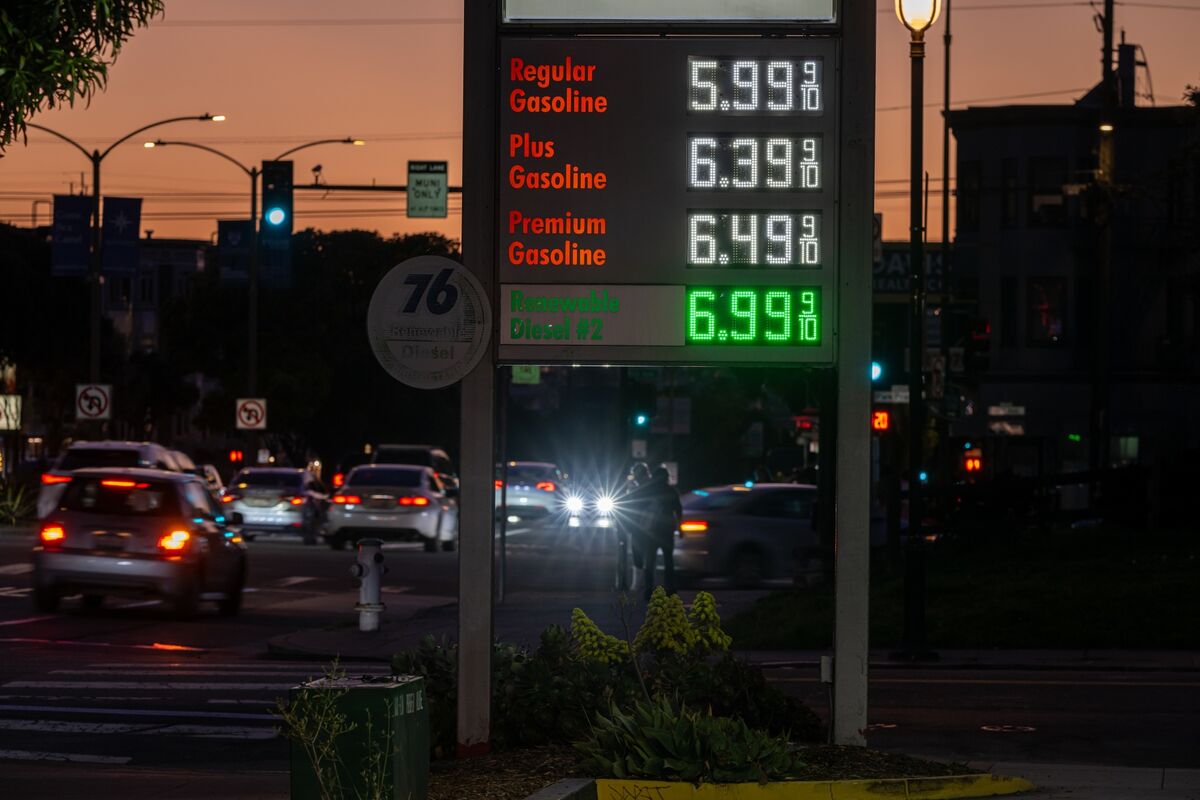
California diesel hit a record average of $7.018/gal, narrowly topping the prior high of $7.012 in June 2022. The spike is attributed to limited in-state refining capacity and disrupted global shipments due to the war in Iran. Higher diesel costs will pressure trucking and logistics margins and add upside risk to local inflation and transportation-sensitive sectors.
Regional refining bottlenecks on the West Coast are creating a durable dispersion between local diesel prices and national benchmarks, which favors assets that either widen margins through physical or regulatory arbitrage (renewable diesel producers, LCFS/RIN generators) or can quickly re-route product flows (marine importers, logistics hubs). The asymmetry is structural: each $10/bbl swing in the diesel crack implies roughly $0.20–$0.40/gal at the pump in tight markets, meaning refiners and biofuel converters capture meaningful incremental EBITDA while transport operators face margin erosion unless fully hedged.
In the near term (days–months) the market is exposed to classic catalysts: geopolitical flare-ups in the Middle East, unplanned refinery outages, and seasonal diesel demand cycles; these can cause rapid moves in spreads and credit prices. Medium-term (3–18 months) the bigger drivers are capital flows into renewable diesel conversions and changes in California credit markets (LCFS/RIN liquidity), which can permanently reallocate margin pools. Tail risks include a coordinated SPR release or regulatory interventions that cap retail prices — both would compress regional cracks quickly.
Actionable positioning should therefore separate exposure to physical diesel price moves from structural winners of the dislocation. Tradeable asymmetries: short-duration plays on diesel futures or crack spreads for immediate mean reversion; longer-duration exposure to renewable fuel producers and LCFS beneficiaries for capture of regulatory rent; and defensive shorts of financially weaker local carriers that lack fuel-surcharge pass-throughs. Monitor RIN/LCFS prices and refinery turnaround schedules as early-warning indicators for both entry and stop decisions.
Contrarian view: much of the headline risk is already priced into spot regional premiums and biofuel equities — the real upside compression risk is operational (spring refinery maintenance) rather than purely geopolitical. If maintenance and SPR dynamics align, expect a sharp mean-reversion over 4–8 weeks; conversely, absent those fixes, capex shifts toward renewables will lock in a structurally higher baseline for biofuel makers over 12–24 months.
AI-powered research, real-time alerts, and portfolio analytics for institutional investors.
Request DemoOverall Sentiment
mildly negative
Sentiment Score
-0.30
