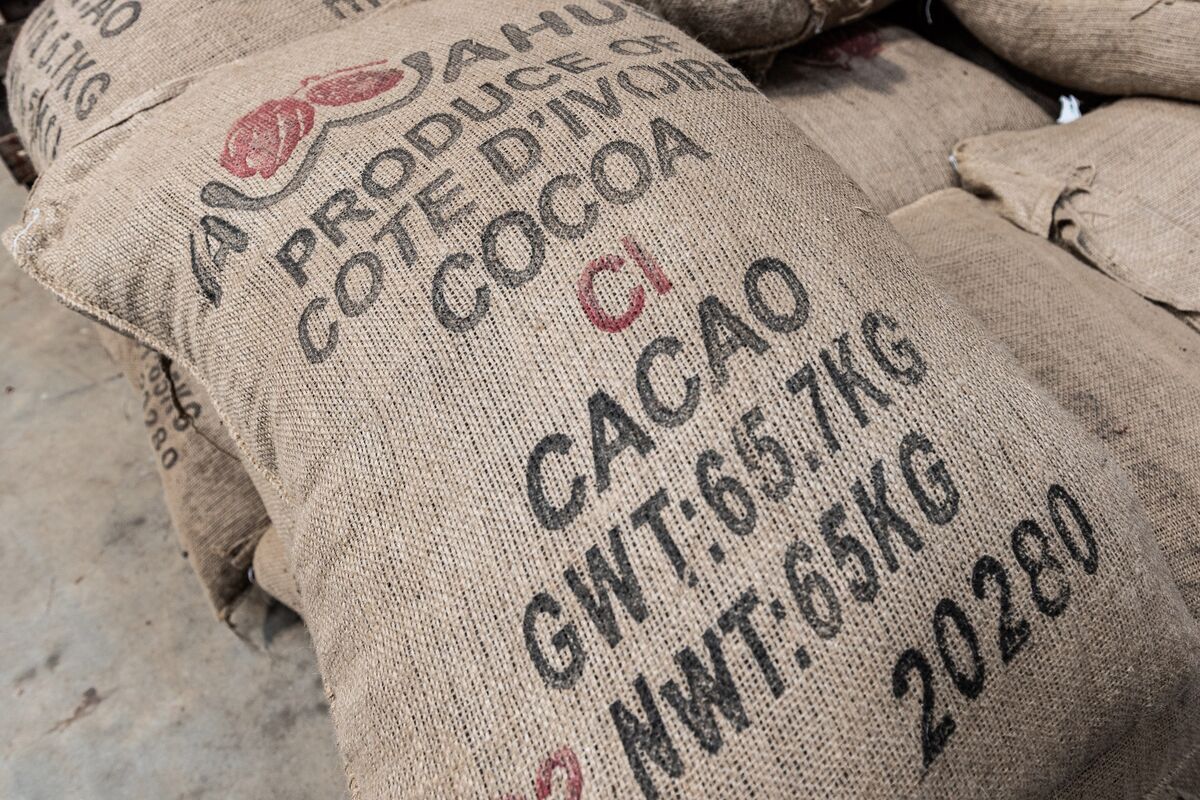
West Africa, the world's leading cocoa producing region, faces another weak harvest, with Ivory Coast projected at 1.4 million tons and Ghana at a grim 620,000 tons, primarily due to structural issues like aging trees, disease, and underinvestment. This outlook suggests global cocoa supply will remain tight, with the stocks-to-use ratio near its lowest since 1981. Consequently, cocoa prices are expected to stay significantly elevated, with JPMorgan and Citi forecasting over $6,000-$7,000 per ton—more than double the long-term norm—as a significant recovery is not anticipated, potentially threatening West Africa's market dominance.
West Africa's cocoa sector is poised for another weak harvest, reinforcing a structurally tight global supply outlook. Projections for the main crop in Ivory Coast are stagnant at 1.4 million tons, while Ghana's output is expected to be a grim 620,000 tons. The persistence of these low yields is attributed not just to weather but to systemic issues like aging trees, crop diseases, and chronic underinvestment, leading analysts at Rabobank to suggest a year-on-year decline in the combined production potential of these top two producers. This supply constraint is reflected in the stocks-to-use ratio, which is near its lowest level since 1981, and in below-average US inventories. Consequently, despite cocoa futures falling 40% from their recent peak, prices are expected to remain elevated. JPMorgan forecasts prices above $6,000 per ton and Citi expects $7,000 in the next year, more than double the long-term norm, signaling a 'higher for longer' price environment. While Cameroon offers a rare bright spot with a projected 12% production increase, the broader regional trend, including an 11% expected decline in Nigeria, threatens West Africa's long-term market dominance as producers like Ecuador expand.
AI-powered research, real-time alerts, and portfolio analytics for institutional investors.
Overall Sentiment
strongly negative
Sentiment Score
-0.70
Ticker Sentiment
