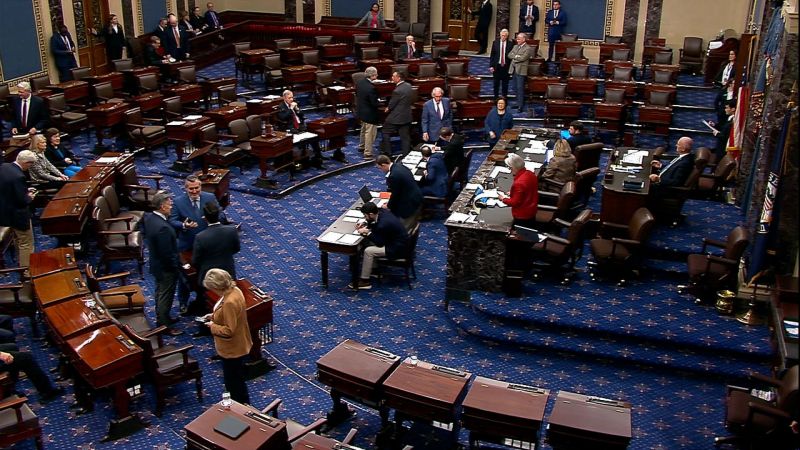
The Senate has advanced a federal funding measure with bipartisan support, signaling a potential end to the government shutdown this week. The bill, which would fund the government until January 30 and some agencies through FY2026, still requires passage in the House, where Speaker Johnson faces challenges securing votes amid Democratic opposition to the exclusion of extended Affordable Care Act subsidies. Key provisions include appropriations for military construction, veterans affairs, and agriculture, alongside a commitment to compensate federal workers for the shutdown period, reflecting a political compromise to restore government operations.
The Senate's bipartisan advancement of a federal funding measure, with eight Democrats joining Republicans, marks a critical step towards resolving the government shutdown, signaling progress in fiscal policy. This proposed bill aims to fund the government until January 30 and secure key agencies, such as SNAP, through fiscal year 2026, offering a degree of short-term stability.
However, the legislative path through the House presents significant hurdles. Speaker Mike Johnson faces the challenge of securing passage with a razor-thin majority, compounded by House Minority Leader Hakeem Jeffries' opposition due to the exclusion of extended Affordable Care Act subsidies. This highlights persistent political divisions despite the bipartisan Senate vote.
Despite these political complexities, GOP leaders express optimism regarding the bill's passage in the House, anticipating some Democratic support. The deal includes provisions for military construction, veterans affairs, and legislative branch security, alongside an agreement to compensate federal workers for the shutdown period, reflecting a compromise to restore government operations. The overall sentiment is moderately positive, yet the tone remains uncertain given the House's upcoming vote.
AI-powered research, real-time alerts, and portfolio analytics for institutional investors.
Overall Sentiment
moderately positive
Sentiment Score
0.40
