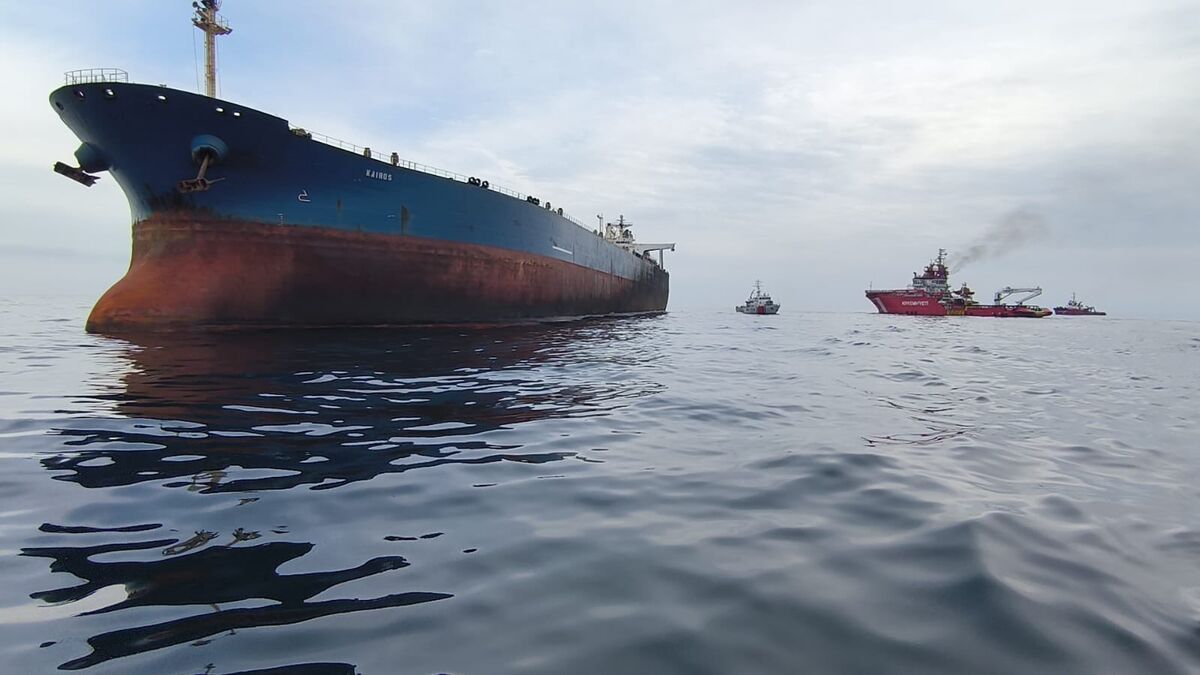
Insurance premiums for ships calling at Russian Black Sea ports have surged roughly 250% following a series of Ukrainian attacks on vessels linked to Moscow, with Marsh reporting coverage costs have jumped more than threefold. Prior to the incidents, rates were about 0.25–0.3% of a vessel’s value; the spike increases voyage costs, raises insurer and shipowner exposure, and could push up freight rates and risk premia for firms operating in the region.
Market structure: War-risk insurance rising ~3–4x from prior 0.25–0.30% implies war-premiums now roughly 0.75–1.0% of ship value, immediately transferring $0.5m–$1m+ of annual voyage cost per $100m vessel to charterers/cargo owners. Winners: brokers (MMC) and reinsurers who can reprice risk; losers: bulk shippers, commodity exporters from Black Sea, and any logistics-sensitive EM exporters facing higher voyage costs. Pricing power will shift to insurers/reinsurers in the near term as capacity tightens and underwriters refuse low-rate cover.
Risk assessment: Tail risks include escalation that closes Black Sea ports (weeks) or expanded targeting of neutral shipping (months), which could spike grain and energy prices >10–20% and force wide rerouting. Immediate (days) effect: higher insurance premia and selective port avoidance; short-term (weeks–months): freight-rate increases, inventory/disruption in grains; long-term (quarters): durable rerouting contracts and permanent higher insurance cycles if market hardens. Hidden dependency: re-routing increases bunker fuel burn and voyage times, propagating into higher freight and CPI for food/energy.
Trade implications: Direct plays favor brokers/reinsurers (MMC, SREN) and agricultural exporters/fertilizer makers (ADM, BG, MOS) for 3–12 month exposure; grain futures (ZW) offer more direct leverage for 1–3 month price moves. Options: use defined-risk call spreads on wheat (3-month ATM buy / +5% sell) and on MOS/CF to limit capital at risk while capturing spikes. Monitor insurance market announcements and chartering flows weekly; act within 1–4 weeks to catch repricing.
Contrarian angles: Consensus may overpay for permanent premium elevation — if hostilities are contained, premiums can mean-revert within 3–6 months as capacity returns, creating short opportunities in insurer names that rally on temporary pricing. Historical parallels (2014 Crimea, limited duration spikes) show rapid reversion once naval risks recede; consider selling rallies in pure-play insurer/reinsurer names after 15–25% run-up. Unintended consequence: government-backed cargo insurance or subsidy programs could cap long-term pricing power for private insurers.
AI-powered research, real-time alerts, and portfolio analytics for institutional investors.
Request DemoOverall Sentiment
moderately negative
Sentiment Score
-0.40
