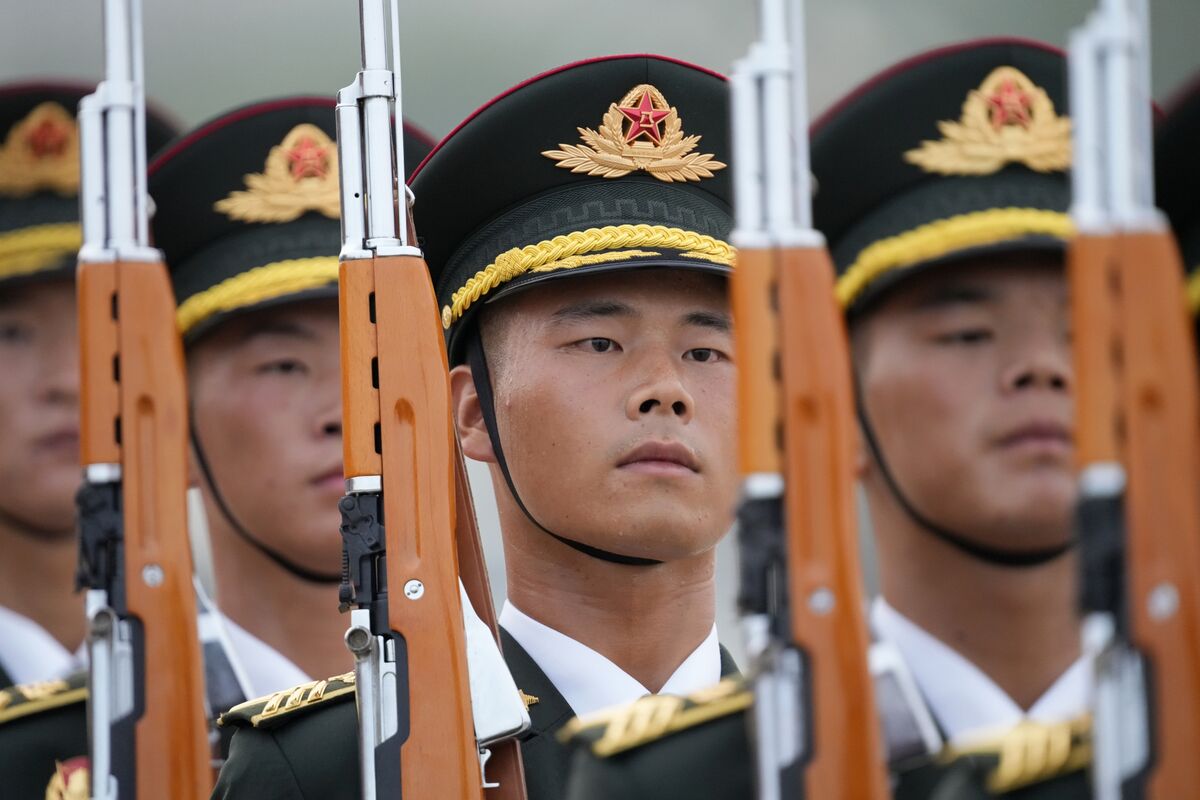
Chinese President Xi Jinping's upcoming military parade hosting Russian President Vladimir Putin and North Korean leader Kim Jong Un follows a significant summit with Central and South Asian leaders, including Putin and Indian Prime Minister Narendra Modi, under the Shanghai Cooperation Organisation (SCO). This series of engagements underscores the strengthening of a China- and Russia-led non-Western security and economic bloc, explicitly positioning itself as an alternative to traditional alliances and challenging the US-led global order.
A significant geopolitical realignment is being demonstrated through a series of high-profile events led by China's President Xi Jinping. The upcoming military parade, featuring Russian President Vladimir Putin and North Korean leader Kim Jong Un, serves as a powerful display of military and political solidarity. This event follows a Shanghai Cooperation Organisation (SCO) summit, which explicitly frames the Eurasian security group as a 'non-Western style of partnership' and an alternative to traditional US-led alliances. The visible strengthening of ties between Xi, Putin, and Indian Prime Minister Narendra Modi projects the formation of an 'emerging order' intended to challenge the existing global framework. The personal rapport highlighted by Modi and Putin's extended meeting further underscores the cohesion of this bloc, which consolidates key players in Central and South Asia around a China-Russia axis, carrying significant implications for global security and defense dynamics.
AI-powered research, real-time alerts, and portfolio analytics for institutional investors.
Request DemoOverall Sentiment
neutral
Sentiment Score
0.00
