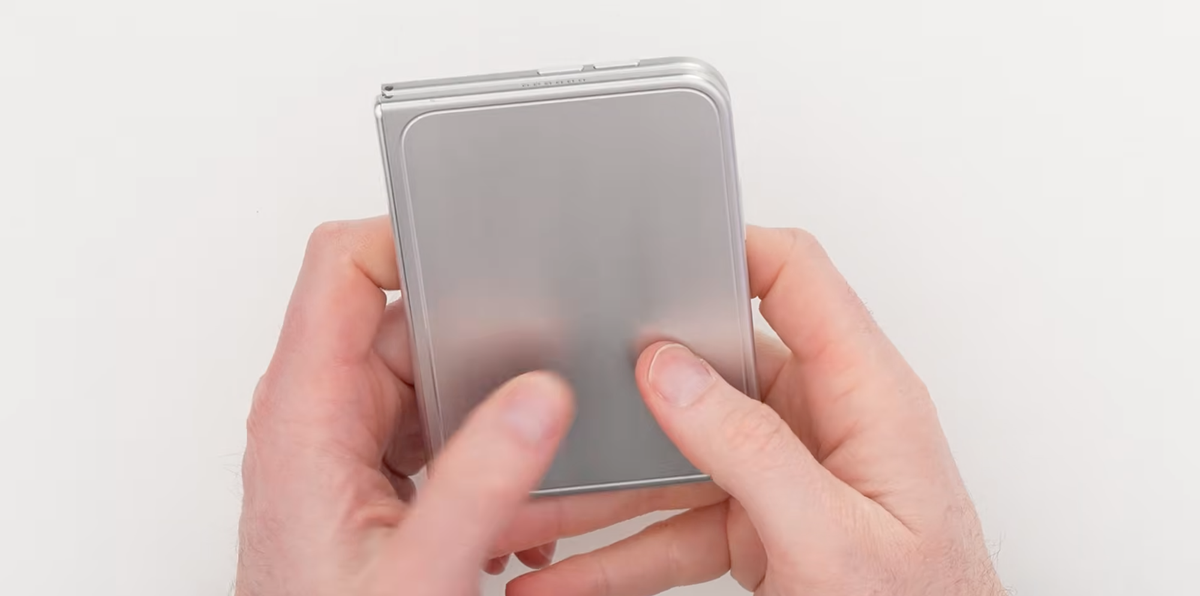
The article is broadly constructive on Apple's rumored iPhone Ultra/Fold, arguing the folded form factor could improve thumb-typing and make the device a more practical productivity tool. It highlights potential benefits from the wider body, while flagging risks around the hinge, crease, and oversized camera bump. The piece is speculative commentary rather than hard news, so near-term market impact should be limited.
This is less about a near-term handset cycle and more about a form-factor reset that could re-open a premium upgrade cohort. A foldable iPhone that materially improves one-handed typing and pocketability would attack the biggest behavioral objection to larger phones: ergonomic fatigue, not screen size. If Apple makes the folded state genuinely useful, it can create a new “default carry” device that pulls more hours of engagement without needing a full-screen interaction every time. The second-order winner is likely Apple’s services stack, not just hardware ASPs. A device that is simultaneously a pocket computer and mini-tablet should increase time spent in messaging, content, payments, and AI-assisted workflows, which raises monetization per user even if unit volumes are modest. The supply chain implication is that hinge, ultra-thin glass, adhesive, and advanced assembly vendors become more strategically important; any evidence of yield stabilization could matter more than launch volume because gross margin sensitivity on first-gen foldables is extreme. The contrarian miss is that the market may be over-optimizing the novelty and underpricing execution drag. First-gen foldables typically invite warranty, crease, camera-bump, and case-ecosystem friction, which can suppress true replacement demand for 12-18 months even if preorder interest is strong. For BlackBerry, the symbolic comparison is negative: if Apple’s folded-state productivity story lands, it structurally compresses the old “keyboard advantage” narrative; if it fails, BB remains a brand relic with no pathway to re-monetization. MSFT is a softer loser here only if this becomes a default mobile productivity surface that displaces some light Office/Copilot usage from laptops to iPhone. The bigger risk to Microsoft is not share loss, but that Apple controls the UX layer where mobile AI assistance and voice-to-text default behaviors are set. That would shift discovery and workflow ownership away from cross-platform apps toward Apple-native surfaces over a multi-year horizon.
AI-powered research, real-time alerts, and portfolio analytics for institutional investors.
Overall Sentiment
mildly positive
Sentiment Score
0.25
Ticker Sentiment
