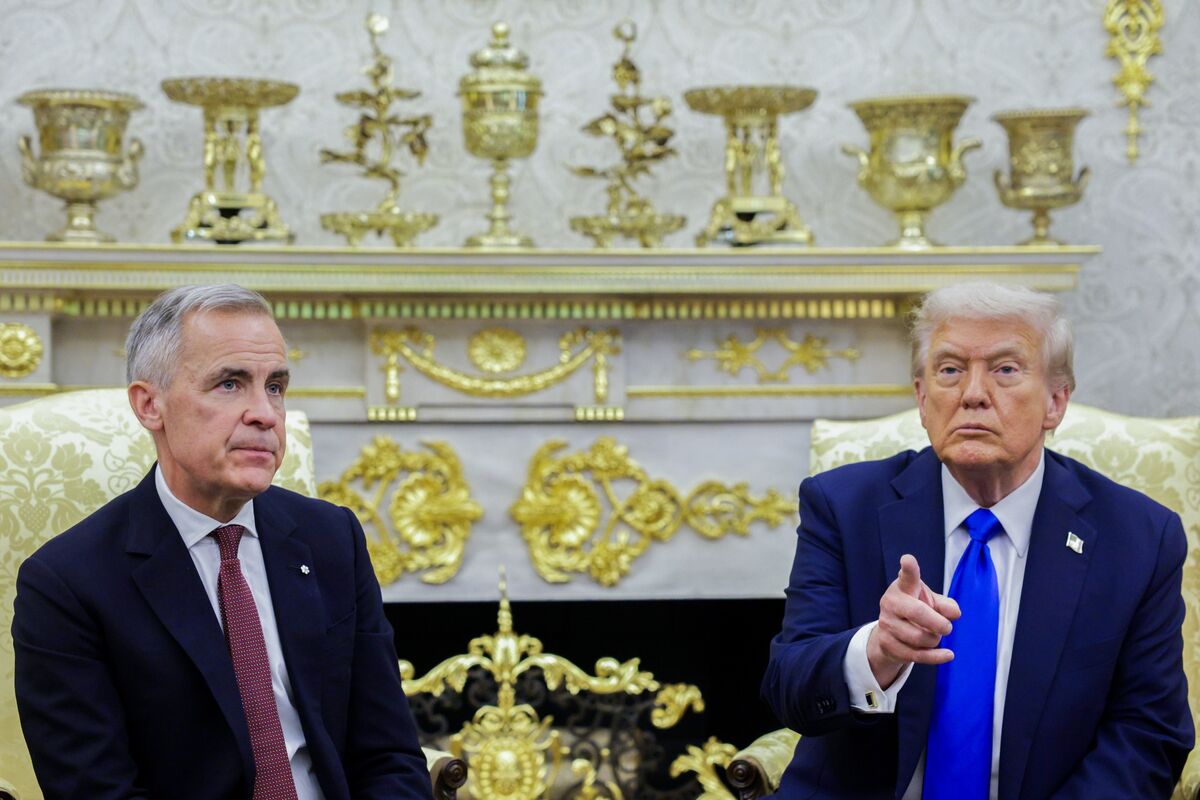
Seven months after winning a national election on a platform of repairing Canada’s relationship with the U.S., Mark Carney faces a fragile domestic economy and has been unable to secure a trade truce with the Trump administration. Ongoing U.S.-Canada trade tensions and policy uncertainty increase downside risks for trade-sensitive sectors and could damp growth and investor appetite for Canadian assets absent a clearer diplomatic or tariff resolution.
Market structure: A protracted Canada–US trade standoff favors US domestic manufacturers, Mexican nearshoring beneficiaries and logistics providers while disadvantaging Canada’s export heavy sectors (energy, pipelines, autos). Expect upward pressure on USDCAD (1–6% range) and 20–50bp widening in 2–10y Canadian sovereign spreads if tariffs or border frictions persist over 1–6 months. Commodity impact will be mixed: oil exposure (CNQ/ SU /TRP) is idiosyncratic to global supply; auto parts and agri exports are most directly at risk.
Risk assessment: Tail risks include punitive tariffs or border taxes (low probability <10%) that could knock 10–20% off TSX export names and push CAD 7–12% weaker in 1–3 months; a negotiated truce would reverse much of this. Immediate (days) risk is headline-driven 2–5% equity/FX swings; short-term (weeks–months) is tariff implementation and supply-chain re-routing costs; long-term (quarters–years) is structural nearshoring altering capital expenditure patterns. Hidden dependencies: US consumer demand, auto JIT supply chains, and energy pipeline chokepoints amplify second-order shocks.
Trade implications: Tactical plays: underweight EWC (iShares MSCI Canada) and Canadian energy/autos (TRP.TO, SU.TO, MGA/MGA US) while overweight US industrials (XLI) and Mexican manufacturing (EWW) as nearshoring beneficiaries. Use USD/CAD exposure to express conviction—target a 3–5% FX move over 3–6 months. Options: prefer defined-risk put spreads on Canadian ETFs and 3–6 month call spreads on XLI/CAT to capture asymmetric payoff amid rising policy uncertainty.
Contrarian angles: Consensus may overstate permanent damage — past US tariff episodes (2018) produced 6–12% sector moves then mean-reverted within 6–12 months; Canada could respond with fiscal stimulus that cushions domestic cyclicals. Mispricings: EWC may be oversold relative to global energy cyclicals; use options to sell premium into headline volatility rather than naked directional exposure. Unintended consequence: aggressive protection raises US input costs and could compress US industrial margins, limiting upside for some winners.
AI-powered research, real-time alerts, and portfolio analytics for institutional investors.
Request DemoOverall Sentiment
moderately negative
Sentiment Score
-0.40
