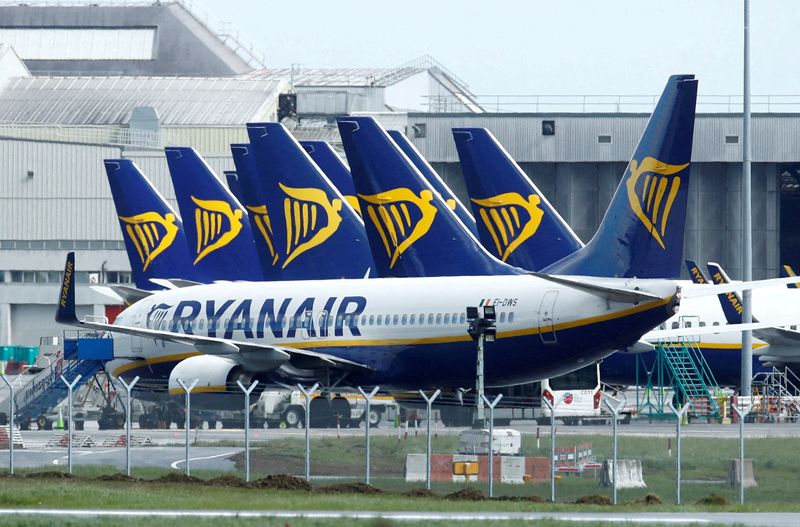
Ryanair delivered a record FY26 pre-exceptional profit after tax of €2.26 billion, up 40% year over year, on revenue growth of 11% to €15.54 billion and passenger volumes up 4% to 208.4 million. The company also returned capital via a €0.195 final dividend and €536 million of buybacks, while ending the year with €2.10 billion of net cash and effectively no debt after repaying its last €1.20 billion bond. Management declined full-year FY27 guidance due to Middle East conflict, fuel volatility and weak booking visibility, noting 80% fuel hedged at about $67 per barrel but warning the unhedged 20% could hurt costs if spot prices stay elevated.
Ryanair is signaling a rare setup where balance-sheet strength and capacity growth can coexist, which usually matters more for equities than the headline profit print. The key second-order effect is that the airline can keep pressing fares and buybacks while smaller European carriers face the same fuel shock without the same hedge depth or net-cash flexibility; that should widen market-share dispersion over the next 2-3 quarters rather than merely move sector multiples together.
The bigger near-term risk is not demand collapse but earnings convexity from the unhedged slice of fuel combined with booking opacity. If spot jet fuel remains elevated into the summer peak, the market will start discounting FY27 margin erosion well before the full-year numbers show up, because aviation equities rerate on forward yield visibility, not trailing profit. That creates a window where the stock can underperform on “good” results if management continues to withhold guidance and close-in bookings stay soft.
On the Boeing angle, Ryanair’s fleet growth and MAX-10 timing are a quiet read-through for supply-chain normalization, but not a clean winner for BA yet. Any certification slippage would mostly hit Ryanair through capacity timing and capital efficiency, while BA gets only limited upside from a small first tranche of deliveries; the market is likely underestimating how much of the 2027 capacity plan is contingent on OEM execution rather than demand.
The contrarian view is that the market may be over-focusing on headline fuel stress and underappreciating the embedded hedge and liquidity profile. With net cash and ongoing capital returns, Ryanair can absorb a temporary cost spike and still compound equity value, while weaker competitors may be forced into price discipline or capacity cuts. If that plays out, the eventual winner is not the airline with the best near-term guidance, but the one most willing to use balance-sheet optionality to take share during volatility.
AI-powered research, real-time alerts, and portfolio analytics for institutional investors.
Request DemoOverall Sentiment
mildly positive
Sentiment Score
0.35
Ticker Sentiment
