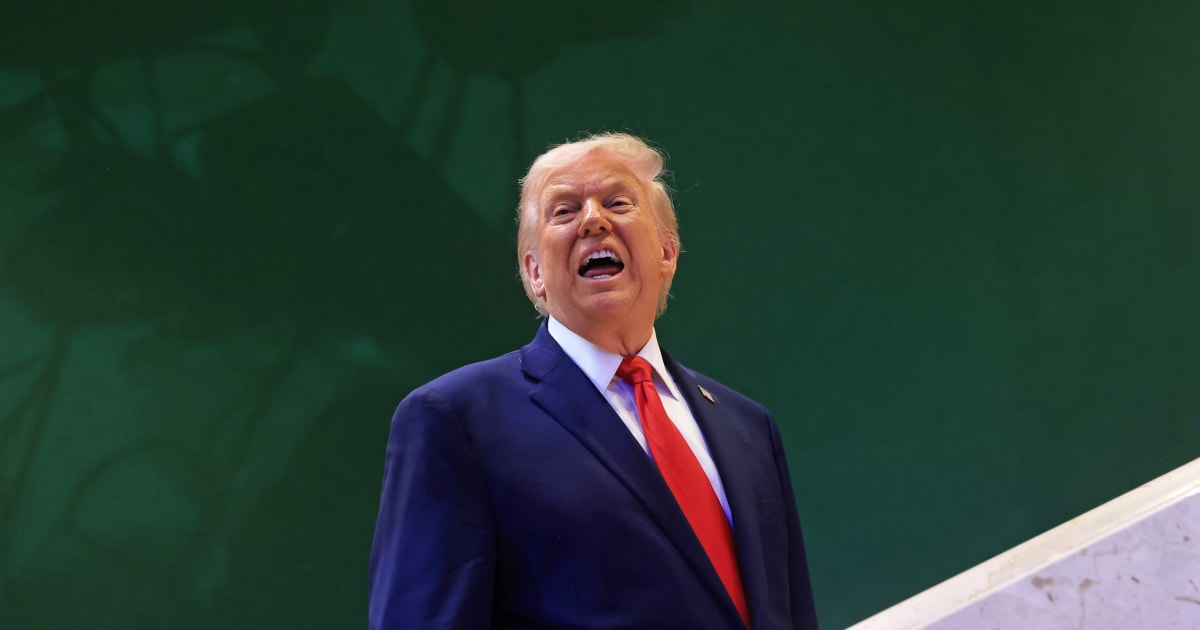
President Trump announced a “framework of a future deal” on Greenland after talks with NATO Secretary General Mark Rutte and halted proposed tariffs against eight European countries that had opposed his annexation plan, while claiming the U.S. will secure extensive military access. Reporting indicates the talks may include U.S. sovereignty over small pockets for bases—analogized to U.K. bases in Cyprus—though details remain unclear and Denmark maintains sovereignty as a red line. The announcement reduces immediate risk of a transatlantic trade war or military confrontation but leaves prolonged geopolitical uncertainty and potential long-term NATO strain.
Market Structure: U.S. defense primes (Lockheed Martin LMT, Raytheon/RTX, Northrop NOC, General Dynamics GD) are primary beneficiaries from any U.S. access to Greenland—expect incremental contract wins for Arctic-capable ISR, air-defense and base-construction packages worth low- to mid-hundreds of millions initially and potentially >$1bn over 3–5 years. Miners of rare earths and strategic minerals (MP Materials MP, Lynas LYC) and heavy-equipment providers (CAT) are secondary beneficiaries as long-term Arctic logistics and extraction economics improve. European exporters and diplomacy-sensitive sectors (large Danish contractors) face reputational and short-term trade risk if tensions re-escalate.
Risk Assessment: Tail risks include NATO rupture or punitive EU tariffs (low-probability but high-impact) and domestic Greenland/Denmark legal blocks that could delay projects by years; price action would be largest in equities (20–30% swings) and niche miners. Time windows: immediate (days) — muted; short-term (1–3 months) — volatility around formal agreements and Pentagon funding announcements; long-term (1–5 years) — realization of base construction, permitting, and mining revenues. Hidden dependencies include Greenland domestic politics, environmental litigation, and Chinese rare-earth counterstrategies.
Trade Implications: Direct plays: overweight large U.S. primes (LMT/RTX 3–4% combined) for 3–12 months and select rare-earth exposure (MP 1–2% for 12–36 months). Options: buy 6-month 15–25% OTM call spreads on RTX/LMT sized to 1–2% max portfolio risk to lever positive deal clarity. Pair trades: long RTX (1.5%) vs short BAE Systems ADR BAESY (1.5%) to express U.S.-centric capture of Arctic defense spend. Rotate out of EU exporters into U.S. defense on any funding confirmation.
Contrarian Angles: Consensus underestimates implementation frictions — mining and base sovereignty have multi-year political/legal timelines, so near-term enthusiasm is likely overdone; prices for specialist Arctic contractors and juniors may be cheap but illiquid and binary. Historical parallels: U.S. base negotiations (e.g., Diego Garcia/Cyprus) show multi-year bargaining with intermittent funding spikes; unintended consequences include higher capex and margin pressure for contractors and protracted litigation that favors larger primes with balance-sheet resilience.
AI-powered research, real-time alerts, and portfolio analytics for institutional investors.
Request DemoOverall Sentiment
neutral
Sentiment Score
0.08
Ticker Sentiment
