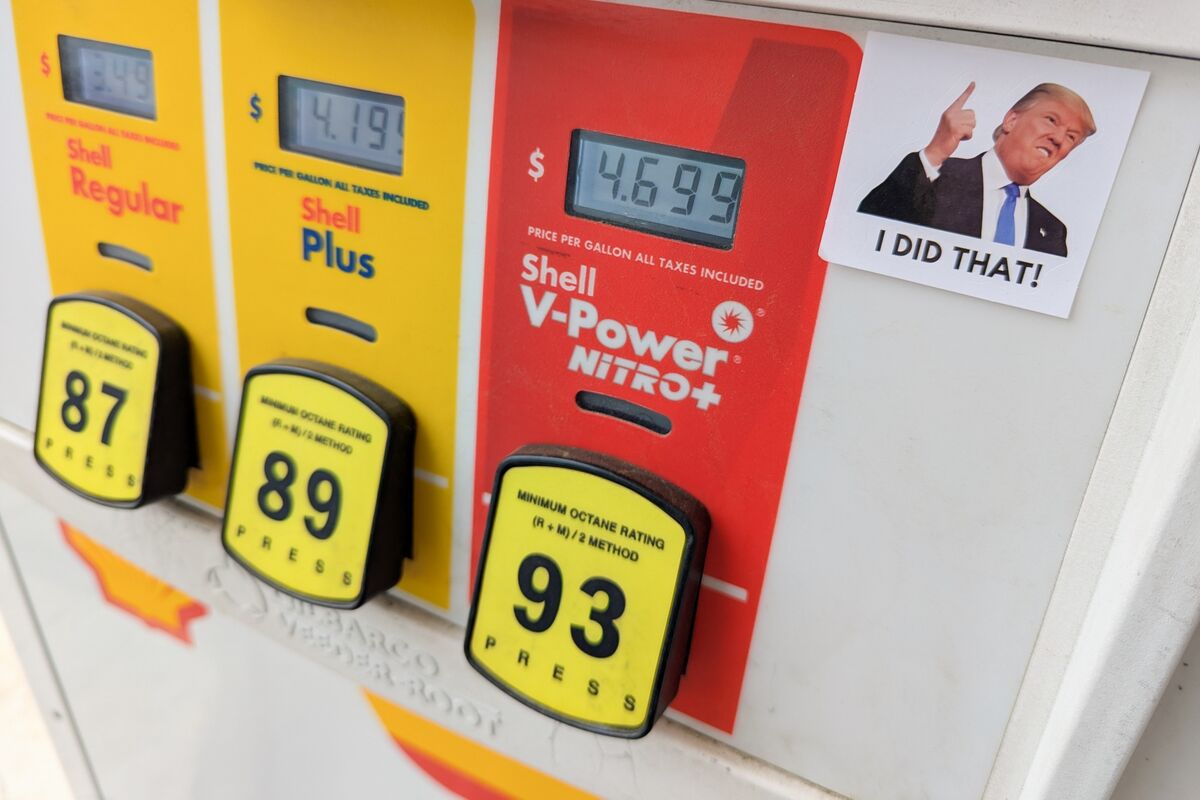
US retail gasoline hit $4.00 per gallon, a level last seen in 2022, with the article attributing the move to disruptions tied to the Iran war. The price milestone is raising consumer alarm and increasing political pressure on President Trump over cost-of-living and inflationary risks. Expect weaker fuel demand elasticity and potential negative effects on consumer sentiment and politically sensitive spending ahead of elections.
Immediate beneficiaries are refiners and US onshore producers that can capture near-term crack widening and incremental oil margin; expect refiners' RBOB/ULSD cracks to trade volatilely over the next 30–90 days and to add material free cash flow if sustained (think tens of dollars/bo bl for a large complex). Freight & insurance markets are a second-order winner for specialized energy service providers (LNG/clean tanker operators, insurance brokers) because rerouting and higher premia raise unit economics for those already contracted.
Key tail risks are geopolitical escalation (weeks–months) that knocks out 0.5–1.0 mb/d of seaborne supply — that outcome pushes crude +$10–$25 in months and amplifies volatility across refined product curves; a countervailing catalyst is political intervention (SPR releases, temporary waivers) ahead of the election which can blunt headline prices within 30–60 days. Demand-side reversals (economic slowdown or sustained pump-driven discretionary cutbacks) are more gradual — expect measurable retail spend impact over 2–4 quarters rather than overnight.
Consensus underestimates the election calendar as a structural volatility amplifier: the marginal probability of policy action (SPR draw, diplomatic de‑escalation or sanction adjustments) is materially higher through Q4, creating asymmetric downside for energy longs. Also overlooked is the acceleration in behavioral shifts — 3–6 month elevated pump costs materially increase urban transit ridership and EV search intent, creating durable but lumpy demand erosion for gasoline beyond the immediate price cycle.
AI-powered research, real-time alerts, and portfolio analytics for institutional investors.
Overall Sentiment
mildly negative
Sentiment Score
-0.30
