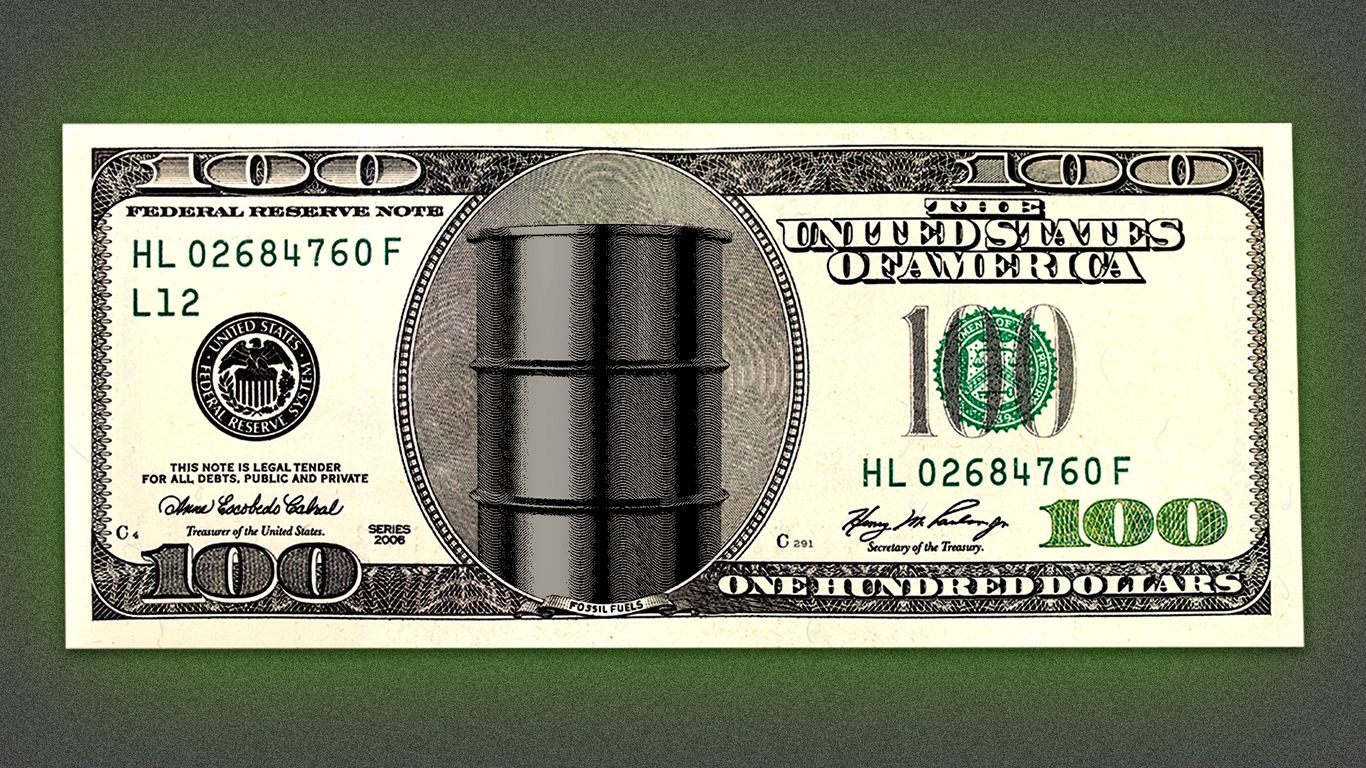
Oil could surge to $200/barrel if the Strait of Hormuz remains closed; Macquarie assigns a 40% probability of $200 if the war extends into June and Eurasia Group puts 55% odds the war lasts through May. U.S. gasoline is up ~35% since the war began, crude briefly neared $120/bbl, and roughly 20% of global oil and LNG transits the Strait, so a sustained closure would create severe supply shortfalls likely pushing prices into the $150–$200 range. Short-term buffers (oil in transit, strategic reserve releases) are fading, implying rapid price increases that could trigger demand destruction and broader economic pain similar to past energy shocks.
A large, sustained disruption to seaborne crude will move the market through three regimes over distinct time horizons: immediate weeks of volatility as in-transit barrels and SPR-like interventions are drawn down; intermediate months when cargo rerouting and higher freight/insurance materially raise delivered costs and create regional arbitrage; and longer-term quarters where demand destruction and fiscal stress in importers feed back into oil growth prospects. Expect the front-month futures to lead price discovery while the forward curve oscillates between extreme backwardation and contango as storage economics flip — that dynamic will magnify volatility and option skew, not just spot levels.
Second-order winners include owners of VLCCs and product tankers (shorter voyages mean more round-trips), energy service and fast-response US shale operators that can flex output within months, and gold/mining equities that benefit from stagflation fears. Losers extend beyond airlines to agriculture and fertilizer producers (feedstock + freight), EM sovereigns with large fuel import bills, and refiners stuck with fixed export contracts or narrow light/heavy crude crack exposures; expect cross-asset spillovers into FX (weaker importers), EM credit spreads, and food price inflation.
Key catalysts that would reverse or accelerate moves are discrete: coordinated strategic reserve releases and diplomatic de-escalation (weeks), OPEC+ marginal output response or re-routing of crude via alternate pipelines (1–3 months), and macro-led demand destruction from monetary tightening-induced recession (3–12+ months). Tail risk remains asymmetric — a quick diplomatic fix collapses premiums rapidly; sustained disruption forces structural capex shifts and durable demand response, accelerating the energy transition.
Consensus pricing currently overweights the pure-physical shock without fully accounting for demand-side elasticity and geopolitical mitigation actions. That creates opportunities in concentrated, time‑limited option structures and relative-value trades (long liquid energy producers vs short cyclical consumption names) that capture directional upside while limiting theta bleed from volatility spikes.
AI-powered research, real-time alerts, and portfolio analytics for institutional investors.
Request DemoOverall Sentiment
strongly negative
Sentiment Score
-0.75
