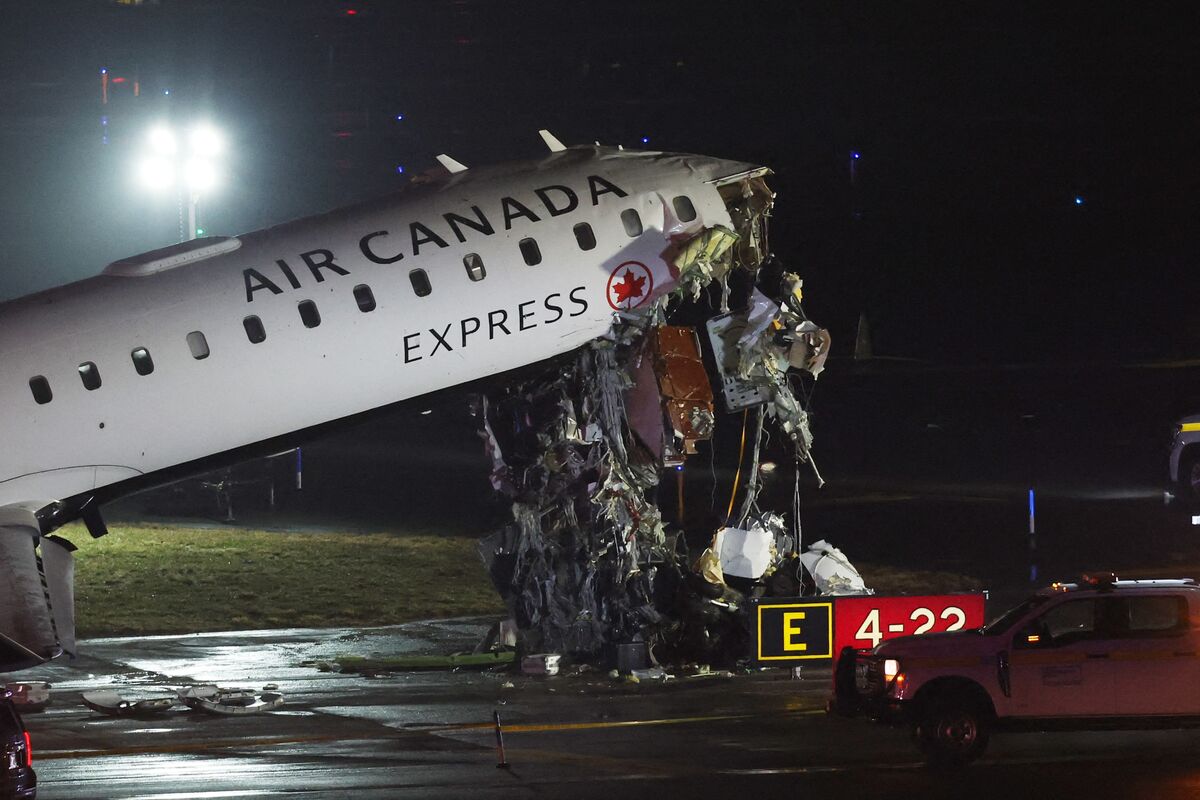
An Air Canada Express plane with 76 people aboard collided with a fire truck shortly after landing at New York’s LaGuardia Airport; NBC reported the pilot and co-pilot died. The National Transportation Safety Board is deploying a team to investigate on Monday. Expect near-term pressure on Air Canada/regional operator sentiment and potential operational disruptions at LGA while the investigation unfolds.
This event will disproportionately hit players exposed to regional/short-haul operations, airport ground services, and legacy fire/rescue equipment suppliers rather than global flag carriers. Expect a 3–6 month spike in operational audits, vehicle-and-runway access restrictions, and paperwork that will shave 50–150 bps off regional carriers’ available seat miles (ASM) through cancelled frequencies and slower turn times, while majors with denser hub networks can reallocate capacity within weeks.
Regulatory and litigation channels represent the larger multi-quarter risk: an NTSB/FAA finding that tightens runway incursion rules, vehicle certification, or crew rest/notification protocols could trigger mandated retrofits and training cycles costing hundreds of millions across US/Canadian airports over 12–36 months. Insurers and reinsurers will reprice aviation liability; a conservative scenario is a 10–20% increase in airline liability premiums concentrated on regional fleets and contractors, compressing margins.
Market reaction will bifurcate: near-term risk-off for public airline equities and airport service providers, but a second-order beneficiary set includes training/simulation vendors, safety avionics suppliers, and construction/engineering firms contracted for remediation. The consensus knee‑jerk to generalize this as a systemic demand shock is likely overstated — history shows single severe incidents depress stocks for weeks but only force structural spends that show through over quarters-to-years, creating asymmetric opportunities to pair short-duration operational pain against longer-duration equipment and services demand.
AI-powered research, real-time alerts, and portfolio analytics for institutional investors.
Request DemoOverall Sentiment
strongly negative
Sentiment Score
-0.85
