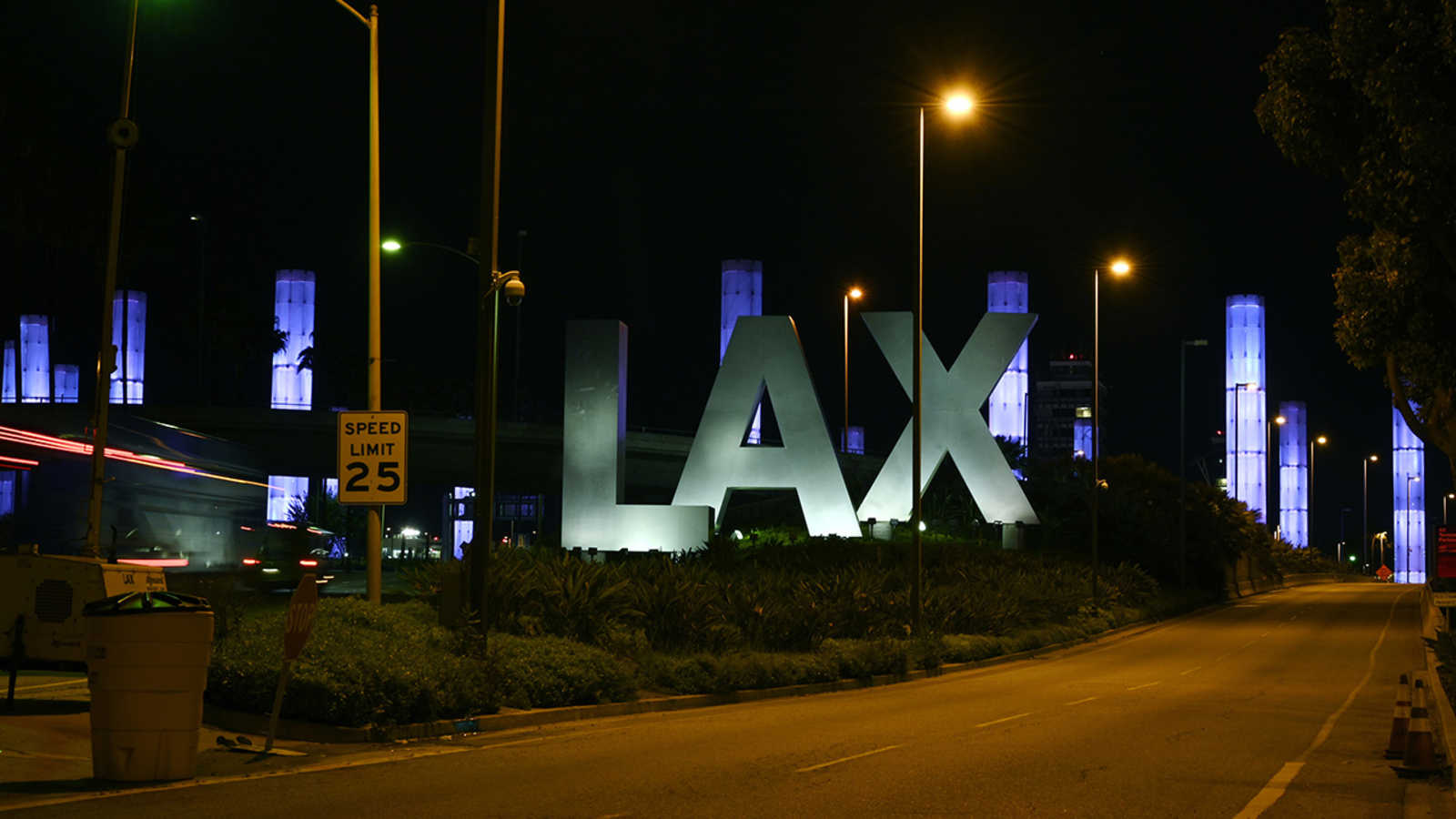
A ground delay at Los Angeles International Airport (LAX) due to staffing issues is in effect, impacting all contiguous U.S. departures with flights to LAX experiencing average delays of 98 minutes; the FAA recorded the ground delay beginning at 6:57 p.m. and it could last through midnight. The disruption presents near-term operational disruption and potential incremental costs for carriers and passenger compensation exposure, but is an isolated operational event unlikely to materially move broader financial markets.
Market structure: A one-night 98-minute average ground delay at LAX disproportionately hurts carriers with tight turn schedules and high LAX capacity (Southwest LUV, Alaska ALK, to a lesser extent American AAL). Legacy carriers (DAL, UAL) and large network carriers with spare aircraft and crew flexibility gain relative pricing power to re-accommodate passengers; airport concession/revenue impact is immaterial for listed airport operators but JETS-like ETFs could see knee-jerk flow. Cross-asset: expect a short-lived rise in airline equity implied volatility, slight widening of high-yield airline credit spreads (<~10–25bps intraday), minimal FX/commodity moves.
Risk assessment: Tail risks include escalation into multi-day operational collapse, union-led walkouts, or DOT enforcement leading to mandated schedule cuts — low probability but high impact for carriers with thin liquidity. Immediate effects (0–7 days) are flow/IV spikes; short-term (weeks) depends on repeat staffing events or holiday travel; long-term (quarters) only shifts if systemic staffing/ATC problems persist, which would enable schedule retiming and fare increases. Hidden dependencies: ATC staffing, TSA screening throughput, and airline crew-scheduling software constraints can amplify delays; catalyst list includes holiday peaks, weather, or labor filings.
Trade implications: Tactical short on high LAX-exposure, tight-turn carriers (LUV) and JETS ETF as event-hedge; relative long on DAL/UAL who can monetize disruption via rebooking fees and network resilience. Options: buy 2–4 week put spreads on LUV (30–10 DTE) or ATM straddles on JETS if IV >30% vs 7-day avg. Rotate 2–5% cash into travel longs only if declines exceed 5% over 7 trading days.
Contrarian angles: The market may overreact to a single-night staffing glitch — fundamentals unchanged absent repeated events; a >5% drop in DAL/UAL would be a buying opportunity given strong liquidity and durable demand. Historical parallels (2018/2022 operational meltdowns) show rebounds within 2–8 weeks after operational fixes; unintended consequence: airlines may pad schedules raising yields 1–3% if staffing shortfalls persist.
AI-powered research, real-time alerts, and portfolio analytics for institutional investors.
Request DemoOverall Sentiment
neutral
Sentiment Score
-0.10
