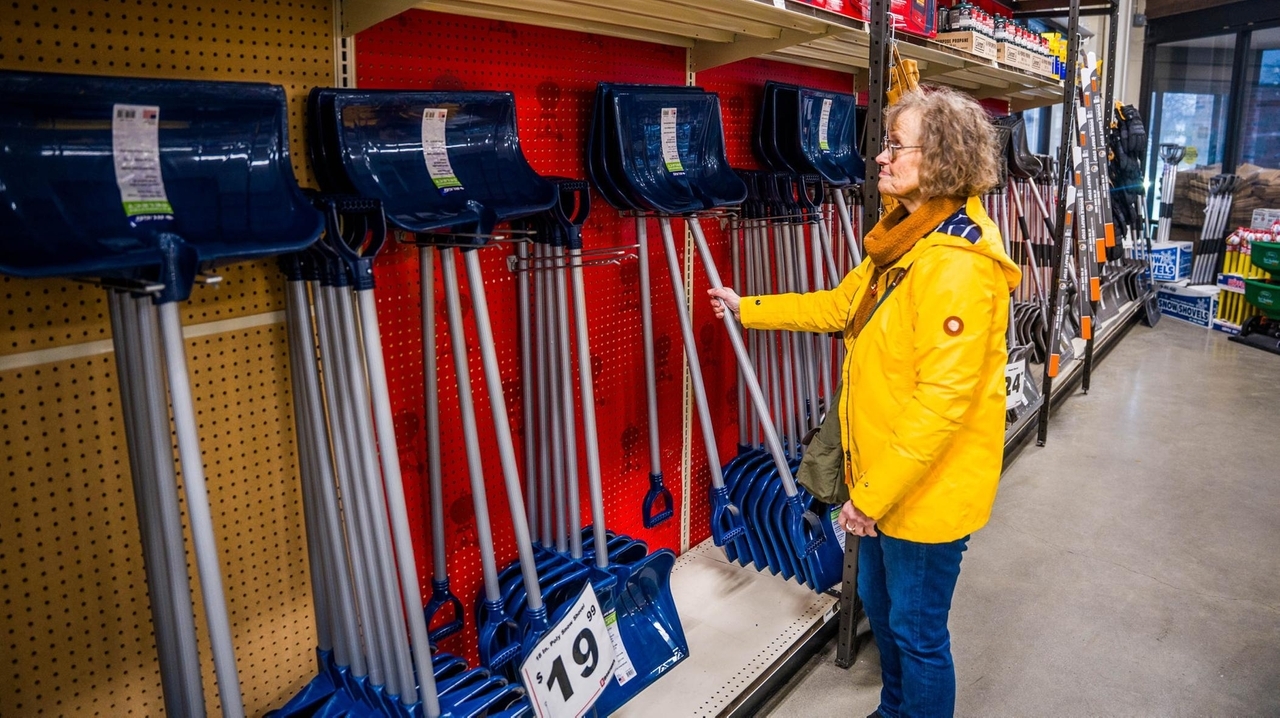
A nor'easter is forecast to impact Long Island from Sunday morning through Monday afternoon, with forecasts calling for 10–13 inches of snow in Suffolk County, 6–10 inches in Nassau/NYC/Westchester/CT, and wind gusts up to 45–55 mph that could produce blizzard conditions and whiteouts. The storm is the result of phasing systems tracking closer to the coastline, producing heavy, wet snow and elevated coastal flooding risk at high tide; PSEG Long Island has staged crews and warned of potential power outages and downed lines that could disrupt Monday commutes, school operations and local logistics.
Market structure: Short, sharp nor’easters create clear winners — regional utilities and grid-repair contractors, big-box retailers and winter-supply chains — and losers — airlines, commuter-exposed transport and time-sensitive logistics. Expect incremental revenue for restoration services and tool/hardware sales (Home Depot, HD; Lowe’s, LOW) over 1–3 weeks, while carriers (DAL, LUV) and parcel shippers (UPS, FDX) face measurable service degradation and cost-per-package increases for 3–10 days.
Risk assessment: Tail risks include multi-day transmission outages (>72 hours) that produce >$50–100m localized economic loss and possible elevated insurance claims (property/business interruption) that could press regional P&C reserves. Immediate horizon (0–7 days) sees operational disruptions; short (1–3 months) could lift capex for resilience; long-term (quarters) could nudge utility rate cases and municipal budget stress in affected counties if cleanup costs exceed expectations.
Trade implications: Tactical trades favor long retail/DIY exposure (1–2% position in HD or LOW; target +3–8% event bump, horizon 7–21 days) paired with short-call or put exposure on regional airline names (buy 1–2% notional of short-dated puts on DAL or LUV expiring 2–3 weeks out). Consider buying XLU (0.5–1%) or specific utility contractors (CAT 0.5–1%) for 1–3 month resilience plays; sell/avoid near-term high-frequency logistics names (UNP, CSX) for 1–2 weeks where delays compress revenue.
Contrarian angles: Markets often oversell regulated utilities on outage headlines; if utilities (PSEG/PSEG-LI exposure) trade down >5% intraday, consider a 1% recovery-weighted long because regulatory cost-recovery and storm rider mechanisms usually restore economics within one rate cycle (3–12 months). Conversely, don’t overpay for “safety” in XLU if implied vol jumps >25% — cheaper to buy selective equipment/retailer exposure or short a beaten-up regional airline on volatility spike.
AI-powered research, real-time alerts, and portfolio analytics for institutional investors.
Request DemoOverall Sentiment
mildly negative
Sentiment Score
-0.25
