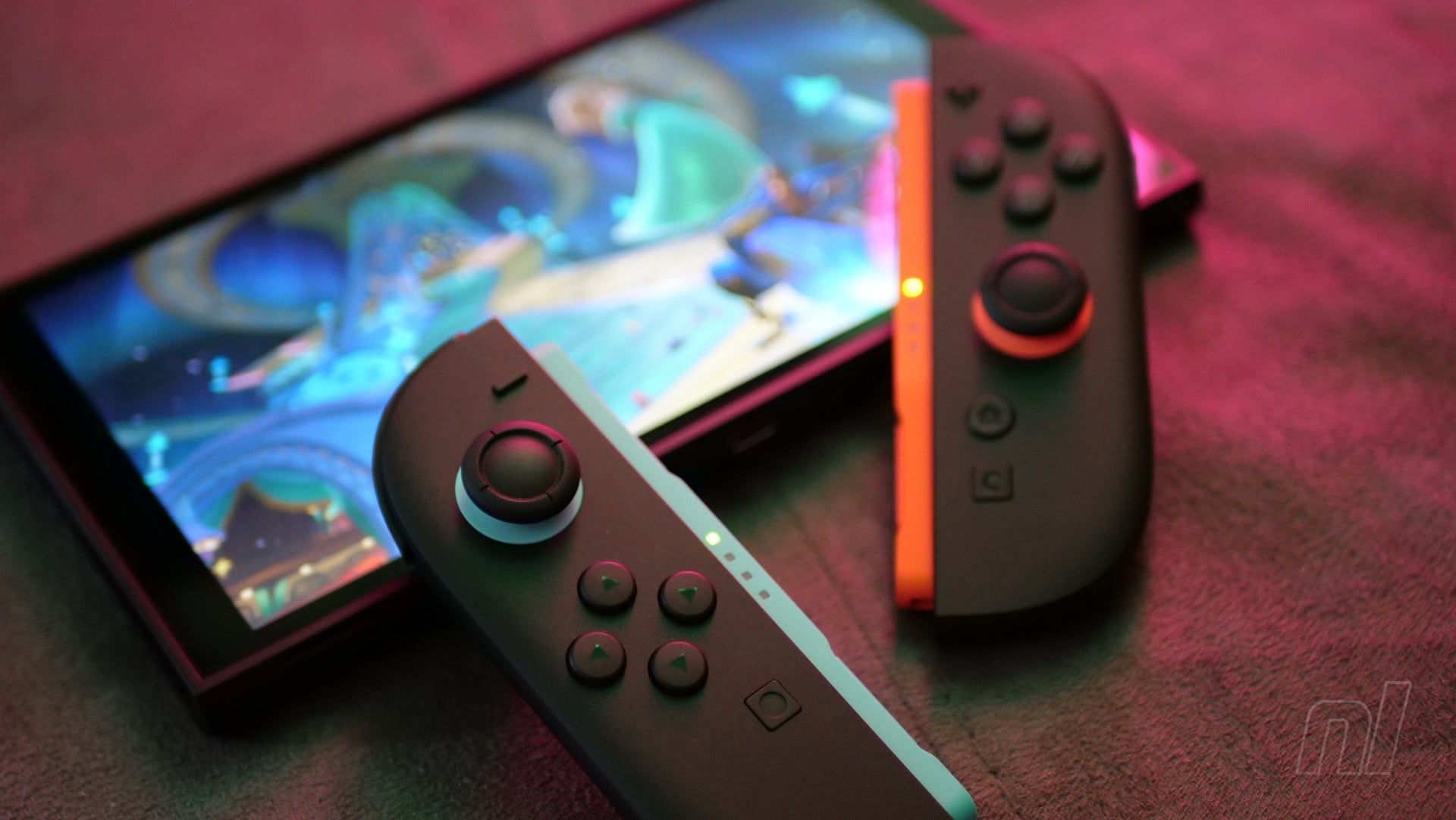
Nintendo reported robust Q3 FY2026 results driven by Switch 2 hardware strength and strong software sales: Switch 2 has sold 17.37 million units since its June 2025 launch and software sales total 37.93 million units (Mario Kart World ~14.03 million, Donkey Kong Bananza 4.25 million, Kirby Air Riders 1.76 million). For the nine months of FY26, net sales rose 99.3% to ¥1,905.8 billion and operating profit increased 21.3% to ¥300.3 billion; management left full-year hardware and software forecasts unchanged while noting upcoming titles (Mario Tennis Fever, Pokémon Pokopia) that could further support momentum. The results materially improve company fundamentals and are likely to be viewed positively by investors given the strong top-line and continuing product cadence.
Market structure: Nintendo (7974.T / NTDOY) is a clear near-term winner — 17.37m Switch 2 units since June 2025 implies ~2.2m units/month and makes the company likely to beat its FY26 19m target; first‑party IP (Mario Kart World 14.03m) drives software attach rates and retailer inventory velocity. Competitors (SONY, MSFT) face niche share pressure in hybrid/portable gaming and may concede pricing power on family/party titles, while third‑party publishers see higher bargaining leverage to join Switch 2 ecosystem. Supply/demand: sell‑through outpacing conservative supply plans suggests incremental orders to ODMs; risk of short‑term component tightness exists but current sales point to structurally strong demand through Q1 next fiscal quarter.
Risk assessment: Key tail risks are a major first‑party delay (Metroid Prime 4 omission) or a hardware recall that would wipe >10% of near‑term EPS; a >5% JPY appreciation vs USD over 2–3 months materially compresses reported overseas revenues. Time horizons: immediate (days) — price reaction to Feb/March game releases; short term (weeks/months) — supply cadence and guidance updates; long term (quarters/years) — content pipeline and third‑party support. Hidden dependencies include heavy reliance on a small number of blockbusters for attach rates and potential margin hit from accelerated content amortization.
Trade implications: Direct — consider establishing a 2–3% long position in NTDOY or 7974.T ahead of Mario Tennis Fever and Pokémon (Feb–Mar) and hedge with a March/May 2026 call spread (buy ATM, sell +15%) to cap cost; target +20–30% in 3–6 months, trim at +20%. Pair — long Nintendo (NTDOY) vs short SONY (SONY) dollar‑neutral 1:0.6 to express platform share shift. Options — buy 3‑month call spreads into Feb releases and sell covered calls on a larger long to monetize upside; set stop‑loss at −12% absolute for cash long positions.
Contrarian angles: Consensus may underappreciate front‑loaded demand and subsequent mid‑cycle cadence risk — historical parallels: strong early console launches (e.g., early Switch) still saw multi‑quarter content lulls that depressed multiples. Market may be underpricing software pipeline risk from Metroid Prime 4 silence; if Nintendo guidance stays unchanged but releases underperform, expect >15% downside in 30–90 days. Unintended consequence: runaway success could strengthen JPY (>5%), creating an earnings translation headwind that would surprise investors focused only on unit sales.
AI-powered research, real-time alerts, and portfolio analytics for institutional investors.
Request DemoOverall Sentiment
strongly positive
Sentiment Score
0.70
