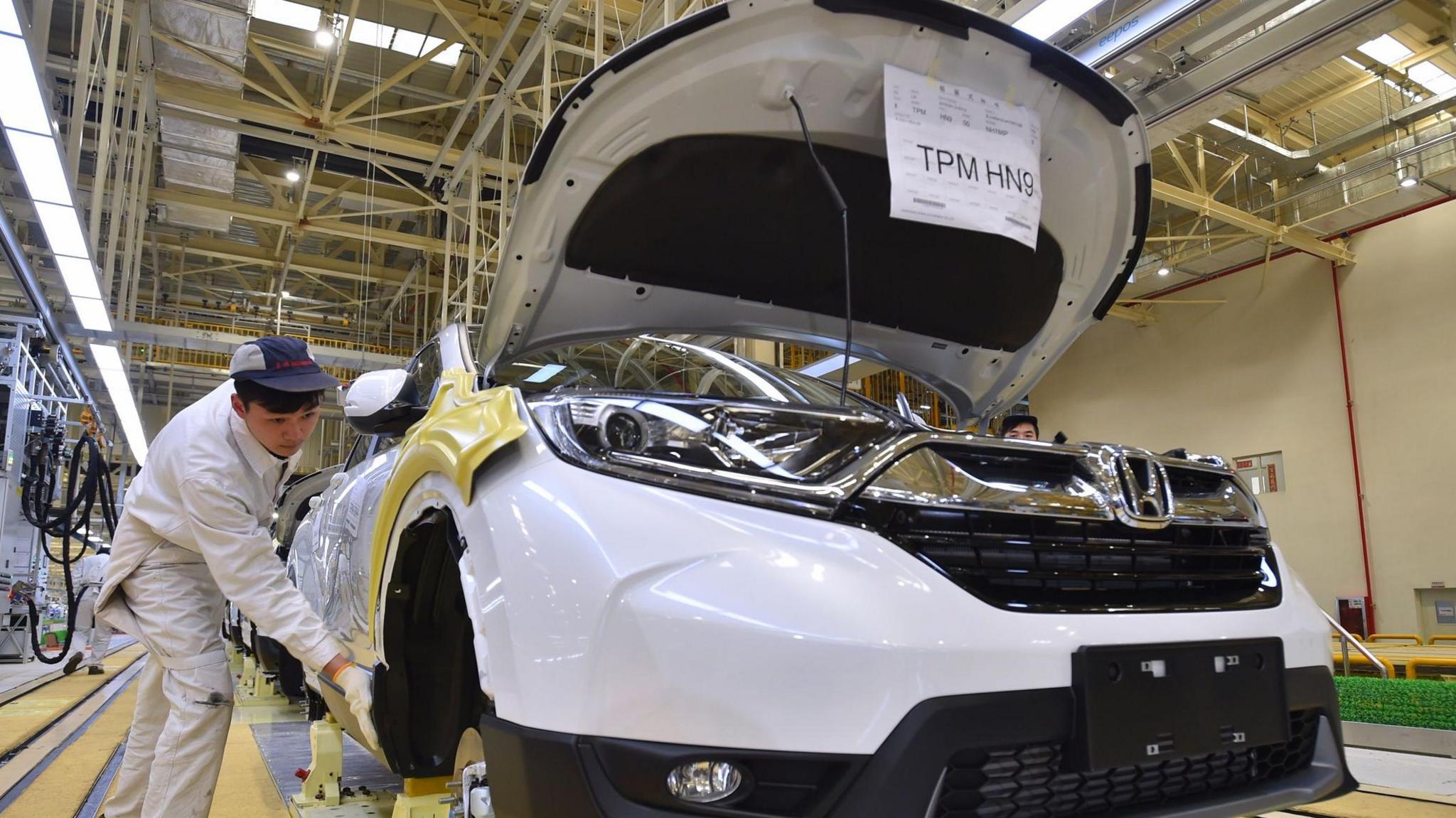
Honda reported its first annual operating loss in 70 years, posting a ¥423bn loss for the year ending March 2026 as weaker-than-expected EV demand, US tariff pressure, and the removal of US EV tax credits hurt profitability. The company scrapped some EV production targets, suspended EV and battery plans in Canada, and now expects ¥512bn in EV-related losses in the next fiscal year. Management is shifting focus toward motorcycles, financial services, and hybrids while prioritizing North America, Japan, and India.
Honda’s reversal is less about one company missing a product cycle and more about the market repricing the entire capital intensity of legacy OEM EV transitions. The second-order winner is not necessarily Tesla-style pure EVs; it is the cost-efficient hybrid stack and battery-supply intermediaries that can monetize compliance and efficiency without forcing a full platform reset. In practice, this shifts bargaining power toward suppliers and contract manufacturers in China and Southeast Asia, while pressuring vertically integrated automakers that locked in capex for a demand curve that is now flatter and more policy-dependent. The key risk is that Honda’s guidance reset becomes a sector-wide template: if a scale player is de-emphasizing EVs, smaller peers with weaker balance sheets may be forced into harsher write-downs or equity raises over the next 2-4 quarters. That creates asymmetric downside for auto OEMs with high EV-fixed-cost absorption and low ICE/hybrid cash generation, especially if US policy stays erratic and tariffs remain a moving target. The next catalyst window is the next earnings season, when management teams will likely either echo this caution or use it to justify slower EV capital deployment. The contrarian angle is that the market may be over-discounting the strategic optionality embedded in hybrids and financial services. A slower EV path can actually improve near-term ROIC, free cash flow, and credit metrics if capex is reallocated away from speculative battery scale-up; that should support multiples for companies that can protect margins rather than chase unit share. The bigger issue is not EV demand collapse, but execution risk in managing a multi-year transition while preserving dealer economics and supplier stability.
AI-powered research, real-time alerts, and portfolio analytics for institutional investors.
Overall Sentiment
strongly negative
Sentiment Score
-0.72
Ticker Sentiment
