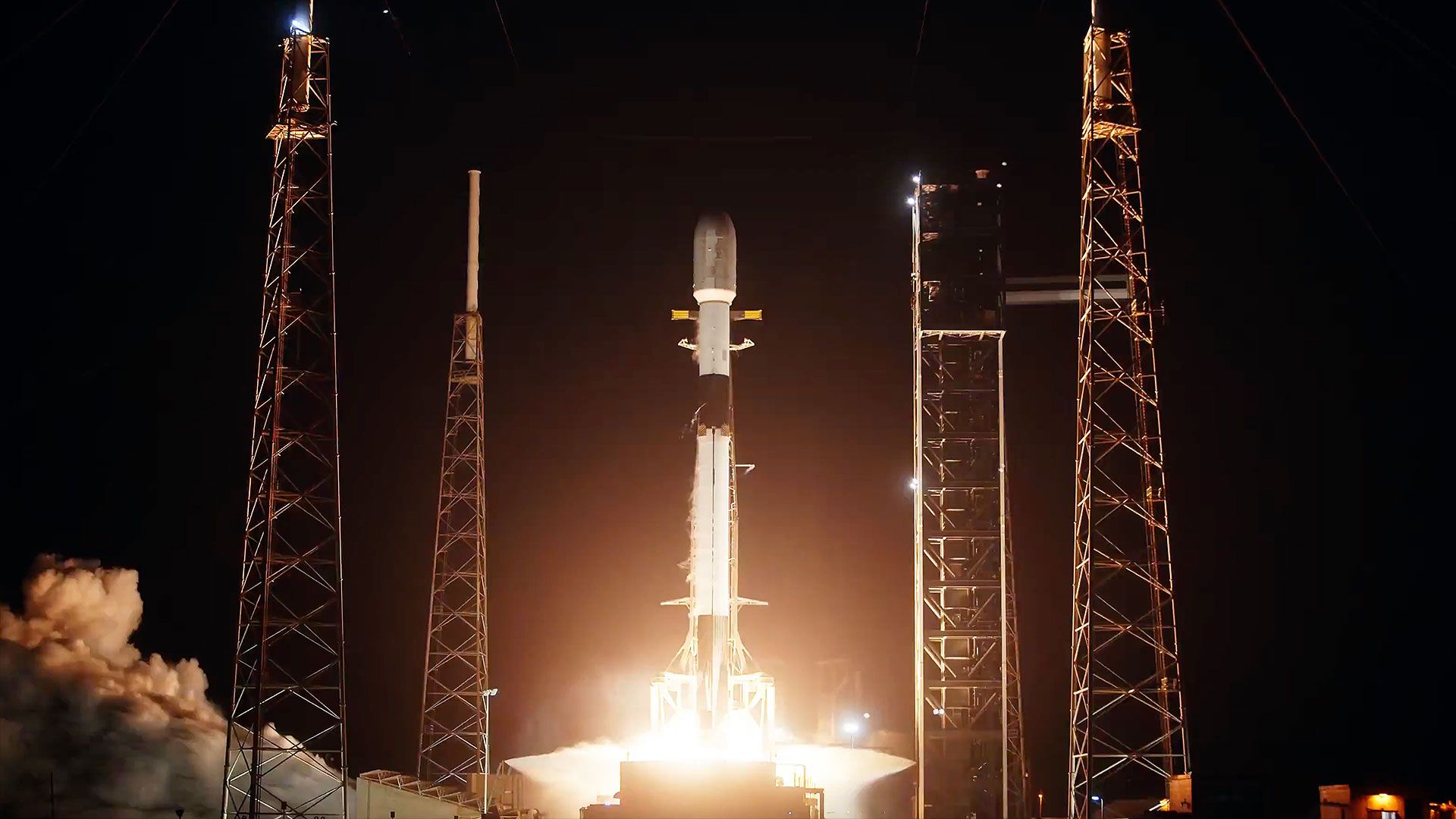
SpaceX launched 29 Starlink broadband satellites (Group 6-82) from Cape Canaveral SLC-40 at 12:25 a.m. EST on Monday, beating forecasts of high winds and cumulus clouds; the Falcon 9 upper stage was set to deploy the payload after an approximately one-hour coast and a second engine burn. The first-stage booster B1092 completed its ninth flight and landed on the autonomous drone ship A Shortfall of Gravitas in the Atlantic, marking SpaceX’s 163rd Falcon 9 mission in 2025 and reinforcing the company’s high-cadence Starlink deployment and booster-reuse strategy as another launch was scheduled for Dec. 16.
SpaceX launched 29 Starlink broadband satellites (Group 6-82) from Cape Canaveral SLC-40 at 12:25 a.m. EST on Monday, beating forecasts of high winds and cumulous clouds; the Falcon 9 reached space about 8 minutes 40 seconds after liftoff and the upper stage was scheduled to deploy the payload after an approximately one-hour coast and a second Merlin-engine burn. The mission highlights operational resilience to marginal weather and adherence to tight mission timelines that are critical for constellation deployments.
The Falcon 9 first stage booster B1092 completed its ninth flight and achieved a landing on the autonomous drone ship A Shortfall of Gravitas, underscoring SpaceX's booster-reuse strategy and recovery reliability. Monday's launch followed a Starlink mission from California the previous day and marked SpaceX's 163rd Falcon 9 flight in 2025, with another launch scheduled for Dec. 16, signaling a sustained high launch cadence.
These facts imply continued capacity build-out for Starlink and incremental cost benefits from repeated booster reuse, which supports a mildly positive market impact (sentiment score 0.25) but limited immediate price shock. Investors should weigh the operational upside from cadence and reuse against short-term schedule and weather risk when assessing exposure to satellite broadband and launch-service themes.
AI-powered research, real-time alerts, and portfolio analytics for institutional investors.
Request DemoOverall Sentiment
mildly positive
Sentiment Score
0.25
