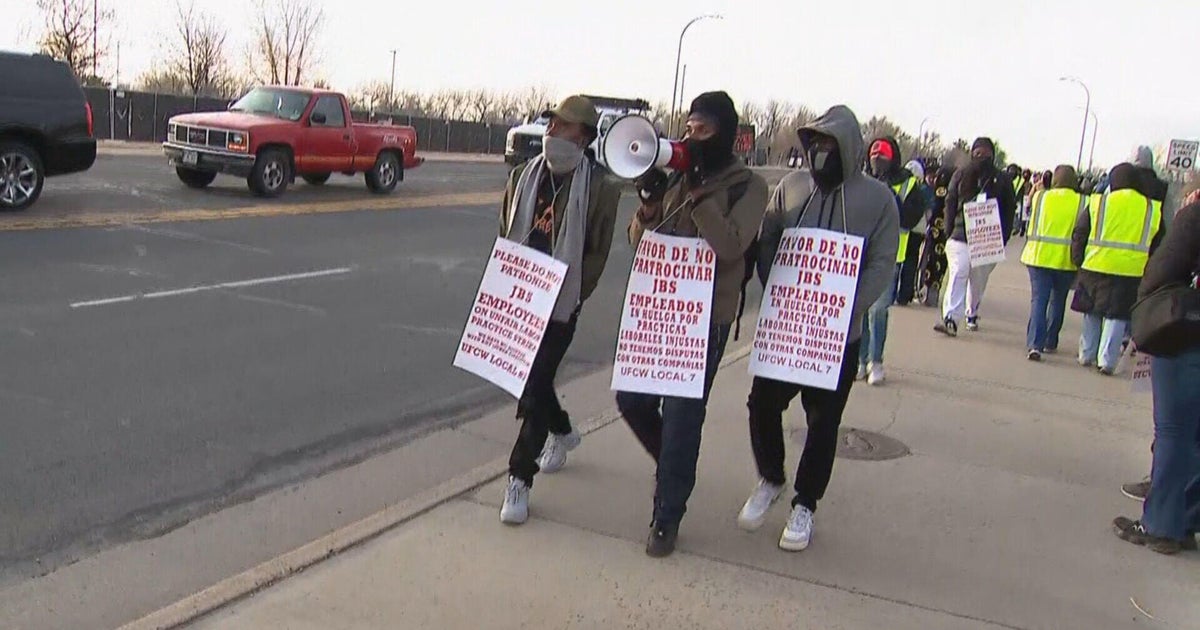
Approximately 3,800 workers at JBS's Greeley, Colorado meatpacking plant will return to work at 5 a.m. Tuesday after a three-week strike, with no new contract reached. The union agreed to suspend the walkout after JBS committed to two days of face-to-face bargaining beginning April 9; JBS says its original comprehensive offer (wage increases, pension, benefits) remains unchanged. Operational disruption should ease with the restart, but the labor dispute remains unresolved and could resume if negotiations falter.
The episode exposed a concentrated operational vulnerability in the US beef packing chain: a single-plant disruption can create outsized short-term price and flow volatility because finished boxed-beef inventories and live-cattle throughput are tightly balanced. Expect a multi-week oscillation — near-term upward pressure on live-cattle and boxed-beef spot prices as buyers scramble for supply, followed by a 4–8 week recomposition risk once throughput normalizes and backlogged cattle are processed.
Restart dynamics will not be margin-neutral. Ramp-up typically forces elevated overtime, lower yield and higher trim rates for several shifts while quality and safety workflows re‑stabilize; conservatively model a 10–25% increase in per-shift labor cost and a 3–5% hit to realized yields during the first one-to-two production cycles. That translates into meaningful Q/Q margin noise even if volumes recover, and invites both temporary pricing power for sellers and second‑order margin squeezes for processors who absorb higher input and logistics costs.
Competitors and service providers will see asymmetrical effects: regional packers and spot-buy brokers can capture incremental volumes and pricing for weeks, while refrigerated carriers and logistics integrators will face short-term demand spikes for haulage and storage capacity. Conversely, grocers and foodservice firms that sourced alternately face transitional inventory and contract rebalancing risk, creating trading opportunities across live cattle, processor equities, and transport names.
The political/labor angle is the defining tail risk. Without a durable contract, the event increases the probability of episodic labor stoppages over the next 6–18 months and raises regulatory/reputational scrutiny that can shift cost structures (higher premiums, union concessions). Key catalysts to watch are near-term production guidance, boxed‑beef spot spreads, and union negotiation outcomes — any negative surprise would quickly wipe out short-term rerating.
AI-powered research, real-time alerts, and portfolio analytics for institutional investors.
Request DemoOverall Sentiment
mildly positive
Sentiment Score
0.08
Ticker Sentiment
