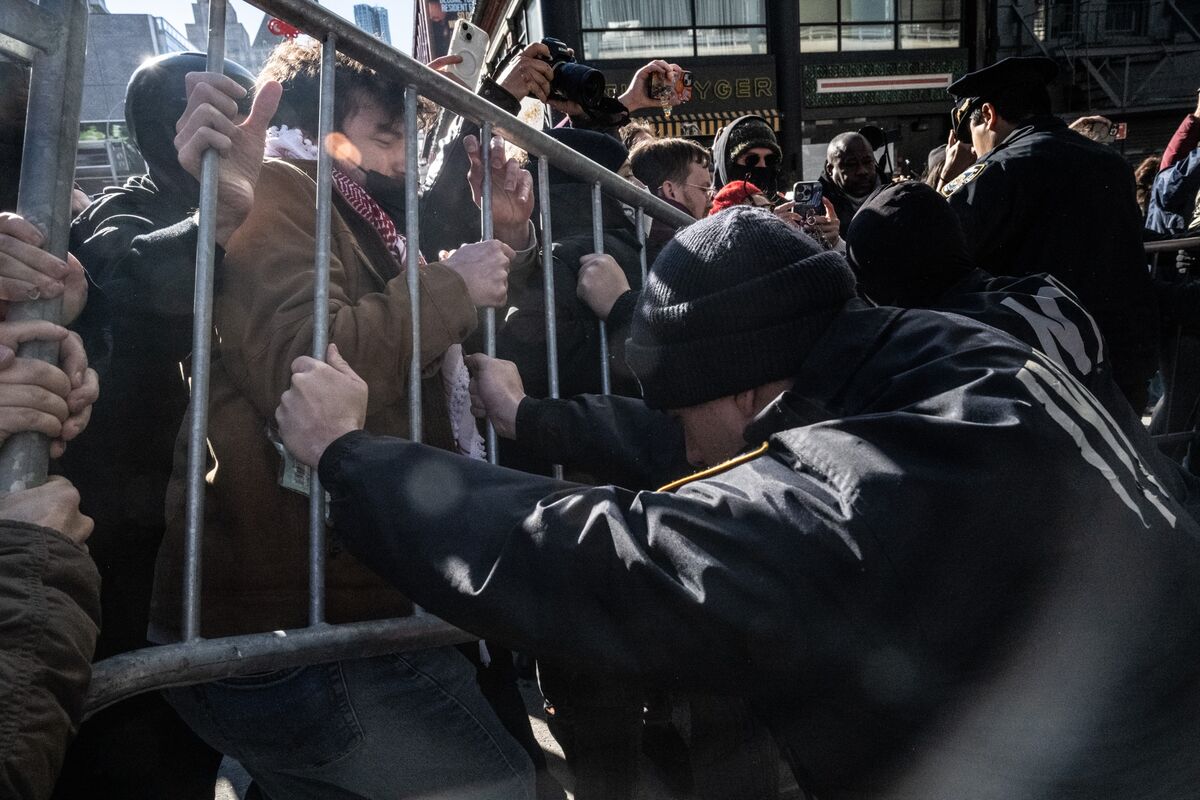
New York Mayor-elect Zohran Mamdani, who takes office Jan. 1, urged undocumented residents to resist improper immigration enforcement by remaining silent, asking if they are free to leave, refusing entry and legally recording agents. His campaign platform includes expanding immigration legal-defense services, denying ICE access to city facilities and tightening data-privacy protections to prevent city-held personal information from being used for immigration enforcement, a set of policies likely to increase tensions with federal authorities and reshape municipal legal and operational risks.
Market structure: City-level limits on ICE access and strengthened data-privacy protections are sector-specific shocks: winners are firms tied to data-privacy, identity and municipal cybersecurity (e.g., ZS, OKTA, CRWD) as cities invest in compliant controls; losers include private detention contractors (GEO, CXW) and vendors relying on federal/local law-enforcement data-sharing. Expect a gradual reallocation of municipal IT spend over 6–24 months from legacy law-enforcement data hubs to cloud privacy tooling, shifting pricing power to SaaS/cloud security vendors and professional legal services firms.
Risk assessment: Tail risks include federal intervention (DHS/DOJ mandate restoring access), large-scale litigation that forces indemnities on the city, or a material NYC budget gap from expanded services (> $200–500m/year) that pressures muni credit. Immediate market moves (days) will be muted; watch weeks–months for procurement RFPs and budget hearings; long-term (quarters–years) is where capex/revenue reallocation occurs. Hidden dependencies: federal grants, state litigation, and vendor contract tenure (multi-year contracts can mute near-term demand shifts).
Trade implications: Tactical opportunities: long select cybersecurity/privacy SaaS with 6–12 month horizons and short ICE/detention names as a tail-risk hedge; municipal-credit tweaks for NYC GOs if recurring spending rises >$100m. Use options to control downside—buy puts on GEO/CXW 6–9 months out 10–25% OTM and buy calls on ZS/OKTA 9–12 months out 15–25% OTM to capture procurement-driven upside.
Contrarian angle: Markets may underweight the fiscal offset — federal grants or private settlement funds could neutralize NYC outlays, making short detention names risky; conversely, smaller legal-tech and local MSPs (not widely covered) could see outsized revenue growth. Historical parallels (sanctuary city cycles) show policy headlines cause transient outperformance in advocacy/tech stocks but require procurement evidence to justify lasting positions; size positions accordingly.
AI-powered research, real-time alerts, and portfolio analytics for institutional investors.
Request DemoOverall Sentiment
neutral
Sentiment Score
0.00
