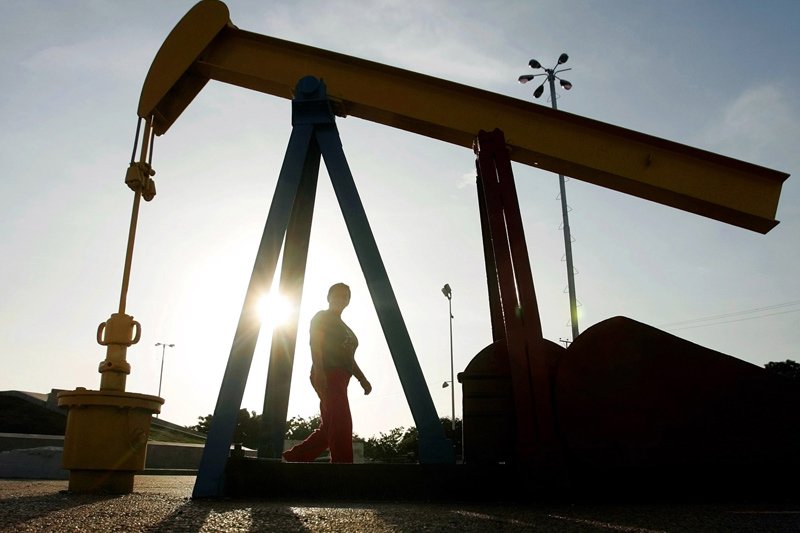
Guyana's election on Monday will determine the management of its substantial hydrocarbon wealth, which has made it one of the world's fastest-growing economies since ExxonMobil began offshore pumping in late 2019. While the incumbent PPP has funneled oil revenues into social programs, opposition parties, some pledging to renegotiate Exxon's contract, challenge the distribution of earnings and aim to deny the PPP its slim parliamentary majority. This election's outcome introduces significant uncertainty regarding future oil revenue allocation and the stability of energy sector agreements, particularly given past electoral disputes and the emergence of a new party led by a US-sanctioned businessman.
The upcoming election in Guyana introduces significant political and contractual risk for ExxonMobil's (XOM) operations, a key driver behind the nation becoming one of the world's fastest-growing economies. Since XOM began offshore production in late 2019, Guyana has accrued approximately $7.5 billion in oil revenue, which the incumbent People’s Progressive Party (PPP) has directed towards infrastructure and social programs. However, the PPP's control is tenuous, resting on a single-seat parliamentary majority. This election carries a moderately negative sentiment (-0.4 for XOM) primarily because three opposition parties have explicitly pledged to renegotiate the country's foundational contract with Exxon. A loss of the PPP's majority could force legislative gridlock or unfavorable revisions to the existing agreement. Further uncertainty is introduced by a new party led by a U.S.-sanctioned businessman, which highlights underlying tensions regarding wealth distribution and could fragment the political landscape. The memory of a five-month standoff over the 2020 election results underscores the potential for post-election instability, which could delay policy clarity and disrupt the operating environment for energy firms.
AI-powered research, real-time alerts, and portfolio analytics for institutional investors.
Overall Sentiment
moderately negative
Sentiment Score
-0.35
Ticker Sentiment
