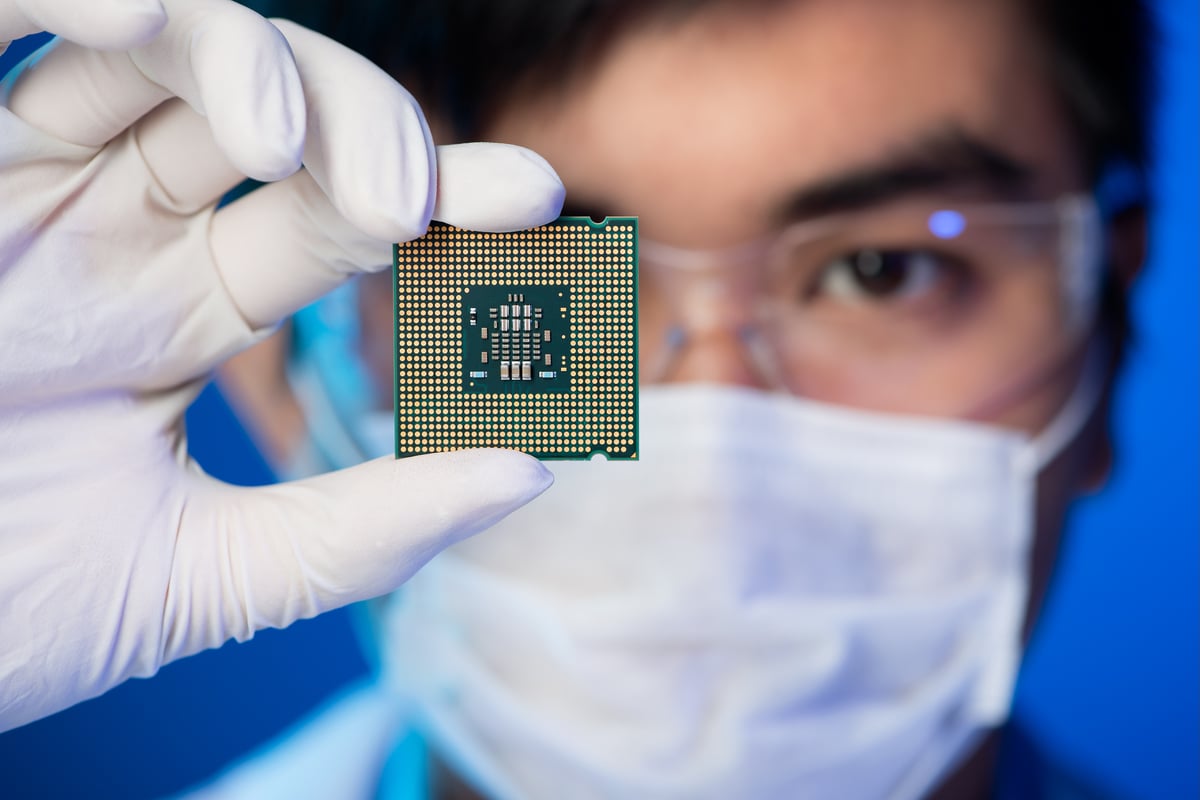
GPUs remain central to generative AI infrastructure and the article argues AMD is better positioned than Intel for the AI era: AMD’s Instinct MI300 family helped its data‑center revenue reach $4.3 billion in Q3 2025 (up 22% YoY) versus Intel’s $4.1 billion (down 1% YoY), and AMD’s full‑stack strategy (GPUs, CPUs and ROCm software) has secured hyperscaler customers such as Microsoft, Meta, Oracle and OpenAI, creating developer lock‑in. By contrast Intel is a more diversified, unevenly performing business that has ceded foundry share to TSMC (56% → 68%, with Intel under 1%), and while Nvidia’s $5 billion investment and CPU‑design deal with Intel could be a catalyst, its impact is uncertain. The piece concludes AMD’s momentum and customer wins position it to capture a larger share of the multi‑year AI infrastructure opportunity and potentially widen the gap with Intel.
GPUs are described as the central enabler of generative AI infrastructure, and the article quantifies a recent advantage for AMD: its data center segment generated $4.3 billion in revenue in Q3 2025, up 22% year‑over‑year, versus Intel's $4.1 billion, which declined 1% annually. AMD's Instinct MI300 accelerators, launched in Q4 2023, are credited with driving rapid traction such that AMD reached parity with Intel's data center revenue within roughly six months of release.
The piece attributes AMD's momentum to a full‑stack strategy — GPUs, CPUs and the ROCm software stack — which the author argues creates developer lock‑in and has won hyperscaler customers including Microsoft, Meta, Oracle and OpenAI. By contrast, Intel is characterized as diversified and uneven in execution, losing foundry relevance as TSMC's share rose from 56% to 68% while Intel's foundry share fell to under 1%.
The article notes a potential but uncertain catalyst for Intel: Nvidia's $5 billion investment and a deal for Intel to design next‑generation CPUs for Nvidia. Given current metrics and customer wins, the author views AMD as better positioned to capture a larger share of the multi‑year AI infrastructure opportunity while Intel remains a turnaround candidate pending clearer execution on the Nvidia tie‑up and foundry challenges.
AI-powered research, real-time alerts, and portfolio analytics for institutional investors.
Request DemoOverall Sentiment
moderately positive
Sentiment Score
0.45
Ticker Sentiment
