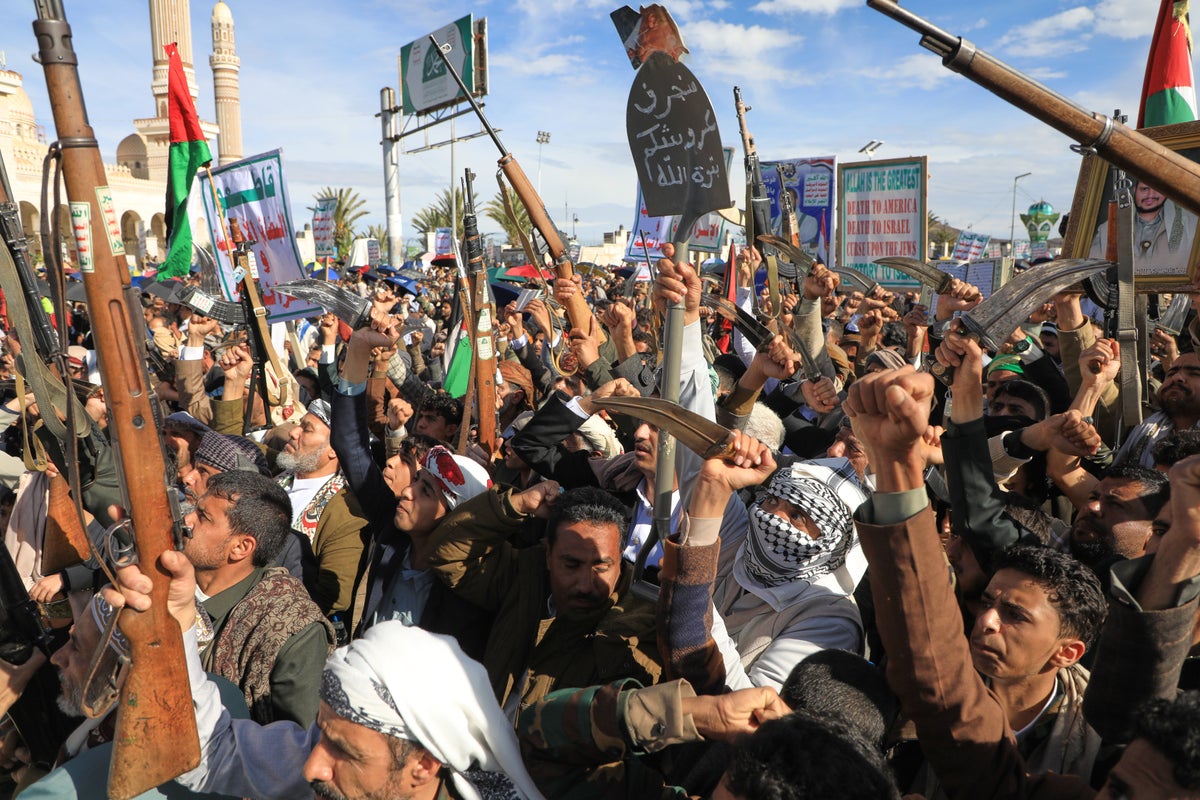
3,500 additional US marines have arrived (bringing US forces in the region to ~53,500) as Iranian missiles and drones struck targets including an E-3 Sentry valued at roughly $300m and injured 12 US personnel. Houthi attacks in the Red Sea and Iranian control of the Strait of Hormuz threaten closure of Bab-el-Mandeb and Hormuz chokepoints, risking severe disruption to oil flows and global trade that could precipitate a worldwide economic slump. Escalation raises systemic market risk across energy, shipping, and regional assets and increases the likelihood of prolonged Western naval commitments and broader military engagement.
The geopolitical shock compresses optionality in global maritime chokepoints and creates an asymmetric payoff: energy producers and strategic-energy logistics win if physical disruption persists, while trade-sensitive sectors (containers, apparel, just-in-time electronics) face margin shock from rerouting and insurance-cost pass-through. A sustained effective closure of Hormuz and/or Bab-el-Mandeb would add 0.5–2.0 mb/d of de facto supply loss to markets via longer voyage times, higher tanker demand and precautionary buying—mechanically supporting Brent by $15–40 in weeks and keeping it elevated for quarters until spare capacity or diplomatic lanes reopen.
Tail risks cluster into two fast timebands. Days–weeks: episodic missile/drone strikes spike insurance “war risk” premia and freight rates (instant P&L hits to shippers and retailers); months: sustained naval standoffs, SPR draws, and OPEC+ production responses set the medium-term price base. Reversal catalysts include coordinated naval escorts, large SPR releases (~100–200m barrels) or credible Iran de-escalation via backchannels—each able to shave $10–20 off a Brent spike within 30–90 days.
Second-order winners include modern VLCC/tanker owners (shorter cycle to price capture) and large-cap energy names with low reinvestment needs; losers include container lines, airports/airfreight reliant on Suez throughput, and regional tourism/retail. Portfolio construction should prioritize convex, hedged exposure to an oil-up/volatility-up regime (options, defense equities, and gold) while shorting structurally vulnerable, trade-exposed equities; expect high correlation among commodity and defense plays for 1–6 months and then dispersion as politics, not fundamentals, lead the roll-down.
AI-powered research, real-time alerts, and portfolio analytics for institutional investors.
Request DemoOverall Sentiment
strongly negative
Sentiment Score
-0.80
