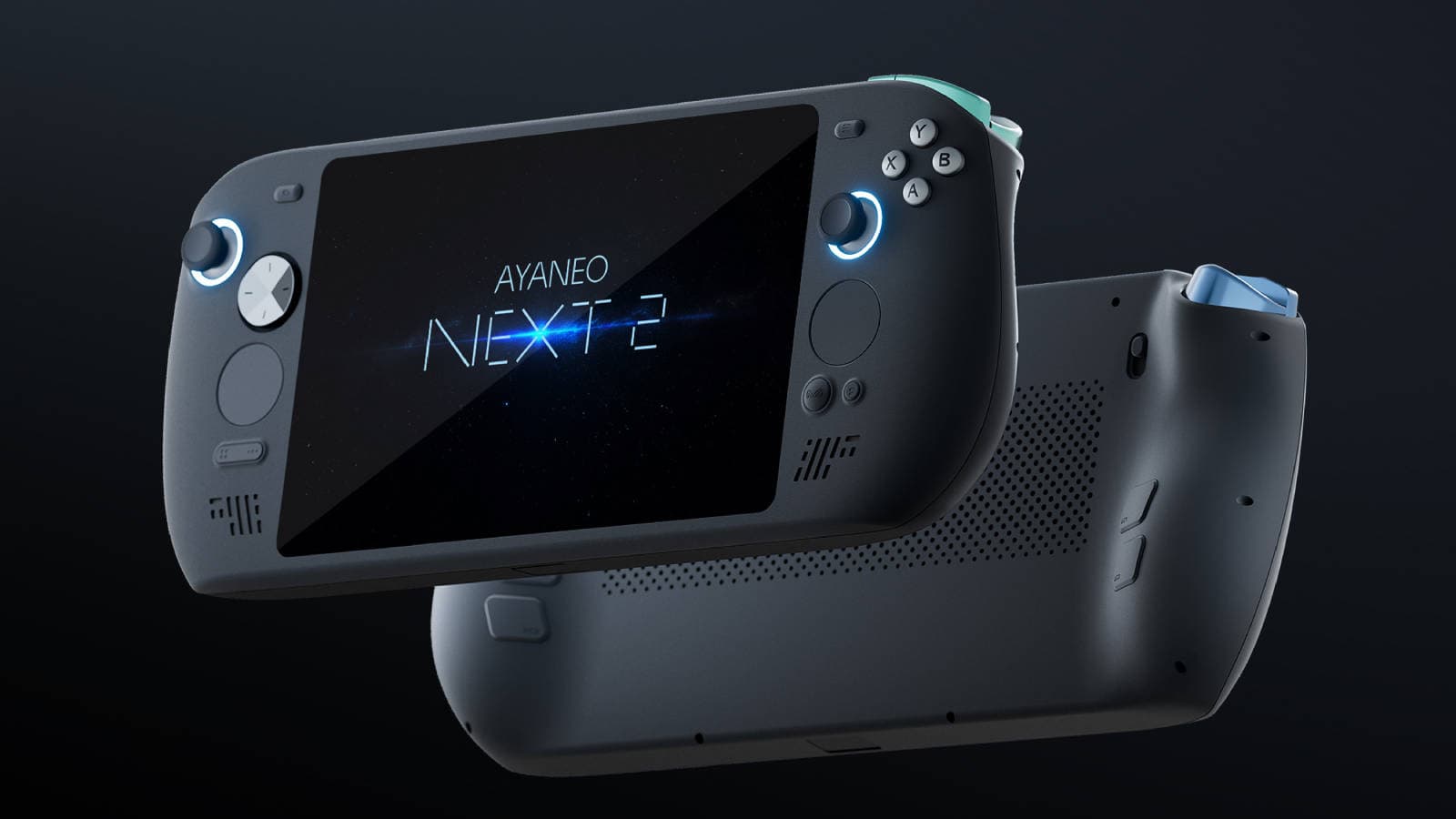
Ayaneo has disclosed Indiegogo pre-order pricing and full specs for its flagship portable PC, the NEXT II, with shipments slated for June 2026. Early-bird prices include $2,299 for the AMD Ryzen AI Max+ 395 model with 64 GB RAM/1 TB storage and $1,799 for the AI Max 385 32 GB/1 TB variant, while retail pricing is $2,699 and $1,999 respectively (higher-tier 128 GB/2 TB SKUs at $3,499 early-bird and $4,299 retail). The device features a 9.06-inch 2400×1504 OLED (up to 165 Hz), Windows 11 Home, dual fans, a 116 Wh battery, modern I/O and sensors, and a sub-1.43 kg weight, positioning it as a high-end, AI-enabled handheld for premium consumer demand.
Market structure: Ayaneo’s NEXT II is a high-priced niche product that mainly benefits AMD (design win validation for Ryzen AI Max series), boutique ODMs (thermal modules, high-capacity batteries) and premium component suppliers; mass-market incumbents (Nintendo, mass console vendors) are largely unaffected. The $1,799–$4,299 pricing band signals a two-tier handheld market — premium, low-volume devices can sustain >$2k ASPs, which supports higher-margin semi content but will not materially move semiconductor TAM unless volumes scale to tens of thousands/month.
Risk assessment: Key tail risks include production delays, high return rates from early adopters, and US export-controls spilling into AI-class APUs shipped from China — any of which could reduce expected unit volume >50% and stress small suppliers. Immediate risk is execution (Indiegogo conversion to shipped units in June 2026); medium-term (3–12 months) is channel pricing/returns; long-term (2+ years) is whether AMD’s mobile AI roadmap sustains share versus Nvidia/Qualcomm in portable form factors.
Trade implications: For liquid markets, this is a modest positive for AMD (AMD) sentimentally and for semiconductor suppliers to mobile gaming (SMH/SOXX overweight), but not a catalyst to re-rate the sector alone. Actionable approaches: small tactical longs in AMD via call spreads to limit downside, a relative pair of long AMD vs short INTC to capture mobile GPU share shift, and sector overweight in SMH by 1–2% for 3–6 months, rebalancing on AMD quarterly results.
Contrarian angles: Consensus may overstate long-term demand — high ASPs typically compress after initial run and competition drives features to lower price points, as with Steam Deck’s later pricing dynamics. If Indiegogo momentum is weak (sell-through <60% or cancellations >20% before June shipments), the market should downgrade the narrative; conversely, sell-out within 72 hours would justify incremental AMD exposure of 0.5–1% within 2 weeks.
AI-powered research, real-time alerts, and portfolio analytics for institutional investors.
Request DemoOverall Sentiment
mildly positive
Sentiment Score
0.25
Ticker Sentiment
