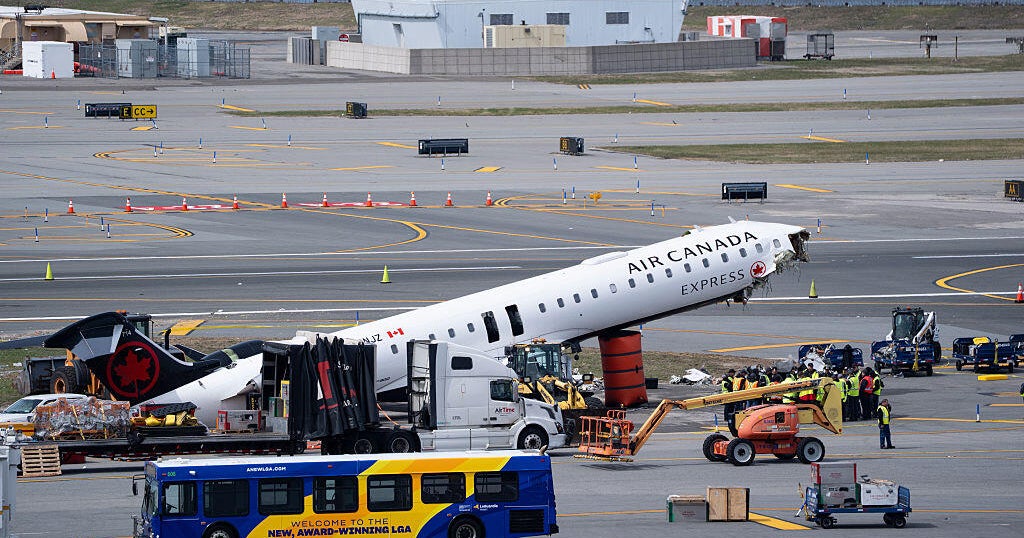
Two pilots were killed when an Air Canada plane carrying 76 people collided with a Port Authority fire truck at LaGuardia; roughly 40 people were treated at hospitals and four remained hospitalized. Wreckage is being cleared and the runway was expected to remain closed until no later than Friday morning, while the NTSB conducts an investigation and has interviewed tower staff amid concerns about controller workload. The incident creates near-term operational disruption risk for LGA throughput and airline schedules; broader market impact is limited but heightens regulatory and safety scrutiny for airport ground operations.
This incident is likely to produce a concentrated, multi-channel shock to Air Canada’s cost of operations and investor sentiment that outlasts the immediate news cycle. Expect a near-term increase in cash outlays from legal reserves, insurance retentions and incremental PR/operational remediation that could depress free cash flow by a low-single-digit percentage of market cap over the next 12 months, even if direct liability settles below headline estimates.
A more persistent effect will be regulatory and procedural: tighter tower staffing rules, mandatory ground‑vehicle tracking, and extra runway inspection protocols will raise unit costs for carriers operating dense, slot‑constrained airports. If implemented industry-wide, these rules could compress margins by 50–150bps over 12–36 months and favor airlines with excess fleet flexibility and diversified hub footprints.
There is also an allocation-shift dynamic: traffic and high-yield frequencies are likely to reallocate to carriers and airports that can immediately pick up displaced slots or move capacity quickly, creating a transient revenue uplift for opportunistic competitors; meanwhile airport authorities and contractors supplying ground‑surveillance and safety retrofits stand to win multiyear capex cycles.
Key catalysts to watch: regulator findings (who bears legal exposure) over 3–9 months; insurer renewal pricing and reserve filings at next quarterly reports; and any slot/operational constraints imposed by regulators which would crystallize structural margin impacts over 6–24 months. A finding that absolves the airline materially would reverse most of the market move; a finding that shifts liability to the airport/authority will limit equity downside for the carrier but raise public‑sector capex needs.
AI-powered research, real-time alerts, and portfolio analytics for institutional investors.
Request DemoOverall Sentiment
strongly negative
Sentiment Score
-0.85
Ticker Sentiment
