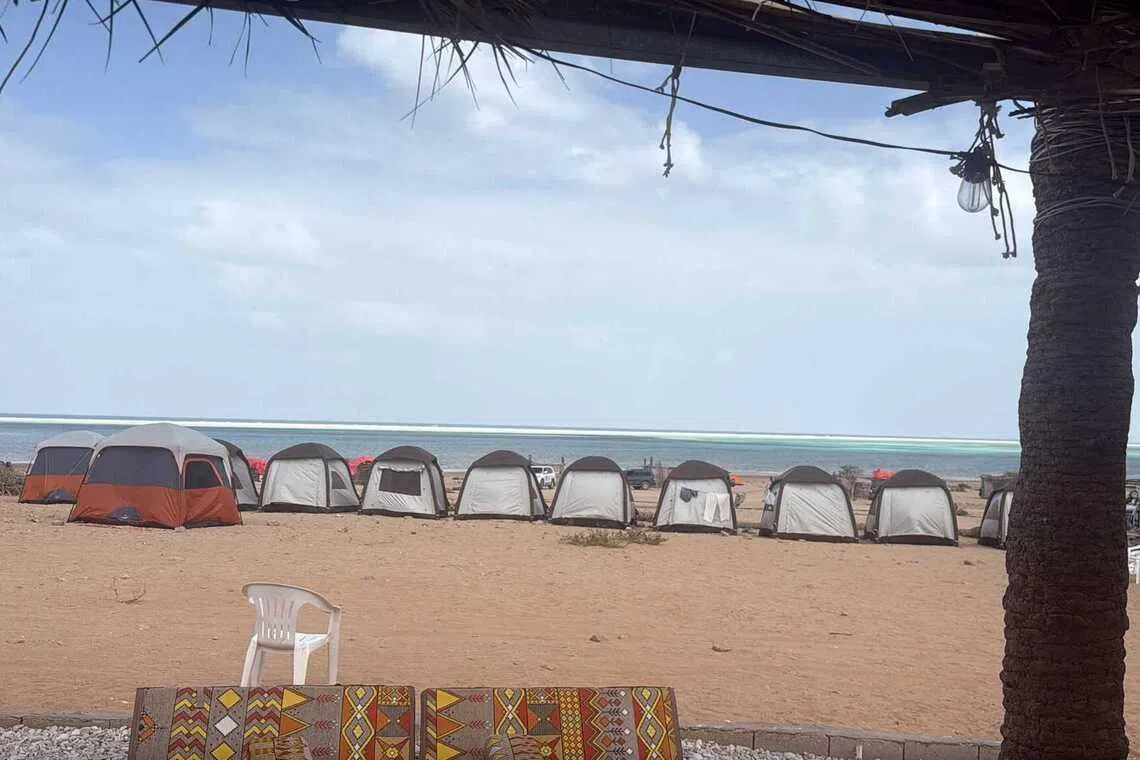
Approximately 420 foreign tourists, including more than 60 Russians and a Singaporean traveler, are stranded on Yemen's Socotra after flights were suspended and Socotra International Airport was closed amid clashes and an escalating dispute between Saudi Arabia and the United Arab Emirates; the Southern Transitional Council, backed by the UAE, has soldiers guarding the airport. The disruption has left tourists at campsites with tour operators providing basic supplies; strikes were reported as recently as Jan 3 in mainland Hadhramaut (≈380–400km from Socotra). While direct market consequences are minimal, the episode underscores rising geopolitical friction between Gulf partners that could amplify regional risk premia for Middle East assets, travel insurance costs and select logistics exposures.
Market structure: Winners are defense contractors (RTX, LMT, NOC), war‑risk insurers/brokers (MMC, AON) and upstream energy producers if Red Sea routes are threatened; losers are regional leisure/tour operators (small caps, niche eco‑lodges) and carriers reliant on Middle East routing. Pricing power: war‑risk insurance and reinsurance premiums can reprice +20–50% in weeks if attacks expand, forcing airlines/shippers to absorb higher per‑voyage costs or pass them to customers. Cross‑asset: a shipping chokepoint incident at Bab el‑Mandeb would likely add $5–25/bbl risk premium to Brent, bid gold (GLD) and USD, and widen EM and GCC sovereign CDS by 50–200bp short term.
Risk assessment: Tail risk is escalation to broader Gulf involvement or strikes on commercial shipping (low probability, high impact) that could disrupt 2–4 mb/d of seaborne oil — oil +15–30% in 1–4 weeks is plausible. Immediate (days): flight cancellations, insurance claims; short (weeks–months): higher premiums, rerouting costs, regional spread widening; long (quarters–years): sustained defense orders and consolidated travel suppliers. Hidden dependencies: reinsurance treaties delay realized insurer profits by 6–12 months; tourism bookings seasonality can amplify losses in spring/summer.
Trade implications: Direct plays — establish tactical longs in RTX and LMT (2–3% portfolio each) and MMC/AON (1–2%) within 1–4 weeks; conditional energy long (XOM/CVX 1–2%) if Brent breaks above $90 for 3 consecutive sessions. Pairs — long RTX (2%) / short RCL (1%) to express defense upside vs leisure downside. Options — buy 3‑month Brent call spread (95/115 strikes, 1:1) sized to 0.5–1% risk budget and buy 3‑month 45–50 delta puts on RCL/CCL as protection.
Contrarian angles: Consensus underprices insurance/broker upside and overprices permanent demand loss for travel — many leisure stocks will recover if disruption is contained; historical parallels (2019 Red Sea tanker attacks) show oil volatility spikes 10–15% then mean‑reverts in 2–3 months. Risk of overreach: if markets overbuy defense on short news, expect a 10–20% pullback when headlines calm; conversely, persistent insurance rate hikes could sustain broker/insurer earnings upgrades over 2–4 quarters.
AI-powered research, real-time alerts, and portfolio analytics for institutional investors.
Request DemoOverall Sentiment
moderately negative
Sentiment Score
-0.35
