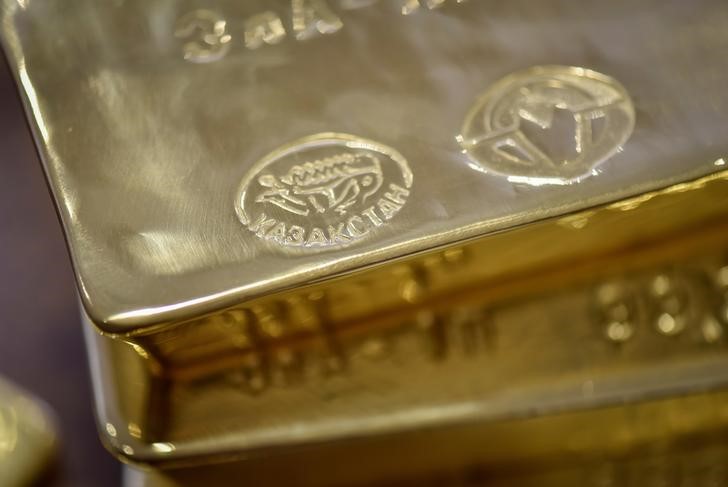
Spot gold jumped ~1% to $5,556.54/oz (futures +0.6% to $4,587.01/oz) after reports President Trump may wind down U.S. military action in Iran and Fed Chair Powell said long-term inflation remains grounded. Despite the intraday bounce, gold was headed for its worst month in 17 years (down ~14% in March), with silver and platinum down ~23% and ~19% respectively. Continued Strait of Hormuz disruption (affecting ~20% of global oil) and hawkish signals from major central banks have lifted yields and kept pressure on non-yielding metals, implying continued volatility and sector-level moves.
The market has front‑run a classic cross‑asset feedback loop: a supply shock in oil (Hormuz disruption) amplifies near‑term inflation risk, which forces central banks toward higher or stickier rates, lifting real yields and compressing non‑yielding assets like gold. That mechanism can keep downward pressure on bullion even as geopolitical risk should, all else equal, support safe‑haven bids; the resultant path is nonlinear — shallow rallies followed by renewed selling as yields spike.
Second‑order winners include upstream energy and tanker owners (routed longer voyages, higher freight rates) and gold‑mining equities that trade at steep leverage to spot bullion but also offer operating leverage to higher power and diesel costs. Losers extend into consumer cyclicals and long‑duration growth stocks if oil‑driven inflation proves persistent for 2–6 quarters.
Key catalysts to watch: (1) a credible diplomatic move to reopen Hormuz (days–weeks) that would remove a large structural premium from oil; (2) a Fed surprise on the dot plot or hawkish communication (minutes to months) that re‑anchors real yields higher; (3) physical flows into/out of bullion and miner ETFs (weekly positioning) that amplify moves. Any reversal in yields is the quickest route to a multi‑week rebound in gold; continued yield ascent will keep miners lagging.
The asymmetric trading edge is option structures that buy convexity to gold/miners while limiting downside if rates grind higher. Pure equity exposure without hedges risks a deeper drawdown if real yields reprice another 50–100bp higher over the next 1–3 months.
AI-powered research, real-time alerts, and portfolio analytics for institutional investors.
Overall Sentiment
mildly negative
Sentiment Score
-0.30
Ticker Sentiment
