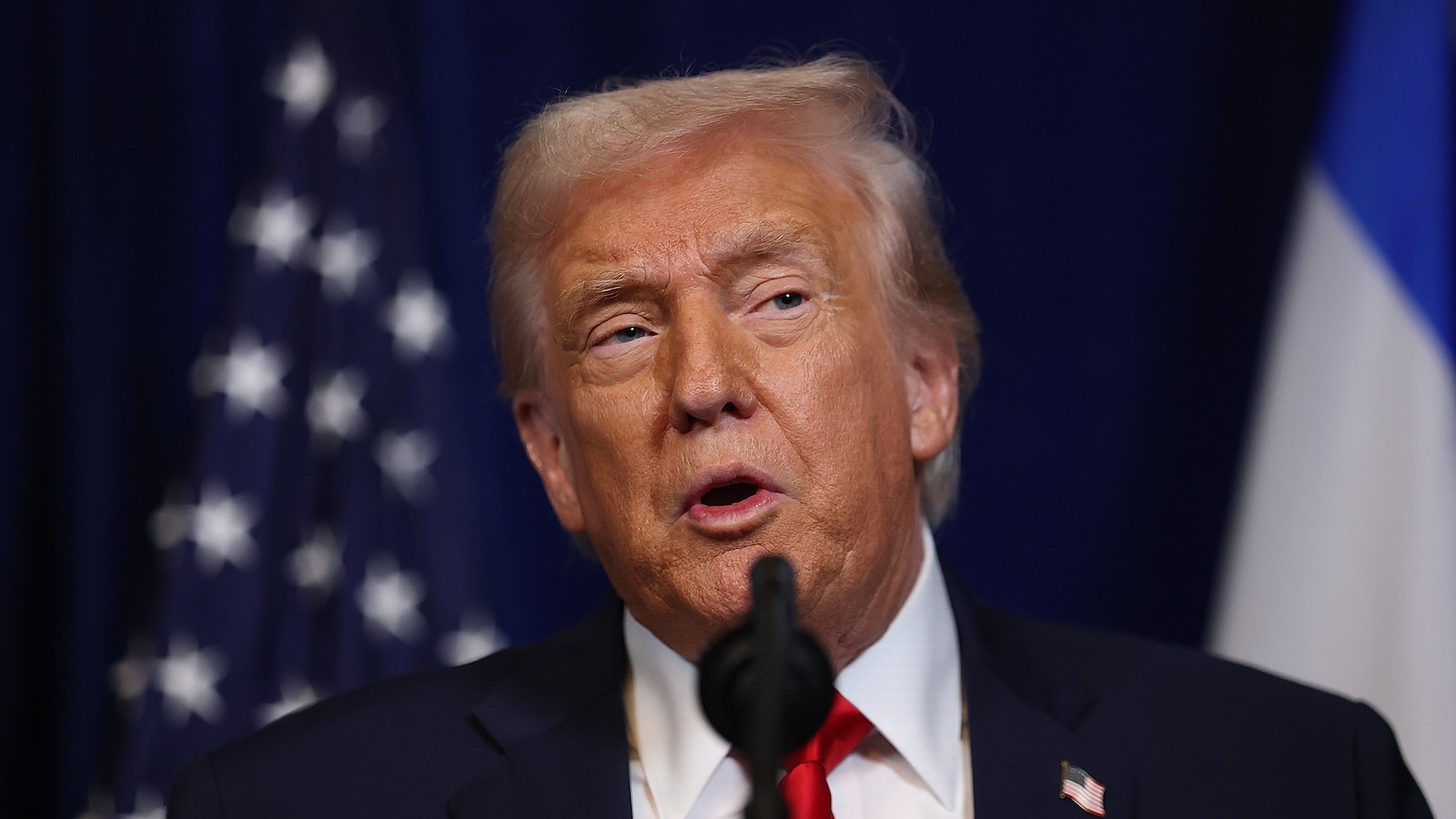
President Trump warned the U.S. is “locked and loaded” to “rescue” peaceful protesters in Iran if Tehran shoots demonstrators, while Iran’s top security official Ali Larijani warned U.S. interference would produce regional chaos and threaten American interests. The protests, which began over high inflation and a record-low currency, have broadened into broader anti-regime unrest; Trump additionally threatened to strike if Iran rebuilds its nuclear or military capabilities. The escalation increases geopolitical risk in the Middle East with potential implications for defense and energy-sensitive assets and emerging-market FX exposed to Iran-related shock scenarios.
Market structure: Near-term winners are defense primes (LMT, NOC, RTX, ETF: ITA) and crude producers (XOM, CVX, ETF: XLE) from a premium on geopolitical risk; losers are EM equities/currencies (EEM, local FX) and travel/leisure (DAL, UAL) due to higher fuel costs and risk-off flows. Pricing power shifts toward firms with government contracts and upstream oil exposure; consumer cyclicals and EM importers face margin pressure if Brent > $85/bbl for >30 days. Cross-asset: expect immediate USD strength and safe-haven bids in gold (GLD) and U.S. Treasuries, but a sustained oil shock would push inflation expectations and sovereign yields higher over quarters.
Risk assessment: Tail risks include direct U.S.–Iran kinetic escalation or Strait-of-Hormuz disruptions that could send Brent >$100 within weeks and spark 10–20% drawdowns in global equities. Time horizons split: days—volatility spikes and FX dislocations; weeks/months—commodity-driven inflation and earnings hits for travel/EM; quarters—higher defense budgets and re-rating of energy/defense sectors. Hidden dependencies: sanctions, shipping insurance (WSA rates), and Israel’s actions; catalysts include casualty reports, troop movements, or oil export interruptions.
Trade implications: Tactical plays: overweight defense and upstream energy for 3–9 months; hedge with VIX call/term-structure if volatility spikes. Pair trades: long ITA (or LMT) vs short DAL/UAL to capture relative resilience; long GLD and short EEM on USD rally. Use options for asymmetric exposure—buy 3-month call spreads on XOM/CVX (6–12% OTM) sized 1–2% NAV, and buy 1–2% notional VIX calls if VIX >20.
Contrarian angles: Consensus may overpay near-term for large defense names—consider buying longer-dated (12–24 month) call options instead of stock to avoid near-term mean reversion. EM sell-off could be overdone if disruption is localized—look for selective dips in high-quality EM exporters (e.g., energy-linked names) to pick up at 20–30% discounts. Historical analogues (2019–2020 Gulf tensions) show short volatility windows; scale into positions and set objective exit triggers (oil back below $75 or VIX normalizing below 18).
AI-powered research, real-time alerts, and portfolio analytics for institutional investors.
Request DemoOverall Sentiment
moderately negative
Sentiment Score
-0.50
