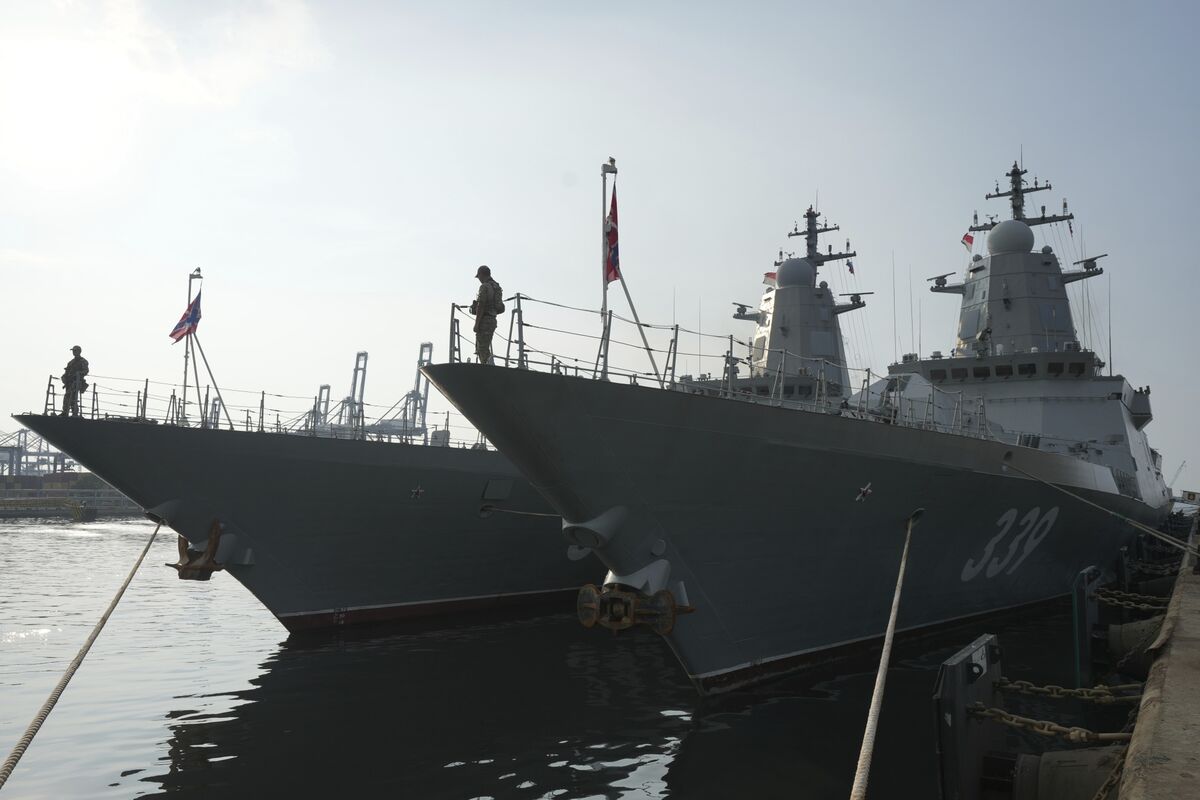
Russia plans to provide naval convoys, deploy protective equipment, and consider armed escort teams for merchant ships and its so-called 'shadow fleet', according to a senior Kremlin aide. The move raises geopolitical risk for shipping, insurers and energy commodity flows, potentially widening risk premia on Russian-flagged cargoes and complicating sanctions enforcement; monitor freight rates, insurance costs and energy logistics for sector-level impacts.
This is an operational mitigation that reduces the perceived tail-risk of sanction-driven maritime trade, which should mechanically re-rate the economics of older tankers and “shadow fleet” owners by lowering voluntary war-risk premiums and opening a subset of cargo flows that were paying large premia or trading off-market. Expect a phased impact: initial commercial pickup in 3–6 months as insurers, charterers and crews test procedures; a more durable earnings uplift for owners in 6–18 months if convoys scale beyond pilot corridors. Defense and maritime service providers are the immediate second-order beneficiaries: demand will shift toward littoral patrol vessels, naval escort systems, communications/sensor suites and armed-escort training — a multi-year replacement/retrofit cycle for platforms and mission systems. Insurers and reinsurers should see higher war-risk policy volumes and sustained premium levels even if absolute claim frequency falls, which supports margin expansion in underwriting cycles. There are clear tail risks and reversal catalysts. A single high-casualty incident involving a convoy would prompt immediate boycotts, port denials and a spike in premiums—prices could gap worse than current levels within days and sustain for months. Conversely, coordinated international countermeasures (naval interdictions, port bans on Russian-flag vessels) could prevent convoy routes from achieving scale, capping the positive thesis within 3–9 months. The market’s natural over/under is binary: traders may leap to re-rate shipping equities on the mere announcement, but execution is costly and crewed convoys are slow to scale. Favor trades that capture convex optionality to upside in 6–18 months while limiting exposure to a short-lived policy announcement or a geopolitical shock that reverses flows overnight.
AI-powered research, real-time alerts, and portfolio analytics for institutional investors.
Overall Sentiment
mildly negative
Sentiment Score
-0.25
