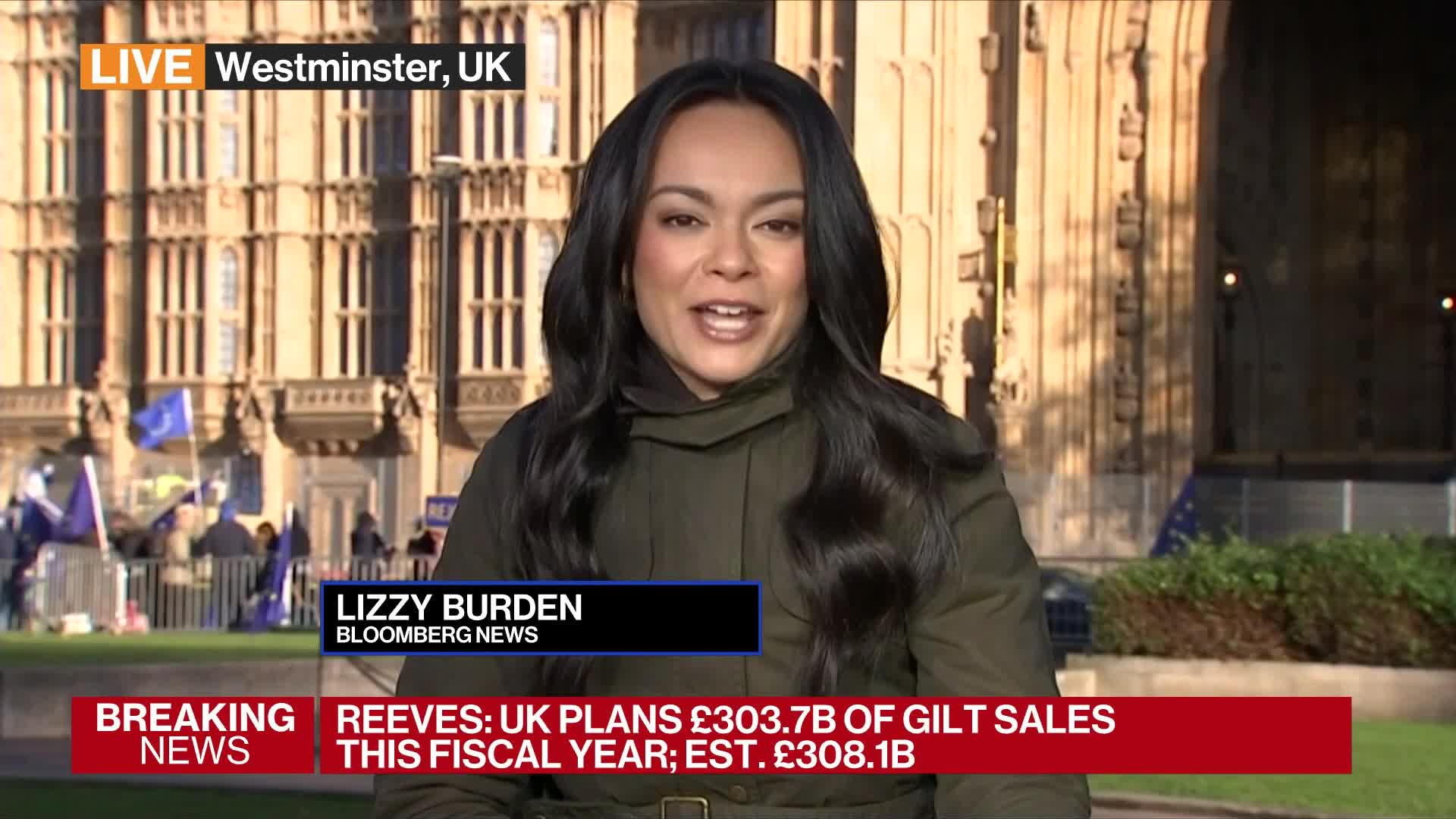
The Chancellor has doubled stated fiscal headroom to £21.7bn (following a premature OBR release) while the Office for Budget Responsibility concurrently downgraded growth and flagged rising welfare costs and slower living‑standards improvement. Tax burden will rise to 38% of GDP—highest since WWII—driven in part by a freeze to income tax thresholds that is expected to raise £12.7bn by 2031 and by lifting the two‑child benefit cap at a cost of about £3bn by decade‑end. Markets reacted intra‑speech with government yields falling but exhibiting whipsawing as investors assess whether the largely backloaded fiscal tightening will be credible enough to curb inflation.
Market structure: The Chancellor’s package (tax burden rising to ~38% of GDP; freezing thresholds raising ~£12.7bn by 2031) is a net fiscal tightening for households that compresses real incomes and consumption; consumer discretionary, leisure and domestically-focused retail will see margin pressure while banks and gilt-sellers gain pricing power from higher nominal rates. Supply/demand: backloaded tightening plus growth downgrades create a two-way shock — near-term fiscal credibility can lower risk premia, but slower growth raises future borrowing needs, increasing gilt issuance volatility. Cross-asset: expect elevated volatility in 10y UK gilts and GBP versus EUR/USD; commodity demand risk (oil/industrial metals) is modestly negative, while short-term equity beta in FTSE 250 should underperform FTSE 100.
Risk assessment: Tail risks include a political backlash (snap fiscal reversal) or sovereign rating pressure if growth worsens — both could spike 10y yields >150–200bp from current levels in a stress scenario within 3–6 months. Immediate (days): volatile repricing around OBR/BoE commentary; short-term (weeks–months): market tests delivery credibility with gilts and GBP; long-term (quarters–years): structurally lower GDP growth and compressed equity multiples if tax base permanently shifts. Hidden dependencies: BoE reaction function — if CPI falls faster than markets expect, easing could collapse gilt yields and pound; monitor 3m CPI and 2y swap breakevens as triggers.
Trade implications: Tactical: establish modest directional and relative-value trades to capture volatility and policy risk. Buy 3–5% notional short in long-dated gilt exposure (eg. short iShares UK Gilts UCITS ETF IGLT.L) for 3–9 months, trim if UK 10y yield falls below 2.75% or rises above 4.25%. Pair: long 3% HSBC Holdings (HSBA.L) vs short 2% Next (NXT.L) for 6–12 months — banks benefit from higher rates, retailers suffer disposable income squeeze. Options: buy 1–2% portfolio notional 1–2 month straddles on UK 10y gilt futures and 3-month GBP puts (GBPUSD) to hedge policy/FX whipsaw.
Contrarian angles: Consensus assumes credible backloaded fiscal consolidation; that underestimates the chance of political reversal and BoE easing if growth/wages deteriorate — a scenario that would cause sterling and long-duration gilts to rally sharply. Historically (post-2010 austerity), fiscal tightening with weak growth produced lower long-term yields once central bank accommodation arrived — watch OBR revisions and BoE minutes over next 30–90 days as the key reversal catalysts. Unintended consequence: threshold freezes create bracket creep that may permanently broaden higher-rate taxpayers, lowering long-term consumer elasticity and capping retail multiple expansion.
AI-powered research, real-time alerts, and portfolio analytics for institutional investors.
Request DemoOverall Sentiment
moderately negative
Sentiment Score
-0.50
