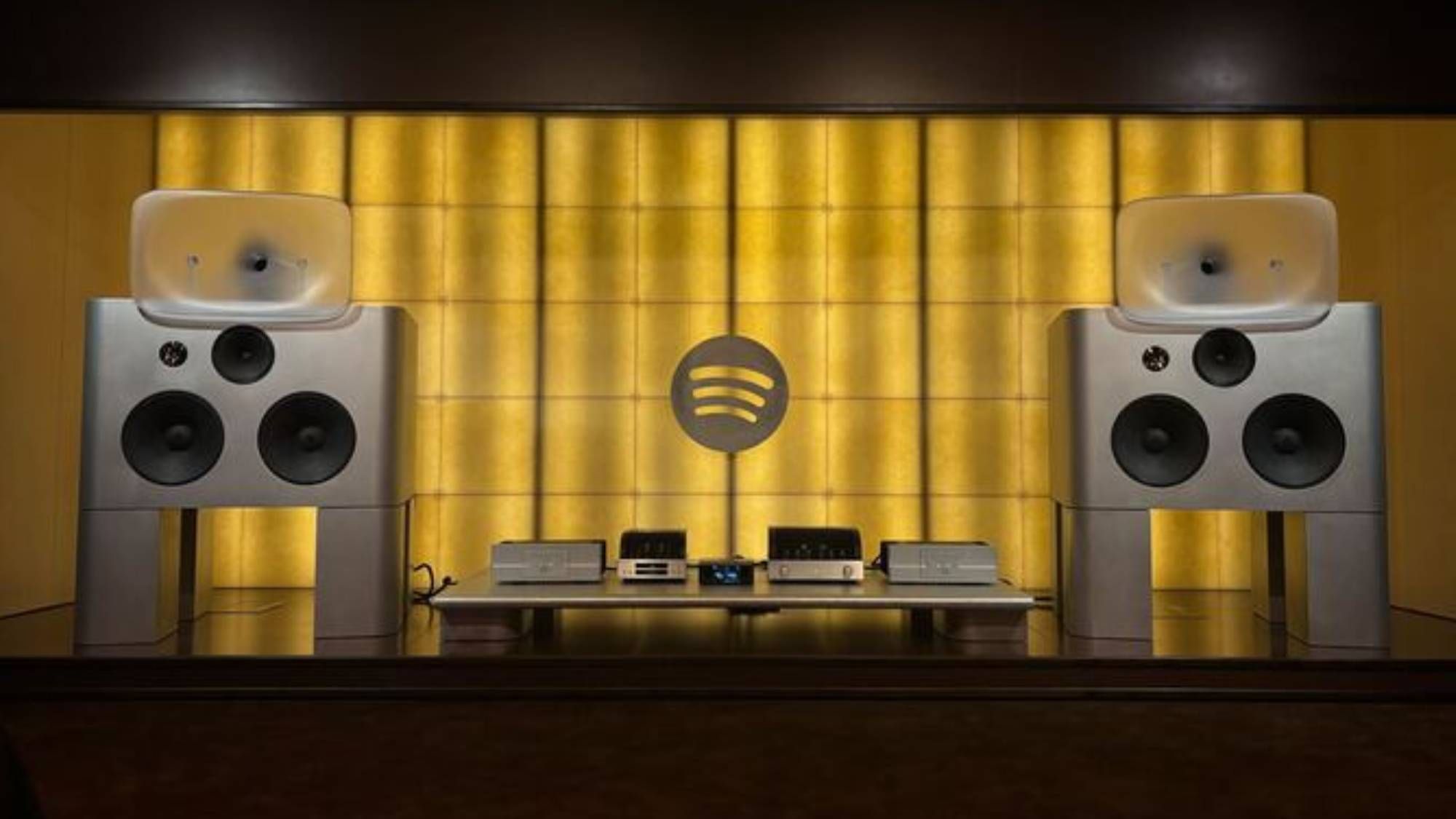
Spotify has opened a permanent Listening Lounge at its London headquarters to showcase lossless audio and promote 'slow listening'; the space was developed by Billie Baier with Friendly Pressure and Cake Architecture. The bespoke stereo rig centers on a Bluesound Node Icon streamer, PrimaLuna DAC and Evo 400 valve preamplifier, two Bryston 3B Cubed power amplifiers and FP-4XXX Alnico loudspeakers with custom SOES Resin Horns. The venue is intended for intimate fan-artist listening events and exclusive album releases/anniversary events, aimed at deepening fan engagement rather than producing immediate financial impact.
Premium-positioning through curated, high‑touch audio experiences is a marketing lever with asymmetric unit economics: a tiny incremental lift in conversion or retention (0.5–2% of ad users) converts to a disproportionate revenue gain given Spotify's scale — a back‑of‑envelope 1% conversion from ad to premium equates to low‑hundreds of millions in ARR and meaningfully improves free cash flow over 12–24 months. The mechanism is not direct ticket revenue from events but improved LTV via higher ARPU and lower churn in a cohort that is harder to reach through digital ads alone.
This strategy changes bargaining dynamics with labels and artists: exclusive or early-release marketing tied to premium experiences increases Spotify's non‑price value to rightsholders, allowing it to push for more favorable promotional windows or co‑funded release events. That reduces marginal content acquisition cost per incremental subscriber versus competing fear‑of‑missing‑out promotional spends, but it also risks escalating one‑off promotional commitments if artists demand payments for access.
On product architecture, double‑down on 'stereo authenticity' versus processed spatial formats is a niche but sticky differentiator for audiophile segments; however, diffusion is limited without hardware tie‑ins. Public beneficiaries are likely platform owners and premium‑audio OEMs that can co‑brand or bundle services — mass adoption requires either price subsidies, hardware partnerships, or distributed experiential programming, implying a 6–24 month rollout timeline to test ROI.
Key risks: macro subscription sensitivity (6–12 months) and the scaling cost of physical experiences (real estate, staffing) that could turn a marketing win into a headline cost item. A reversal catalyst would be a competitor bundling lossless+exclusive sessions into a low‑cost ecosystem bundle (Apple/Amazon) or a measurable failure to move conversion KPIs after a 12‑month pilot, which should trigger reallocation of spend back to algorithmic growth channels.
AI-powered research, real-time alerts, and portfolio analytics for institutional investors.
Request DemoOverall Sentiment
mildly positive
Sentiment Score
0.25
Ticker Sentiment
