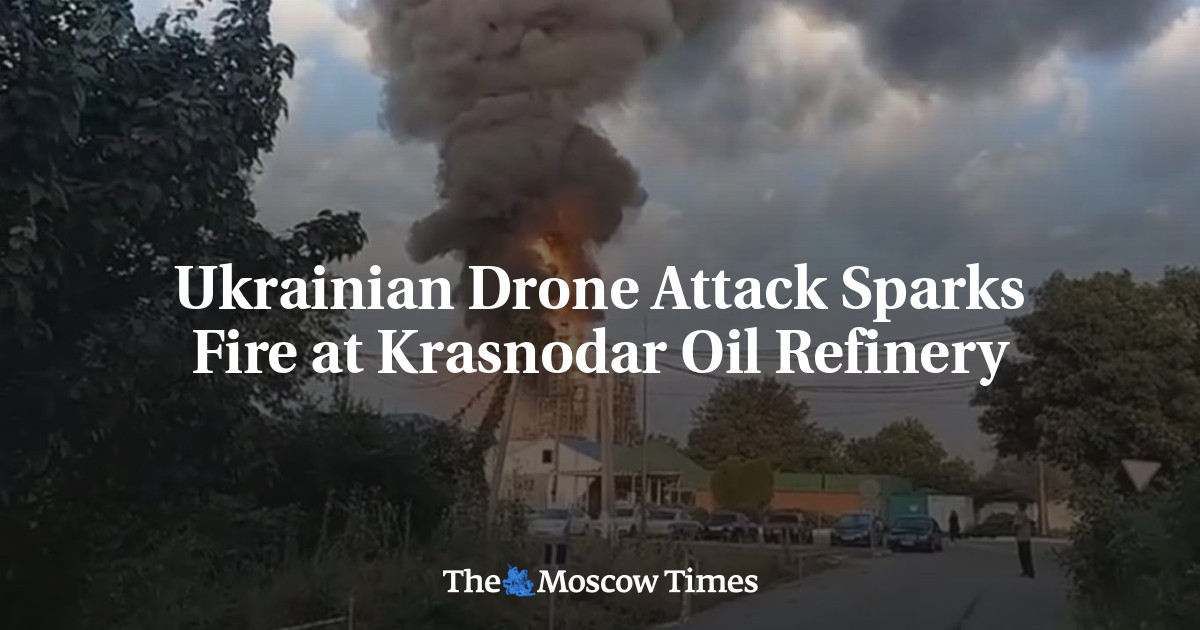
Ukrainian drone strikes targeted Russia's Afipsky oil refinery in the Krasnodar region, sparking a fire at a gas condensate processing unit that was later extinguished. This facility, processing approximately 6 million metric tons of crude annually, is a recurring target, underscoring Ukraine's strategy to disrupt Russian energy infrastructure and posing continued risks to regional energy supply and operational stability.
A recent Ukrainian drone strike successfully targeted Russia's Afipsky oil refinery in the Krasnodar region, causing a fire at a gas condensate processing unit. This incident is not isolated, as the facility was also attacked in February, indicating a persistent and targeted campaign against Russian energy infrastructure. The Afipsky refinery, with an annual processing capacity of approximately 6 million metric tons of crude oil, represents a significant asset, and its repeated targeting underscores the material risk to Russian refining output. The broader context of the attack, which saw Russian air defenses intercept 82 drones overnight, highlights the escalating scale and frequency of such operations. This sustained pressure on Russian energy assets introduces a notable level of operational uncertainty and disruption risk, which is reflected in the moderately negative sentiment and the ongoing threat to regional supply stability.
AI-powered research, real-time alerts, and portfolio analytics for institutional investors.
Request DemoOverall Sentiment
moderately negative
Sentiment Score
-0.60
