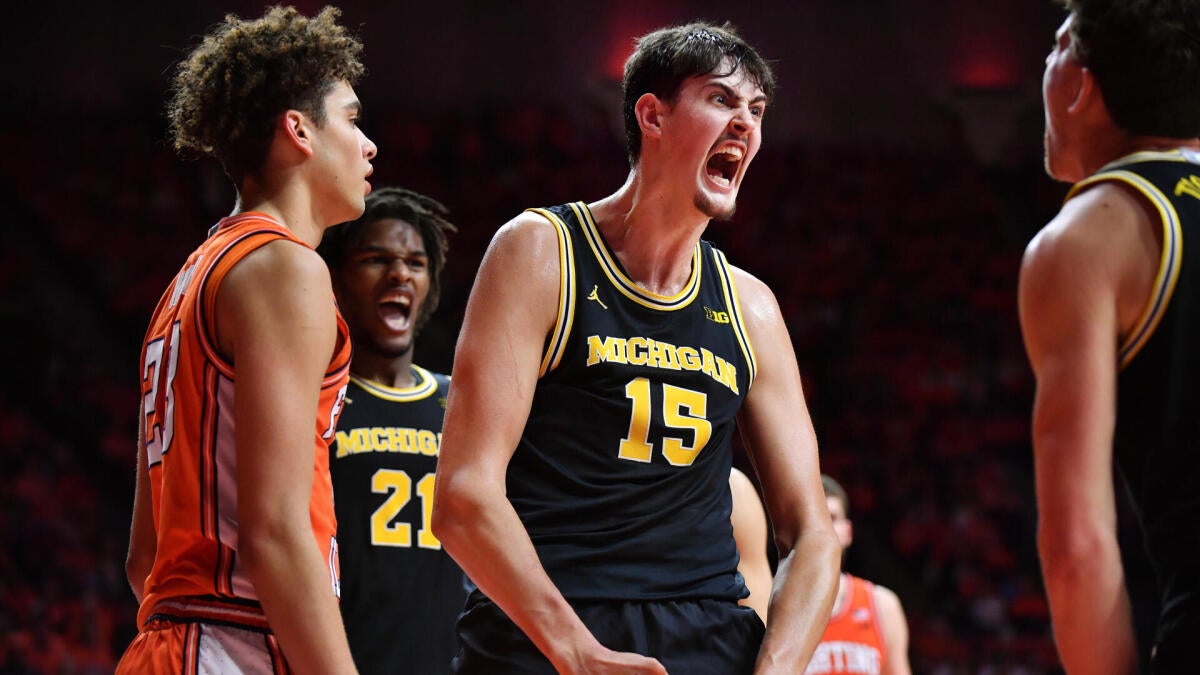
Michigan is favored by 8.5 points (money line -389) over Tennessee (+300) with the game total set at 146.5. SportsLine's projection model ran 10,000 simulations and forecasts the Over (146.5) in 58% of sims, a combined score of ~150, and both teams clearing ~70 points; the model also indicates one side covers the spread in >50% of sims but the specific spread pick is behind a paywall.
The publicization of a high-frequency simulation model shifts value from raw broadcast eyeballs toward measurable prediction and engagement products; that flow benefits platforms that can capture affiliate betting revenue, subscription upgrades, and higher CPMs for event-driven ad inventory. If even a few percentage points of incremental conversion accrue during peak tournament weekends, the revenue uplift compounds because affiliate fees and in-app spend are high-margin and recur across future events.
Near-term catalysts are binary and concentrated: single high-visibility misses or hits (an upset or model-validated blowout) will move consumer trust and affiliate traffic sharply over days, forcing sportsbooks to rebalance liabilities and potentially widen spreads. Over months, the real test is persistence — whether model accuracy holds across opponent styles and sample drift; a deterioration would reduce conversion and could produce reputational damage that is hard to reverse.
Second-order effects favor vertically integrated media/betting tie-ups and punish pure-play bookmakers with thin media distribution. Tactical market moves should therefore target asymmetric exposure to short-term betting-volume spikes (options on sportsbook ops) while establishing longer-duration selective longs in media platforms that own predictive IP and direct-to-consumer channels, sized to reflect execution risk and potential churn if the model underperforms.
AI-powered research, real-time alerts, and portfolio analytics for institutional investors.
Overall Sentiment
neutral
Sentiment Score
0.00
