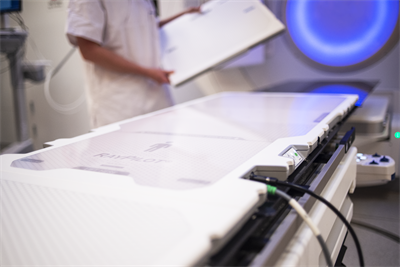
Micropos Medical AB has entered an agreement with Velindre Cancer Center to implement its Raypilot System and ASBRT workflow for high‑precision prostate cancer radiotherapy, with system installation and the first patient treatment planned for Q1 2026. The technology enables real‑time prostate motion tracking, eliminates the need for implanted gold markers, and supports hypofractionated treatment in as little as three to five days; the deal could help drive clinical adoption and incremental commercial traction for Micropos, which is listed on the Spotlight Stock Market.
Market structure: The direct winners are Micropos Medical (small‑cap, Spotlight Stockholm) and clinics that adopt real‑time tracking (faster SBRT workflows, potential to charge premium for shorter courses). Incumbent suppliers of implanted fiducial markers and legacy SBRT platforms (smaller vendors with narrow footprints) face share erosion; larger integrated players (Siemens Healthineers, Elekta) benefit via complementary linac sales and service upsell. Near‑term supply is limited — expect constrained device deliveries and pricing power for proven systems during 12–24 month adoption window, with minimal macro bond/commodity impact but modest SEK sensitivity and hospital capex spillover to industrial suppliers.
Risk assessment: Key tail risks are regulatory/reimbursement setbacks, negative clinical/outcome publications, or failed integration at Velindre; each could halve Micropos valuation in <6 months. Time horizons: immediate (days/weeks) — sentiment moves on press milestones; short (3–12 months) — installation + early outcomes; long (1–3 years) — adoption curve and reimbursement shifts. Hidden dependencies include interoperability with varied linac fleets, training burden, and procurement cycle timing; catalysts include first‑patient (planned Q1 2026), peer‑reviewed data, and new ICD/reimbursement codes.
Trade implications: Direct play — small, conviction‑weighted long in Micropos ahead of Q1 2026 milestone; hedge with long exposure to large suppliers (SHL.DE or EKTAY) rather than pure med‑tech small caps. Pair trade — long Siemens Healthineers (SHL.DE) vs short Accuray (ARAY) for 6–12 months to capture scale/installation advantages. Options — use 9–15 month call spreads on SHL.DE (levered capex exposure) sized 0.5–1% notional; avoid illiquid options on Micropos until liquidity improves.
Contrarian angles: Consensus underestimates slow adoption friction — expect 2–4 year plateau to material market share rather than immediate disruption; conversely, success at Velindre is a high‑leverage binary that could re‑rate Micropos >2x if peer‑reviewed safety/efficacy published within 12 months. Historical parallel: new radiotherapy tech typically needs 3+ years of evidence and procurement cycles to move market share; unintended outcome — consolidation of treatments in larger centers, pressuring smaller hospitals' CAPEX cycles.
AI-powered research, real-time alerts, and portfolio analytics for institutional investors.
Request DemoOverall Sentiment
mildly positive
Sentiment Score
0.28
