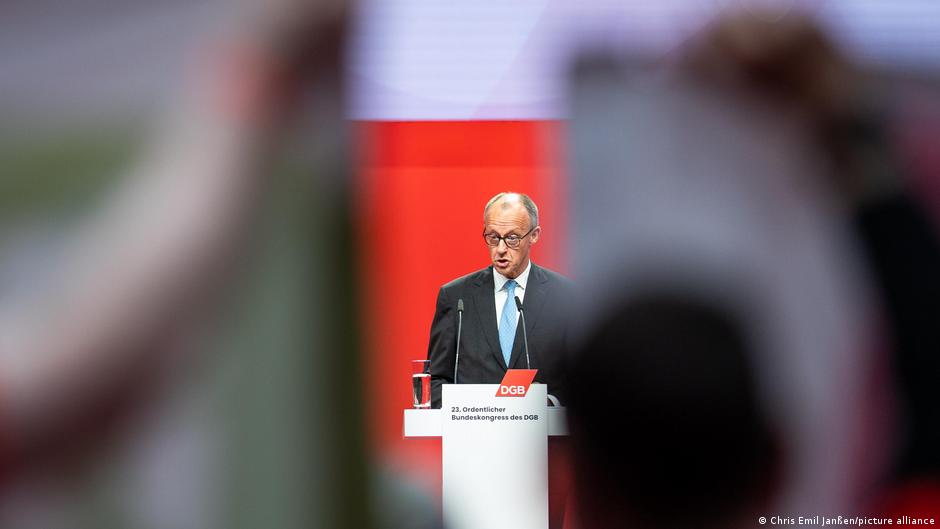
Germany's April inflation rose to 2.9% from 2.7% in March, with energy prices up 10.1% year on year and fuel costs jumping 26.2%. Chancellor Merz warned Germany is losing more than 100,000 industrial jobs annually as he pushed for structural reforms, while the government also outlined tougher customs enforcement and a new cyberdefense law. Lufthansa separately said it could lift its ITA Airways stake to 90% for an additional €325 million, pending regulatory approval.
The market takeaway is not “more Germany politics,” but a growing probability that Berlin shifts from cyclical support to forced cost redistribution. If wage restraint, pension reform, tighter customs enforcement, and cyber-defense spending all advance together, the near-term winners are domestically exposed automation, defense/cyber, and compliance providers; the losers are labor-intensive cyclicals and low-margin import distributors that rely on cheap external sourcing. The bigger second-order effect is that Germany is trying to reprice its social contract while inflation is re-accelerating, which raises the odds of short-lived strikes, delayed capex, and slower margin recovery for industrials.
The inflation print matters less for headline direction than for policy sequencing. Elevated energy-driven inflation gives the ECB less room to ease aggressively, while Berlin’s reform push simultaneously pressures firms to absorb higher labor and compliance costs; that combination is toxic for German mid-caps with weak pricing power. The customs tightening is also a stealth tariff on low-value imports, which should support domestic retailers with local sourcing but compress volumes for cross-border e-commerce and last-mile logistics names that depend on parcel growth.
Cybersecurity is the most mispriced leg because the policy response is likely to convert a one-time loss estimate into recurring budget authorization. The likely budget beneficiaries are firms selling detection, endpoint, identity, and critical-infrastructure security into the public sector and regulated industries; the risk is that “active cyberdefense” may evolve into procurement delays rather than near-term contract acceleration, so timing matters. The key catalyst window is the next 1-3 months: pension and reform proposals before summer recess, EU parcel-fee implementation by November, and any escalation in inflation forcing the government to choose between growth support and fiscal discipline.
Consensus is probably underestimating the political durability of the reform agenda’s market implications. Even if Merz’s rhetoric is noisy, the underlying direction is toward higher friction costs for imports, greater security spending, and more pressure on domestic employers to fund the transition—an environment that rewards firms with regulated demand or pricing power, not broad German beta. The contrarian risk is that reform fatigue triggers a policy retreat and temporary relief rally in cyclicals, but that would likely be a tradable squeeze rather than a durable regime change.
AI-powered research, real-time alerts, and portfolio analytics for institutional investors.
Request DemoOverall Sentiment
mildly negative
Sentiment Score
-0.15
