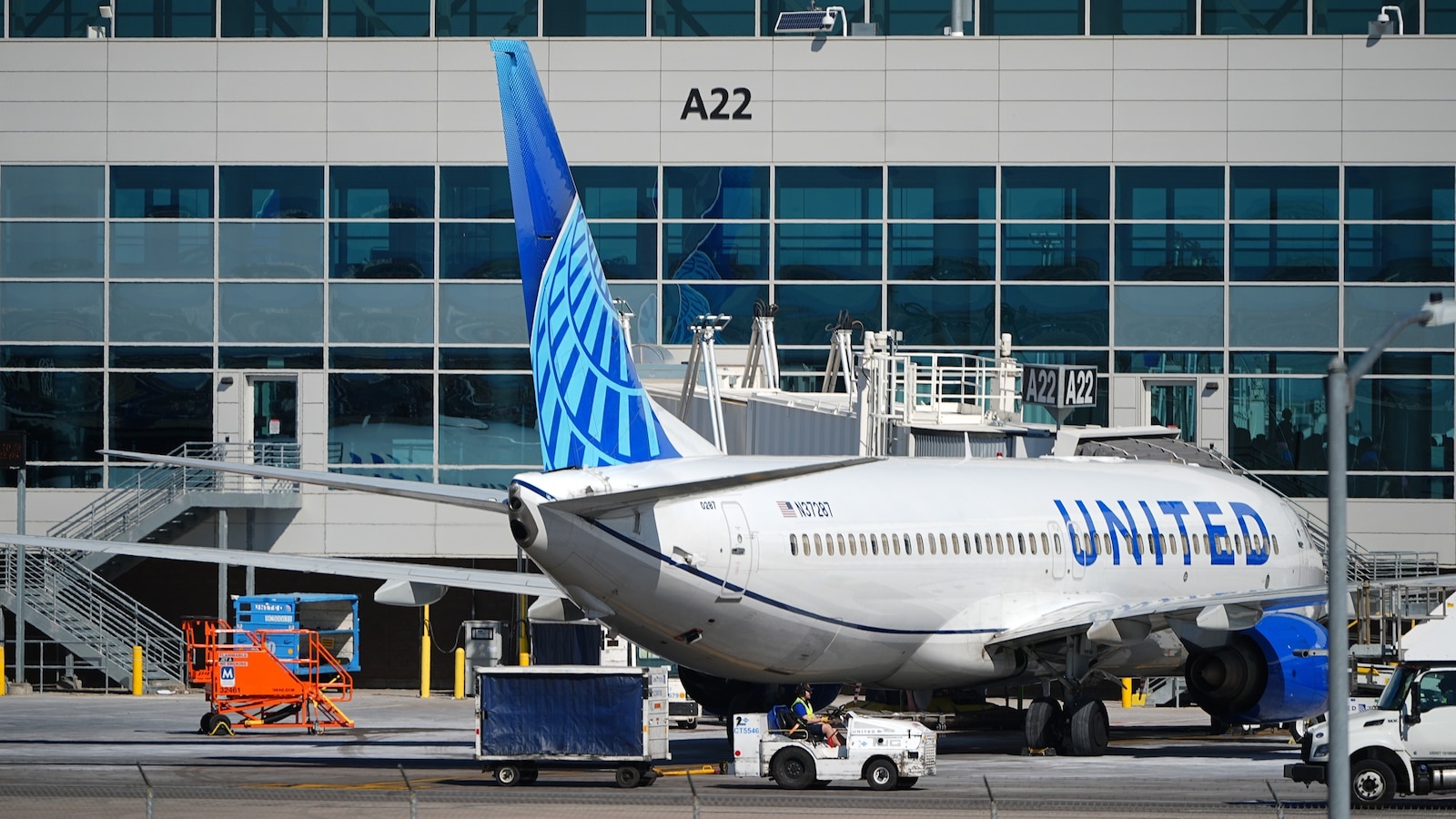
United is raising checked-bag fees by $10 effective for tickets bought on/after April 3: first bag $45 prepaid ($50 within 24 hours of flight) and second bag $55 prepaid ($60 within 24 hours). The change covers travel to/from the U.S., Mexico, Canada and Latin America; the airline cites jet fuel costs that have doubled YTD (Argus U.S. Jet Fuel Index $4.88/gal) and CEO Scott Kirby warned fuel could add about $11B/year if sustained. United has cut some off-peak/redeye capacity and some fares have risen 15-20%; JetBlue has also increased baggage fees.
The fee move is a lever on unit revenue that trades off short-run margin uplift for higher demand elasticity and reputational friction. Ancillary pricing is low-friction revenue capture, but it compresses marginal willingness-to-pay and can accelerate substitution toward lower-cost carriers or bundled-fare products; expect measured revenue per passenger improvement but a non-linear hit to yield if customers shift channels or booking cadence within 3-12 months.
From a competitive standpoint, airlines with stronger loyalty ecosystems and co-brand card economics will internalize more of the upside from ancillary pricing while leaking less demand to rivals — that asymmetry creates a dispersion opportunity across carriers. Second-order operational effects matter: more carry-on usage (and attempts to avoid checked fees) increases boarding friction and turn-time variance, raising unit costs and reducing aircraft utilization if not offset by higher fares.
Key catalysts to watch are fuel-price trajectory, capacity adjustments and consumer behavior signals (search/booking lead times, upsell take rates). A sharp fuel decline or aggressive capacity restoral would reverse pricing impetus within 60-120 days; conversely, sustained fuel premiums will force further product unbundling and fare inflation over multiple quarters. Regulatory or card-partner changes (e.g., limits on surcharge pass-through) are low-probability but high-impact tails that could re-rate the sector.
Contrarian lens: the market may underprice the benefit of targeted ancillary capture and card economics for the strongest networks, meaning select airlines could re-rate higher even as peers struggle. The right exposure is therefore selective — favor carriers with durable loyalty, predictable corporate mix, and nimble capacity management rather than a blanket sector bet.
AI-powered research, real-time alerts, and portfolio analytics for institutional investors.
Request DemoOverall Sentiment
mildly negative
Sentiment Score
-0.15
Ticker Sentiment
