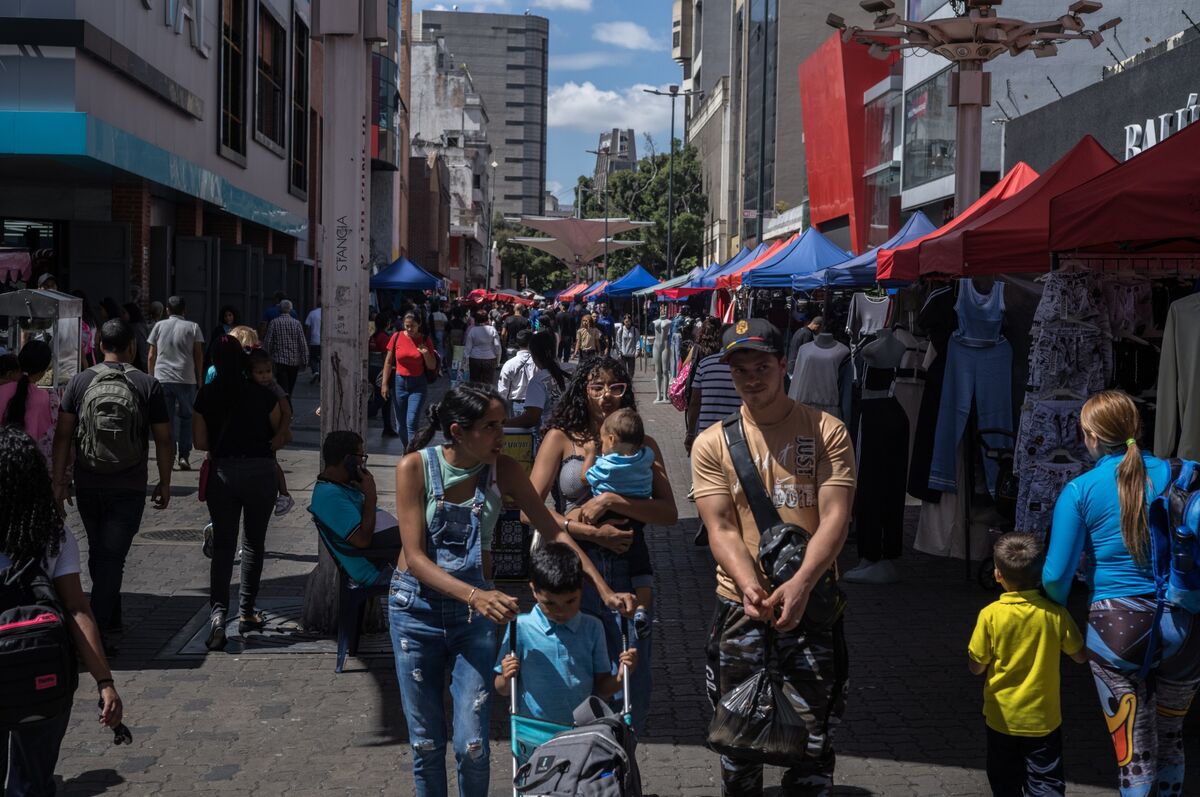
In Caracas upscale shoppers are buying Thanksgiving fare despite heightened political rhetoric and Maduro’s recent call to resist a potential U.S. invasion, underscoring a degree of consumer resilience in Venezuela amid geopolitical tension. The anecdote suggests localized discretionary spending and social-normalcy signals rather than any immediate macroeconomic turn, but sustained political escalation could alter risk sentiment for assets tied to Venezuela and broader emerging-market risk premia.
Market structure: Local Venezuelan retailers, dollarized importers, remittance/payment channels and informal food suppliers are short-term winners as consumers demonstrate resilient discretionary spending despite escalation rhetoric; pricing power shifts to dollar‑receiving vendors and wholesalers, compressing margins for state‑subsidized suppliers. Sovereign creditors, PDVSA counterparties and holders of bolivar‑linked assets are losers as political brinksmanship increases risk premia and likely raises inflation/import costs over months.
Risk assessment: Tail risks include a low‑probability US military or severe sanctions escalation that would widen Venezuela sovereign/PDVSA CDS by 300–600bps and disrupt regional oil logistics within days–weeks; second‑order risks are remittance curtailment and banking de‑risking by correspondent banks that would hit household liquidity over months. Key hidden dependencies are Chinese/Russian political support, oil price moves (>+/-10% alters Maduro’s risk tolerance) and election cycle timing (6–12 months horizon) that could trigger rapid policy shifts.
Trade implications: Position for higher geopolitical volatility and local demand resilience: favor liquid safe‑haven hedges (gold), targeted credit protection (CDS) and selective long exposure to Latin American consumer tech that can capture dollarized consumer spend, while hedging broad EM beta with options. Timing: near‑term (0–3 months) protect with hedges; add selective carry/longs on conviction 3–12 months as noise fades.
Contrarian angles: Consensus underestimates the persistence of dollarized consumption despite political threats — short bursts of risk premium may overshoot then mean‑revert; conversely, markets may be underpricing the political cost to oil/logistics if rhetoric escalates. Watch for >200bps move in Venezuela CDS or >10% local oil export disruption as triggers for re‑rating positions and pair reversals.
AI-powered research, real-time alerts, and portfolio analytics for institutional investors.
Request DemoOverall Sentiment
neutral
Sentiment Score
0.00
