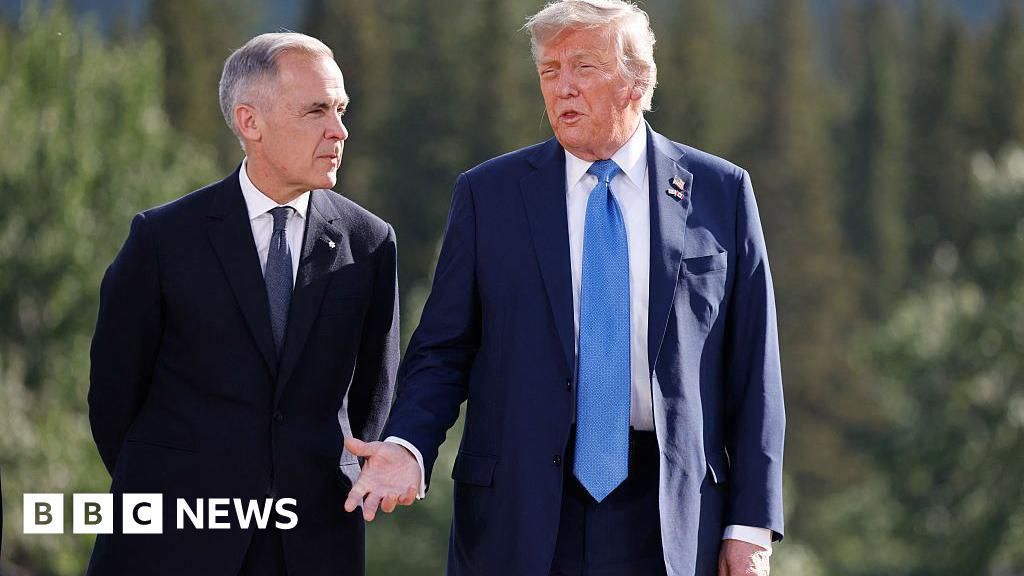
President Trump threatened a 100% tariff on all Canadian goods if Canada concludes a trade deal with China, posting the warning on Truth Social and accusing Canadian Prime Minister Mark Carney of turning Canada into a “drop off port” for Chinese goods. The spat follows reports of a Canada-China deal that would ease Chinese EV tariffs and lower levies on Canadian agricultural products; Trump provided no timeline or enforcement details but has previously imposed new tariffs on Canada, including a 35% tax on goods outside reviewed free-trade terms. The escalation—coupled with earlier US moves to withdraw diplomatic invitations and comments on defense plans—raises near-term policy risk for cross-border trade-exposed sectors (autos, agriculture, supply chains) and adds political uncertainty to US-Canada economic relations.
Market structure: A credible 100% tariff threat is a direct negative shock to Canadian exporters (energy, metals, lumber, agriculture, automotive parts) and to TSX-heavy sectors; US importers and domestic manufacturers gain near-term pricing power. Expect a sharp re-routing incentive: short-term supply-chain disruption (weeks) raising input costs by an estimated 10-30% for affected US downstream firms, while Canada’s GDP-exposed sectors could see revenue down 15-40% in a worst-case embargo.
Risk assessment: Tail risks include a sustained US-Canada trade blockade, retaliation by Canada (tariffs/FTA disruption), and financial stress for Canadian banks if corporate defaults rise — credit spreads could widen 10–50bp in months. Immediate market moves (days) will be FX- and volatility-driven (CAD weaker by 3–8%, IV on Canadian equities up 30–80%), short-term (weeks–months) sees earnings revisions; long-term (quarters) could reconfigure North American auto supply chains toward Mexico/US reshoring.
Trade implications: Use FX to hedge: USD/CAD options and Canadian equity downside protection (EWC puts). Rotate away from Canada-exposed names into large-cap US defensives and defense contractors (short-term safe haven). Options can monetize elevated IV: buy 3-month put spreads on EWC and 3-month USD/CAD call spreads sized to 0.5–2% NAV.
Contrarian: Consensus may overstate permanent decoupling — political threats often resolve or dilute after 1–3 months; a tactical rebound in CAD/TSX is plausible if de-escalation occurs. Conversely, complacency underprices conditionality: trades should size for asymmetric outcomes (10–20% downside but limited upside if rhetoric fades).
AI-powered research, real-time alerts, and portfolio analytics for institutional investors.
Request DemoOverall Sentiment
moderately negative
Sentiment Score
-0.45
