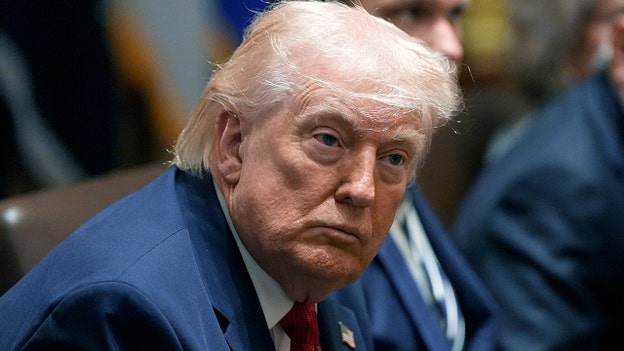
President Trump says the U.S.-Iran conflict is expected to last 4–6 weeks and revealed Iranian negotiators allowed at least eight oil tankers through the Strait of Hormuz — a chokepoint that historically transited ~20% of global oil/gas — while GCC officials allege Iran is charging fees for passage. The campaign has included targeted strikes on IRGC naval leadership, two deaths in the UAE from intercepted missile shrapnel, U.S. force posture increases (82nd Airborne elements, carrier strike group) and claims of >9,000 enemy targets struck. Regional air defenses have intercepted >90% of Iranian missiles/drones, but analysts warn low-cost Iranian projectiles are depleting expensive interceptors, implying sustained defense spending and higher energy/risk premia across markets.
A commercial maritime chokepoint being monetized creates an outsized pass-through to delivered energy costs because transport and insurance are near-immediate line items for every barrel. A typical reroute around southern Africa adds ~10–18 days per voyage and raises bunker burn and time-charter utilization such that landed cost can rise by ~$1–$6/bbl and TC rates can spike 40–120% depending on vessel class, concentrating near-term winners in tanker owners and ship finance.
The defensive asymmetry between low-cost attackers and high-cost interceptors is forcing a durable expenditure mismatch: a single intercept can cost 10^1–10^3x what the incoming munition costs, creating a sustainment problem for air-defense inventory and maintenance budgets. That arithmetic favors suppliers of lower-cost countermeasures (EW, decoys, loitering-munition neutralizers) in the 3–12 month window and pressures manufacturers of expendable interceptors to scale production or see per-engagement economics worsen.
If kinetic campaigning shifts toward irregular, hit-and-run tactics, the transition converts a short shock into a multi-year security premium for regional basing, logistics, and insurance, while depressing EM risk appetite and capital flows to nearby producers for quarters to years. Markets often underprice the multi-domain supply-chain impacts (freight, refining slate changes, credit spreads for regional corporates) because they focus on headline commodity prices rather than transport and defense cost inflation.
Contrarian angle: consensus treats any spike as transitory; the structural response—longer voyages, permanently higher war-risk premia, and accelerated onshore storage and domestic energy security spending—is more persistent. That implies convex upside for asset owners of transport capacity and defense technologies that lower per-engagement cost, and convex downside for exposed services/transport names if the premium persists beyond three months.
AI-powered research, real-time alerts, and portfolio analytics for institutional investors.
Request DemoOverall Sentiment
strongly negative
Sentiment Score
-0.65
Ticker Sentiment
