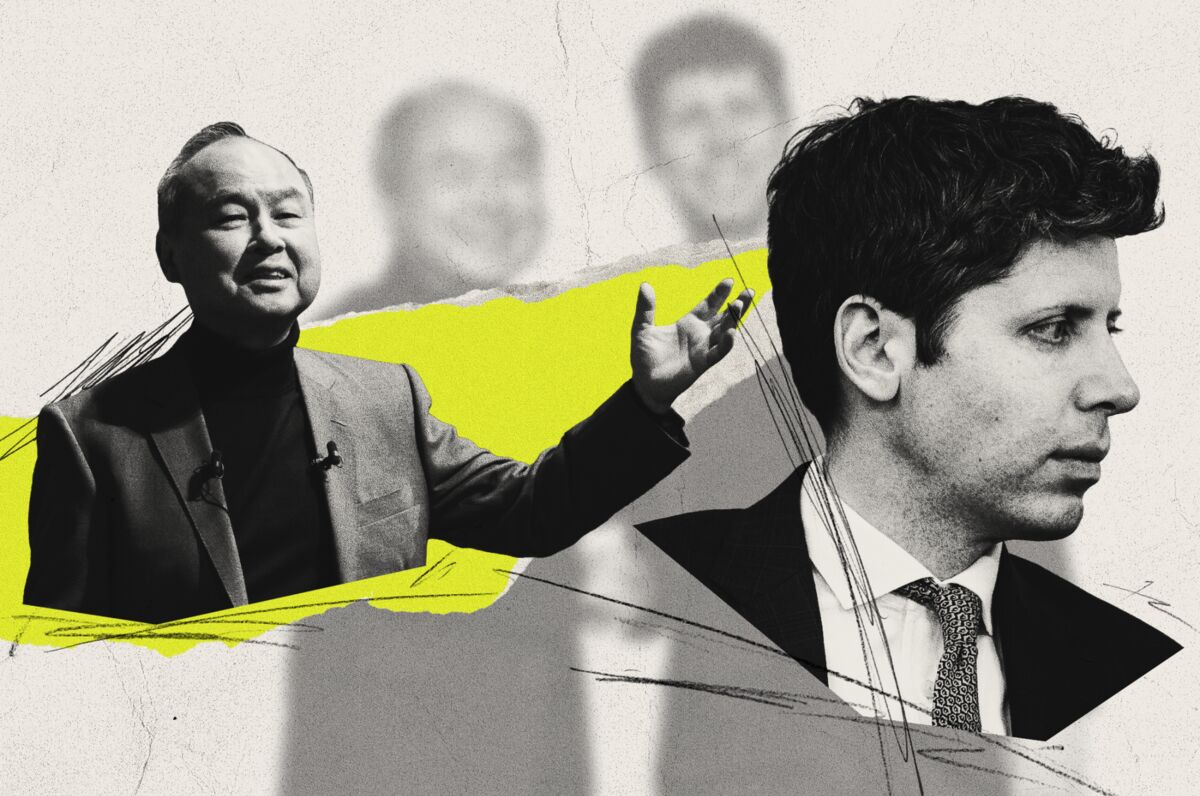
SoftBank has committed more than $60 billion to OpenAI, but internal concern is rising over Masayoshi Son’s unusually concentrated bet on Sam Altman and the US AI company. Rival Anthropic’s recent breakthroughs have raised doubts in markets about OpenAI just as it reportedly prepares for a possible IPO as early as this year. The article highlights governance and concentration risk rather than any immediate financial deterioration.
This is less about one venture allocation and more about governance drift inside a capital allocator that is now behaving like a single-name growth fund. When conviction concentrates around a founder narrative, the first-order risk is valuation; the second-order risk is that internal challenge evaporates, which usually shows up later as a worse entry price and less discipline on follow-on capital. In private markets, that tends to create a delayed impairment cycle: the market prices in “category winner” economics first, then re-rates when execution risk, monetization timing, or customer concentration becomes visible.
The competitive implication is that skepticism around OpenAI is not a bearish call on AI demand; it is a relative-value opportunity for alternatives with more conservative governance and clearer path-to-revenue. Anthropic benefits from any capital that wants exposure to frontier models without the same perception of personality risk, and hyperscalers remain the cleaner public-market expression of AI infrastructure demand because their monetization is diversified across cloud, ads, and enterprise workflows. The likely second-order effect is a widening gap between “AI as product” and “AI as platform” names, with the latter better insulated if public markets start discounting private-model funding risk.
Catalyst timing matters: the near term risk is not a collapse in fundamentals but a markdown in enthusiasm if the IPO window opens into a tougher sentiment tape. Over the next 1-3 months, any evidence that OpenAI’s growth requires more expensive capital or that rival model quality is converging could compress private-markup expectations across the AI venture complex. Over 12-24 months, the bigger issue is whether SoftBank’s capital structure and concentration limits force more asset sales or slower deployment elsewhere, creating hidden opportunity cost.
The contrarian view is that the market may be overreacting to governance optics while underpricing the option value of a winner-take-most AI platform. If OpenAI successfully converts distribution into recurring enterprise revenue, today’s unease will look like classic early-cycle discomfort. But the burden of proof has shifted: at this scale, the default assumption should be that any dependency on one founder narrative is a financing risk until proven otherwise.
AI-powered research, real-time alerts, and portfolio analytics for institutional investors.
Request DemoOverall Sentiment
mildly negative
Sentiment Score
-0.25
