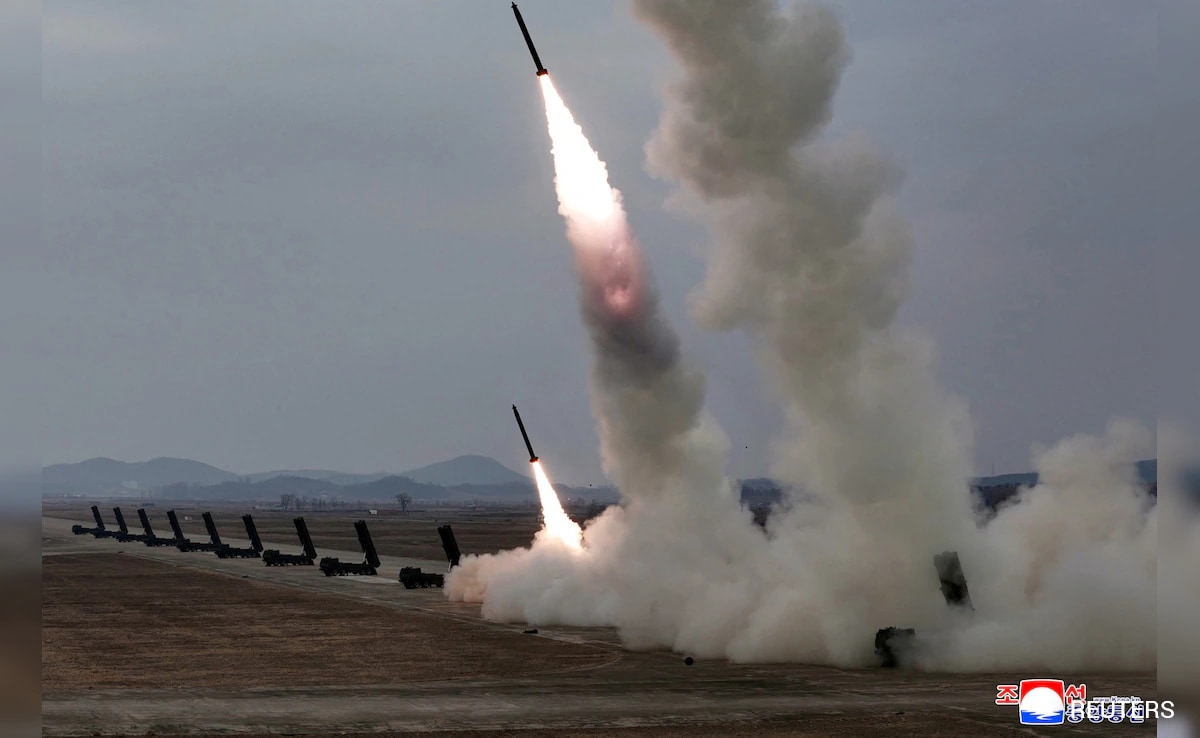
The US aims to permanently derail Iran's nuclear weapons program; the IAEA reports Iran has 408.6 kg of 60% enriched uranium (enough to potentially fuel ~9 warheads), ~200 kg of 20% fissile material convertible to weapons-grade uranium, and roughly 2,500 ballistic missiles. Analysts say strikes may slow Iran short-term but will likely harden its resolve to acquire nukes and spur regional proliferation (Saudi Arabia, Turkey, possibly Egypt) and higher public demand for deterrents (South Korea support at 76.2%), raising systemic geopolitical risk and warranting a risk-off posture for portfolios.
The market reaction will bifurcate between short-duration risk-off flows (safe-haven assets, insurance repricing) and multi-year structural reallocation into hard-defense and nuclear-related supply chains. In the next 1–3 months expect elevated volatility driven by episodic escalations and shipping/insurance rate repricing; beyond 12–36 months the clearest mechanically driven winners are firms providing munitions, missile-defence interceptors, resilient SATCOM/cyber, and front-end nuclear fuel-cycle services, where procurement is less politically contingent and inventories convert to revenue quickly.
Second-order effects matter: rising war risk will lift marine and war-risk insurance premiums, pushing up tanker and bulk freight costs and compressing margin for commodity traders and refiners exposed to Gulf transit. Simultaneously, perceived erosion of extended deterrence increases sovereign and corporate demand for onshore energy resilience and local strategic inventories, which benefits industrial gas, storage, and specialist engineering contractors rather than broad-capex OEMs.
Catalyst cadence: watch three buckets — (1) tactical: satellite/ISR attrition and ground-base damage (days–weeks) that force immediate procurement; (2) policy: allied procurement approvals and emergency budgets (weeks–months) that convert orders into multiyear revenue streams; (3) structural: a credible acceleration toward indigenous nuclear fuel programs (12–36 months) that benefits uranium miners and fuel-cycle services. The primary reversal risk is rapid, verifiable de-escalation or diplomatic guarantees that restore credible extended deterrence, which would compress the current risk premia across defense and commodity insurance within 30–90 days.
AI-powered research, real-time alerts, and portfolio analytics for institutional investors.
Request DemoOverall Sentiment
strongly negative
Sentiment Score
-0.80
