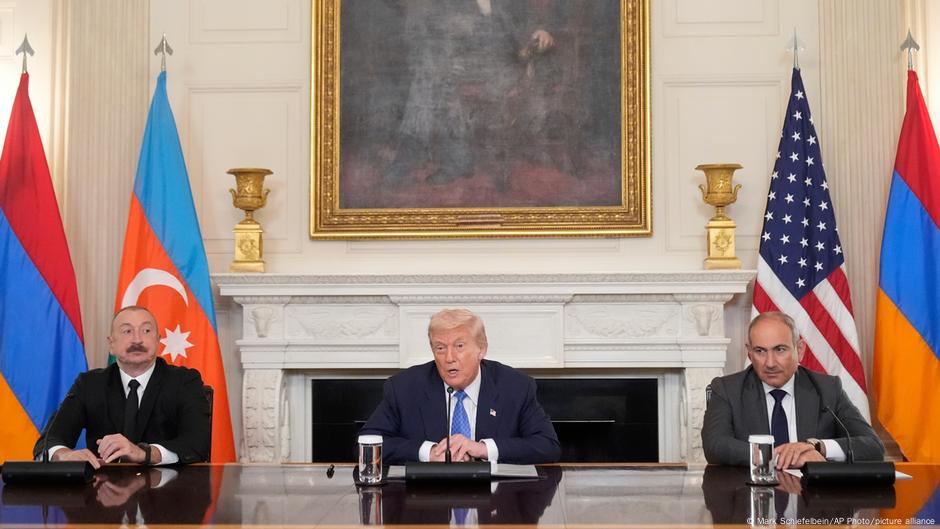
Armenia and Azerbaijan have signed a historic US-brokered peace deal, ending nearly four decades of conflict over Nagorno-Karabakh. The agreement, facilitated by the Trump administration, includes the establishment of a key transit corridor with exclusive US development rights, designed to enhance regional energy and resource exports. This accord marks a significant geopolitical shift, notably diminishing Russia's long-standing influence in the South Caucasus region.
A historic US-brokered peace agreement has been signed between Armenia and Azerbaijan, formally ending nearly four decades of conflict over Nagorno-Karabakh. The deal's central economic component is the establishment of a new trade and transit corridor, for which the United States has secured exclusive development rights. This corridor, connecting Azerbaijan with its Nakhchivan exclave through Armenian territory, is explicitly designed to facilitate increased exports of energy and other resources from the region. The agreement represents a significant geopolitical shift, materially diminishing Russia's long-standing influence in the South Caucasus, a trend accelerated by its preoccupation with the war in Ukraine. Furthermore, the US has lifted restrictions on military cooperation with Azerbaijan, signaling a deepening of security and economic ties and potentially altering the regional investment risk profile.
AI-powered research, real-time alerts, and portfolio analytics for institutional investors.
Request DemoOverall Sentiment
strongly positive
Sentiment Score
0.75
