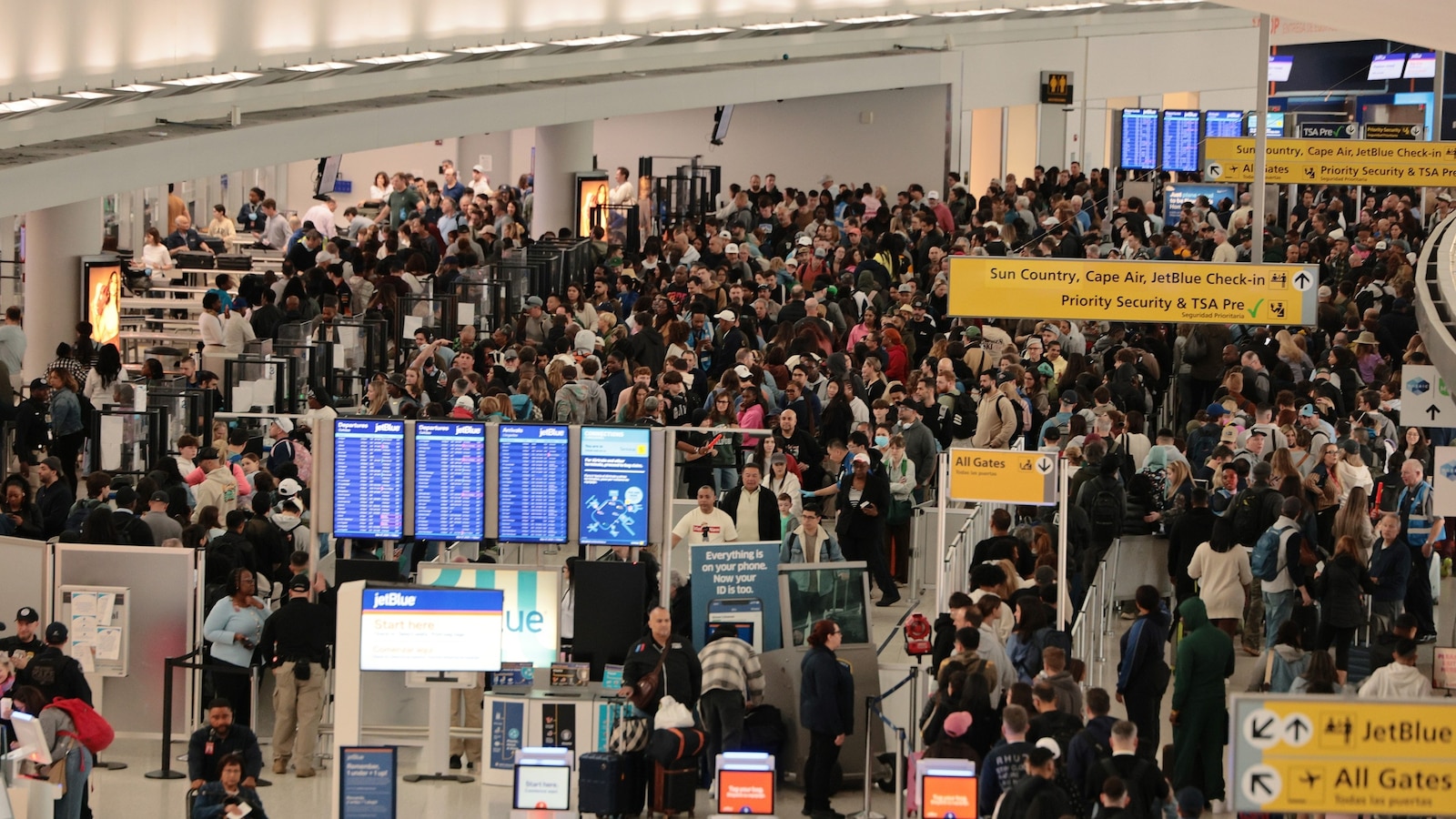
10.27% of scheduled TSA workers called out sick on Saturday, with Houston Bush International and Hobby reporting 38.3% and 36.8% no-show rates and multiple major airports recording ≥30% callouts. More than 500 TSA officers have quit and workers have been unpaid for 44 days amid a funding standoff; President Trump signed a memorandum directing DHS to find funds to pay TSA and paychecks were expected around March 30-31. The situation poses continued operational risk for airport security staffing and potential travel delays, while fueling political disputes over DHS funding and executive authority.
Operational shock at TSA checkpoints has an outsized, non-linear effect on the travel ecosystem: when staffing falls into the 30%-plus no-show range at major hubs, throughput loss compounds across the day as missed connections cascade. That concentration of delays at anchor hubs (IAD/JFK/ATL/HOU-type nodes) increases airline on‑time performance risk disproportionately versus a uniform national slowdown—expect a 10–25% increase in missed connections for affected O&D itineraries over the following 7–14 days, which translates into rebooking costs, crew disruptions and spare-part cascading effects for narrow operational-margin carriers.
The near-term catalyst (resumption of paychecks) can normalize behavior in days, but the more durable risk is structural: 500+ resignations during the funding crisis mean training and background checks create a 6–12 week floor to restoring capacity, and political/legal pushback could reintroduce episodes later this year. That suggests a bifurcated time profile — operational pain on the order of days–weeks, and an investment cycle (automation, outsourcing, contract security) measured in quarters–years as airports and DHS seek de-risking solutions.
From a competitive angle, capital is likelier to flow toward automated screening, CT/advanced imaging, and biometric ID at checkpoints, creating a multi-year RFP pipeline for defense/aviation tech contractors and system integrators. Conversely, airlines and airport concessionaires face concentrated near-term revenue and margin pressure and the reputational hit that can depress discretionary travel in affected micro-markets; the market will underprice the latter if it assumes this is a one-week event rather than a structural labor-supply shift.
AI-powered research, real-time alerts, and portfolio analytics for institutional investors.
Request DemoOverall Sentiment
mildly negative
Sentiment Score
-0.30
