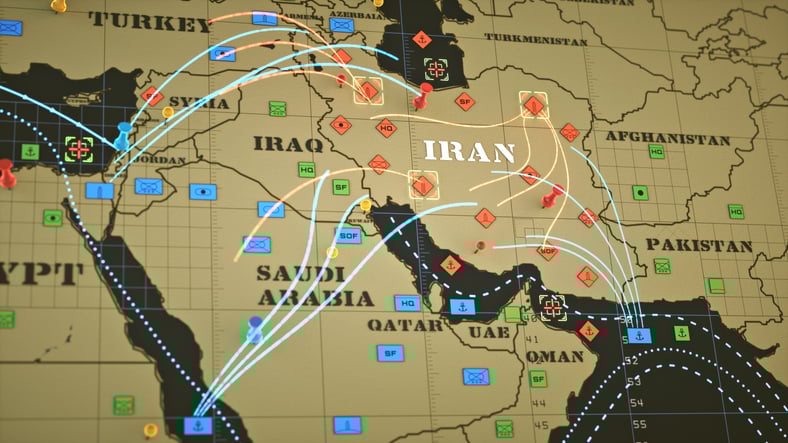
The Supreme Court struck down IEEPA-based tariffs, invalidating an estimated $130–$175B in collected duties and prompting a temporary Section 122 bridge (up to a 15% surcharge for 150 days) that expires July 24. Energy shocks are significant: the Strait of Hormuz (20% of world crude/LNG) has pushed Brent to $105–$120/bbl and LNG prices ~+50%, with fuel representing >50% of maritime shipping costs and rerouting risks that can erode ~30% of shipment margins. Expect elevated freight rates, insurance surcharges, higher landed costs for petrochemicals, fertilizers and metals, and rapid policy-driven tariff shifts; audit ACE data for refund eligibility (industry interest accrual cited at ~$650M/month) and prioritize scenario planning, supplier diversification, and liquidity/hedge checks.
Market dislocations from concurrent geopolitical shock and trade-policy whipsaw create concentrated opportunities across logistics, insurance, and inventory-heavy industrials. Operators with flexible fleets and contractual routing optionality can capture outsized margin expansion because freight and insurance rate resets are lumpy and multi-month; conversely, manufacturers with single-source, energy‑intensive inputs see input cost beta rise materially.
Tariff legal uncertainty elevates the value of optionality in sourcing and distribution: firms that can rapidly toggle suppliers, delay shipments, or monetize duty-footprints will outperform peers even if headline duties ebb and flow. Expect a two‑stage timing pattern — an immediate spike in logistics cost/working capital needs (days–weeks) followed by strategic reshoring and contract rewrites (quarters–years) that permanently reprice landed cost for some sectors.
Tradeable pockets: logistics service providers, neutral freight forwarders and warehouse REITs should see durable demand and pricing power as shippers buy capacity and time; insurance and reinsurance franchises will expand margins via higher war/route surcharges; fertilizer and petrochemical margin pass‑throughs create asymmetric stress for food processors and agricultural input users. Monitor capital allocation choices — firms that invest in reverse logistics and circularity now buy insurance against commodity volatility while capturing margin improvements later.
Contrarian overlay: the market may be overstating permanence of the premium — supply elasticity in energy and maritime capacity can reverse price shocks within 3–9 months if diplomatic pathways open and incremental capacity (spot tonnage, spot regas) comes online. Trade sizing should assume a mean reversion tail risk and use option structures or pairs to limit binary downside from rapid de‑escalation.
AI-powered research, real-time alerts, and portfolio analytics for institutional investors.
Request DemoOverall Sentiment
mildly negative
Sentiment Score
-0.30
