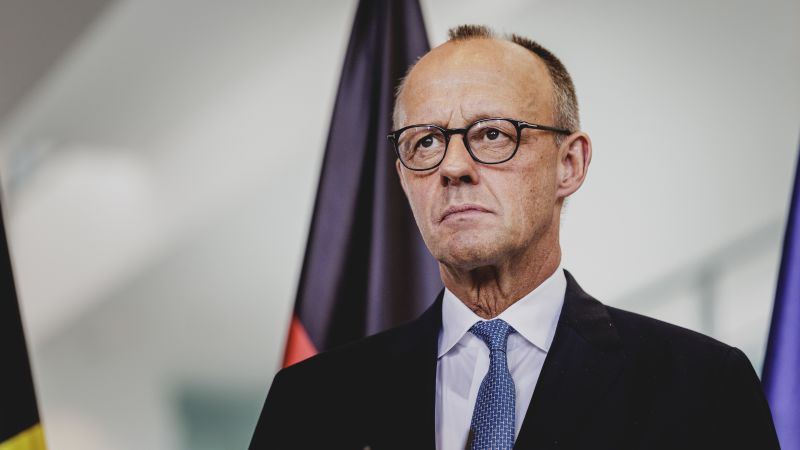
German Chancellor Friedrich Merz has proposed a significant policy U-turn, advocating the European Union utilize $160 billion of frozen Russian Central Bank assets, largely held in Euroclear, as an interest-free loan for Ukraine's weapons procurement. This initiative, aimed at securing Ukraine's military resilience and strengthening Europe's defense industry, marks a departure from Berlin's previous legal concerns and will be advanced at upcoming EU meetings, despite anticipated Russian retaliation and potential opposition from certain member states.
Germany's proposed policy pivot to utilize $160 billion of frozen Russian assets represents a significant escalation in financial pressure against Moscow and a potential turning point for Ukraine's military funding. The proposal, championed by Chancellor Friedrich Merz, would structure the funds as an interest-free loan to Kyiv, earmarked exclusively for weapons procurement and designed to be repaid from future Russian war reparations. This mechanism circumvents prior legal and financial hesitations in Berlin and aims to provide Ukraine with military resilience for several years. A key secondary objective is the explicit goal to "strengthen and expand" Europe's own defense industry, as EU states would be involved in determining procurement. The bulk of the targeted assets, part of a larger $229 billion pool frozen in the EU, are held at the Belgian clearing house Euroclear. The initiative faces two primary hurdles: securing near-unanimous EU approval, with potential opposition from Hungary and Slovakia, and navigating the risk of significant, albeit unspecified, retaliation from the Kremlin. Chancellor Merz's push for a decision by the end of October sets a clear timeline for a resolution that carries substantial geopolitical and financial market implications.
AI-powered research, real-time alerts, and portfolio analytics for institutional investors.
Overall Sentiment
strongly positive
Sentiment Score
0.60
